
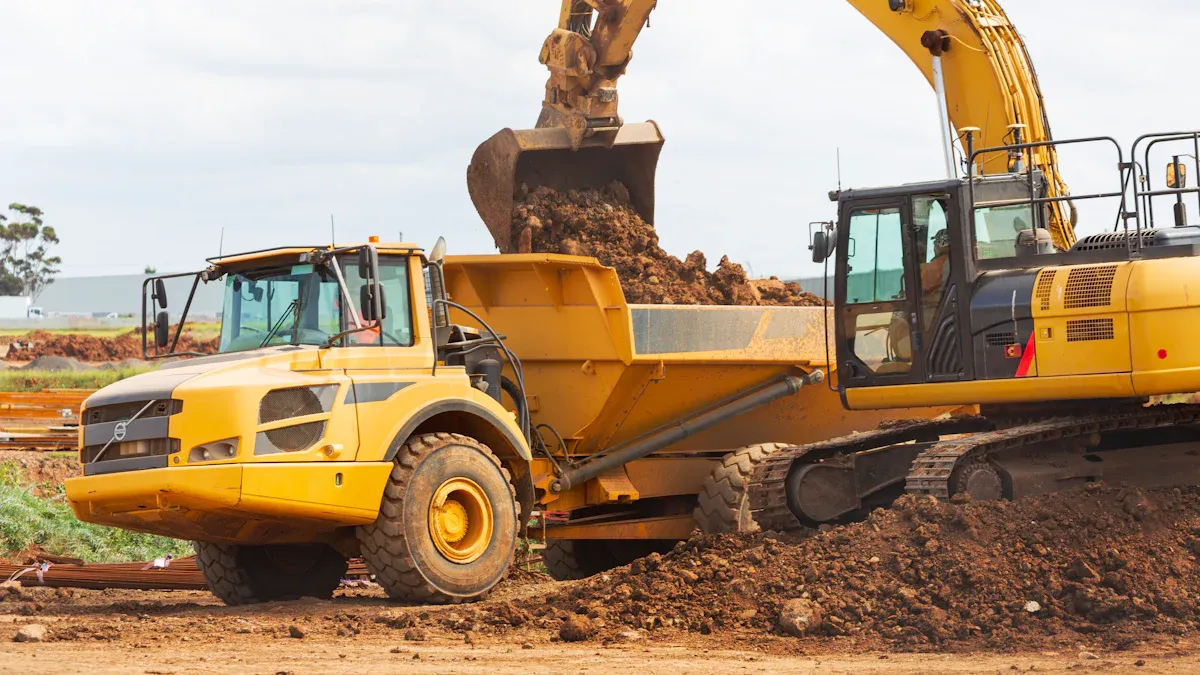
Hydraulic technology plays a crucial role in construction machinery, driving efficiency and performance. By 2026, several trends will shape this landscape, including the rise of electric actuation, smart sensors for enhanced monitoring, and the use of lightweight materials. These innovations promise significant improvements in operational efficiency, particularly for OEM hydraulic components suppliers, hydraulic pump manufacturers in China, and those specializing in hydraulic motors for excavators.
Key Takeaways
- Embrace electric actuation and smart sensors to enhance efficiency in hydraulic systems. These innovations lead to better performance and reduced energy waste.
- Adopt lightweight materials like carbon fiber to improve maneuverability and energy efficiency in construction machinery. This shift can significantly lower maintenance costs.
- Utilize IoT technology for real-time monitoring of hydraulic systems. This proactive approach helps prevent breakdowns and extends the lifespan of machinery.
Innovations in Hydraulic Systems
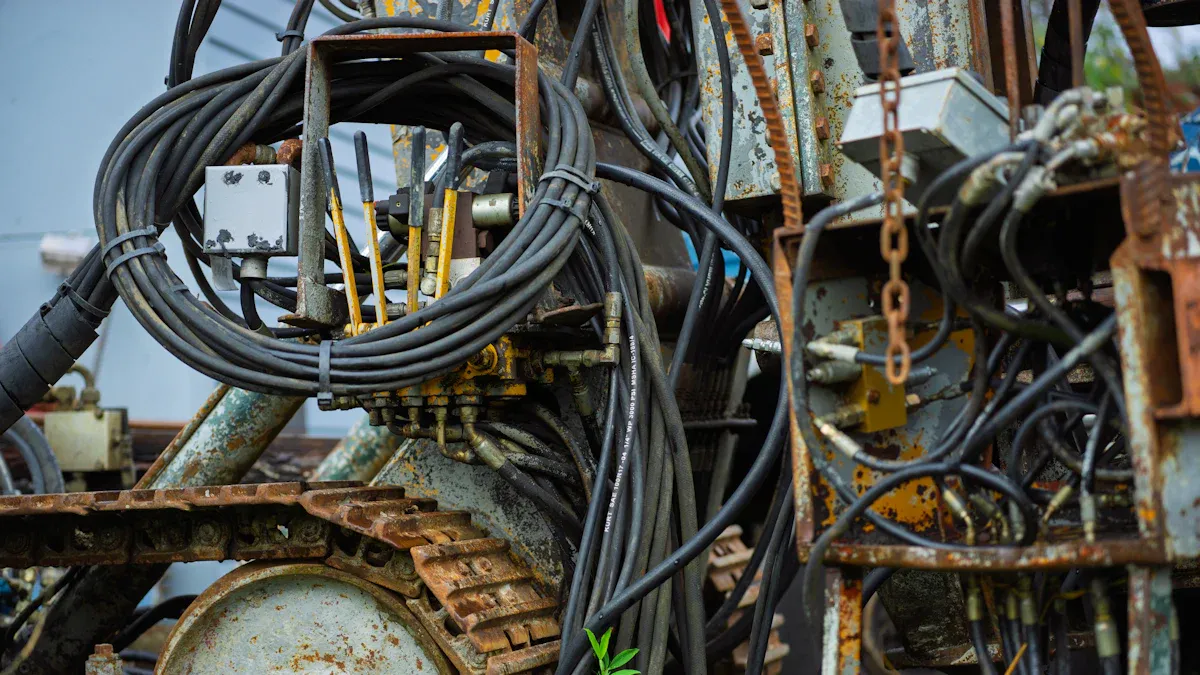
The construction industry is witnessing remarkable innovations in hydraulic systems, significantly enhancing machinery performance and efficiency. These advancements focus on improving energy efficiency, operational precision, and system reliability.
One of the most notable breakthroughs involves variable-displacement axial-piston pumps. These pumps utilize electronic control and load-sensing capabilities, optimizing energy use and reducing waste. The table below summarizes key innovations in hydraulic pump efficiency:
| Innovation Type | Description |
|---|---|
| Variable-displacement axial-piston pumps | These pumps feature electronic control and load-sensing capabilities, optimizing energy use. |
| Proportional and servo valves | These valves provide precise control and faster response, enhancing operational efficiency. |
| Compact valve blocks and integrated units | Designed for modern machinery, these units simplify integration and improve overall performance. |
In addition to pumps, new hydraulic valve technologies are emerging. These include the introduction of components like the PVP 48 OC/CC Inlet for the PVG 48 Valve and Hybrid Load Control technology. Manufacturers are also launching new models such as the MP1T axial piston tandem pump and the CLM 12 T cam lobe motor. These innovations reflect a commitment to improving hydraulic valve efficiency and control in construction machinery.
Digital hydraulic systems are another significant advancement. They enhance operational precision and unlock substantial savings over the lifecycle of construction equipment. By reducing breakdowns and improving uptime, these systems lead to more predictable maintenance budgets. The following table illustrates the impact of digital hydraulic systems:
| Aspect | Impact |
|---|---|
| Control | Enhanced precision through digital valves and electronic actuators. |
| Efficiency | Improved energy savings by adjusting operations based on real-time demand. |
| Reliability | Increased system performance and reduced breakdowns due to advanced control systems. |
| Automation | Supports autonomous operation, reducing human intervention in construction tasks. |
Moreover, manufacturers are addressing the cost implications of these advanced hydraulic technologies. They are developing smart hydraulic systems that utilize IoT technology and data analytics to optimize energy usage and reduce downtime. This approach includes using load-sensing pumps to match output flow with system demands, thereby minimizing energy loss.
As the industry moves toward more sophisticated hydraulic solutions, challenges remain. Increased system complexity requires new skills in electronic control and diagnostics. Additionally, ensuring reliability in harsh construction environments poses a significant hurdle. However, the ongoing innovations in hydraulic systems promise to transform the construction machinery landscape, particularly in applications involving hydraulic motors for excavators.
Material Advancements
Material advancements play a pivotal role in enhancing the performance and durability of hydraulic systems in construction machinery. The industry increasingly adopts high-performance coatings, seals, and lubricants to reduce friction and extend component longevity. For instance, advanced sealing technologies significantly prolong cylinder life and minimize leaks, leading to lower maintenance costs and improved environmental compliance.
| Trend | Description | Expected Impact | Percentage Adoption by 2026 |
|---|---|---|---|
| Enhanced Sealing Technologies | Improvement in sealing technologies to prolong cylinder life and reduce leaks. | Lowered maintenance costs and improved environmental compliance. | 75% |
Moreover, the use of composite materials, such as carbon fiber reinforced polymers (CFRP), has revolutionized hydraulic cylinders. Research indicates that these materials can reduce weight by approximately 57% compared to traditional metal cylinders while maintaining equivalent performance levels. This weight reduction enhances maneuverability, carrying capacity, and energy efficiency in construction machinery.
The transition to lightweight materials also leads to more compact hydraulic systems, which is crucial for applications with weight constraints. Modern hydraulic pistons made from advanced materials have demonstrated a 30% improvement in efficiency and a 25% reduction in energy consumption. Additionally, aluminum-ceramic pistons have shown a 25% decrease in energy consumption, further illustrating the impact of lightweight materials on overall machine efficiency.
As the industry continues to innovate, the integration of these advanced materials will likely enhance the performance of hydraulic motors for excavators and other construction machinery.
Market Growth Projections
The market for construction machinery hydraulic systems is poised for significant growth in the coming years. By 2026, analysts project the market size will reach USD 46.64 billion. This growth stems from various factors, including technological advancements and increased infrastructure development.
Key regions driving this growth include:
- Asia-Pacific: This region is expected to see the highest adoption of hydraulic technology in construction equipment. Government-led initiatives are boosting demand for advanced hydraulic machinery.
- China and India: Rapid industrialization and urbanization in these countries are major contributors to the market expansion. Significant infrastructure projects, such as China's Belt and Road Initiative and India's Smart Cities Mission, are increasing demand for hydraulic systems.
The following table highlights the construction machinery segments driving demand for advanced hydraulic systems:
| Segment Type | Examples | End-User Industries |
|---|---|---|
| Construction Machinery | Excavators, Loaders | Construction, Mining |
Asia-Pacific accounted for over 34% of the global hydraulics market revenue in 2024, with China leading the market and contributing nearly 40% of the hydraulic attachments market share. The demand for hydraulic motors for excavators continues to rise, reflecting the industry's shift towards more efficient and powerful machinery.
As the market evolves, stakeholders must remain vigilant to capitalize on these growth opportunities.
Environmental Considerations
The construction machinery industry faces increasing pressure to adopt environmentally friendly practices. Stringent regulations from organizations like the U.S. Environmental Protection Agency (EPA) impose restrictions on hydraulic fluid usage and emissions. These regulations include bans on certain fluids due to pollution risks and requirements for eco-friendly, leak-proof designs. Compliance with these regulations is essential to avoid fines and reduce environmental contamination.
Key environmental regulations affecting hydraulic fluid usage include:
- ISO 14001: Promotes lifecycle impact reviews.
- EU REACH: Restricts hazardous chemicals in hydraulic fluids.
- U.S. EPA Spill Prevention, Control, and Countermeasure (SPCC): Enforces rules to prevent spills.
To meet these standards, manufacturers increasingly adopt biodegradable hydraulic fluids. These fluids break down naturally within 10 to 28 days, significantly lowering pollution risks. They are less toxic and often derived from renewable sources, enhancing safety in sensitive environments.
Additionally, advancements in hydraulic control systems, such as electro-hydraulic systems, improve energy efficiency and resource use. These innovations contribute to sustainability goals by optimizing resource consumption and reducing greenhouse gas emissions.
The shift towards eco-friendly technologies has led to notable reductions in emissions. For instance, the adoption of biodegradable fluids and energy-efficient components has decreased total emissions from excavators by approximately 25.25%. This transition not only supports regulatory compliance but also aligns with the industry's commitment to environmental stewardship.
Integration of Smart Technologies
IoT in Hydraulic Systems
The integration of the Internet of Things (IoT) into hydraulic systems marks a significant advancement in construction machinery. IoT technology enables real-time data monitoring, which enhances the reliability of hydraulic systems. By continuously tracking performance metrics such as flow and pressure, operators can detect potential issues early. This proactive approach allows for timely interventions, preventing costly breakdowns and extending the lifespan of hydraulic components.
Key benefits of IoT integration in hydraulic systems include:
- Real-time Monitoring: Smart sensors gather data on system performance, fluid levels, and pressure.
- Data-Driven Decisions: Operators can analyze critical data to optimize maintenance schedules.
- Enhanced Efficiency: Automation and intelligent algorithms maintain optimal performance, reducing energy consumption.
For instance, smart hydraulic systems utilize sensors to monitor flow and pressure, alerting operators to inefficiencies before they escalate into significant failures. This capability not only minimizes unplanned downtime but also optimizes maintenance strategies, ensuring that equipment operates at peak efficiency.
Predictive Maintenance Solutions
Predictive maintenance represents a transformative approach to managing hydraulic systems in construction machinery. By leveraging advanced technologies, maintenance teams can interpret performance data and make informed decisions. This strategy maximizes asset availability and reduces maintenance costs.
One of the leading technologies in predictive maintenance is the use of particle counters. These devices assess the condition of hydraulic oil, allowing for targeted interventions that keep systems in optimal condition. The LPA3 particle counter, for example, enables maintenance personnel to quickly evaluate fluid quality, facilitating timely maintenance actions.
The integration of AI and IoT in predictive maintenance systems significantly enhances machine uptime and reliability. These systems can detect subtle changes in hydraulic conditions, such as increased vibrations or fluctuations in flow rate, which may indicate potential failures.
The following table summarizes the steps involved in predictive analytics for hydraulic systems:
| Step | Description |
|---|---|
| 1 | Sensors monitor real-time data from key systems (engine, hydraulics, undercarriage, electrical). |
| 2 | This data is transmitted to a central AI system for analysis. |
| 3 | The system identifies patterns and flags anomalies before failures occur. |
| 4 | Alerts and maintenance recommendations are delivered to operators and service teams. |
By implementing predictive maintenance strategies, construction companies can achieve several advantages:
- Maximized Uptime: Early detection of issues allows for repairs before breakdowns occur.
- Reduced Maintenance Costs: Timely interventions prevent unnecessary service.
- Longer Equipment Lifespan: Machines last longer when maintained based on real-time conditions.
- Improved Safety: Early alerts mitigate risks associated with malfunctions.
The integration of smart technologies into hydraulic systems not only enhances operational efficiency but also aligns with the industry's commitment to innovation and sustainability.
Hydraulic Motor for Excavator Developments
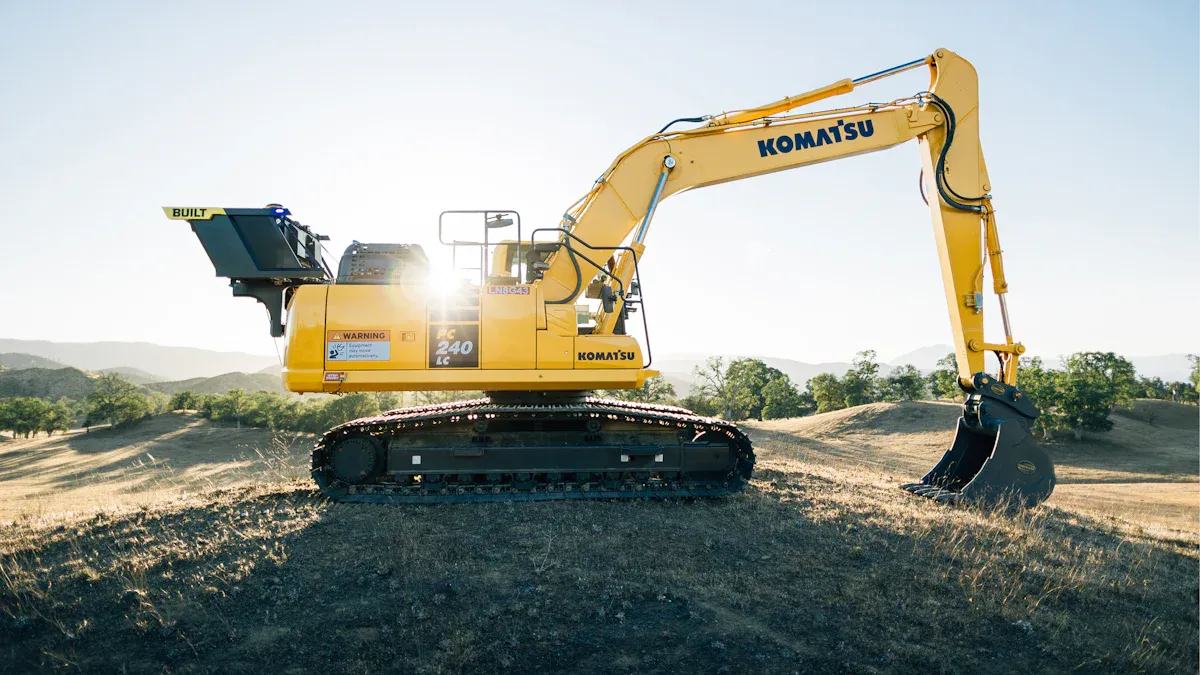
Recent developments in hydraulic motors for excavators emphasize energy efficiency, durability, and smart integration. Manufacturers design motors that deliver higher torque and power density while maintaining a compact size. This compactness suits space-limited excavator designs without sacrificing performance or reliability. Additionally, many new motors comply with environmental regulations, reflecting a growing focus on sustainability and reduced emissions.
Key advancements include:
- Integration of IoT technologies for real-time monitoring and diagnostics, enabling operators to track motor health and optimize maintenance.
- Adoption of electric and hybrid hydraulic motors, especially in regions with strict environmental policies, supporting greener construction machinery.
- Novel powertrain and energy management systems that capture potential energy from the boom system, improving fuel efficiency.
- Hydrostatic transmissions that optimize engine operation in real time, reducing overall energy consumption by approximately 9.44%.
- Electric energy regeneration subsystems that recover energy during boom-down movements, enhancing regeneration efficiency by up to 10.51%.
These innovations allow excavators to operate more efficiently and sustainably. The equivalent consumption minimization strategy (ECMS) and Extremum Seeking Control (ESC) further refine energy management, boosting conservation in complex hydraulic systems.
The hydraulic motor for excavator designs now balance power, size, and environmental impact. These improvements help construction companies reduce fuel costs and emissions while maintaining high performance. As the industry advances, such motors will play a critical role in meeting future demands for efficient and eco-friendly machinery.
The trends in hydraulic technology, such as hybrid systems and smart hydraulics, enhance efficiency and sustainability. These innovations lead to better fuel efficiency, lower emissions, and reduced downtime. As manufacturers adopt these advancements, they position themselves competitively in the evolving construction machinery landscape, paving the way for future growth.
FAQ
What are the key benefits of integrating IoT in hydraulic systems?
Integrating IoT enhances real-time monitoring, optimizes maintenance schedules, and improves overall efficiency in hydraulic systems.
How do biodegradable hydraulic fluids contribute to environmental sustainability?
Biodegradable hydraulic fluids break down naturally, reducing pollution risks and supporting compliance with environmental regulations.
What advancements are being made in hydraulic motors for excavators?
Recent advancements focus on energy efficiency, compact design, and smart integration, improving performance while reducing emissions.
Post time: Mar-24-2026