
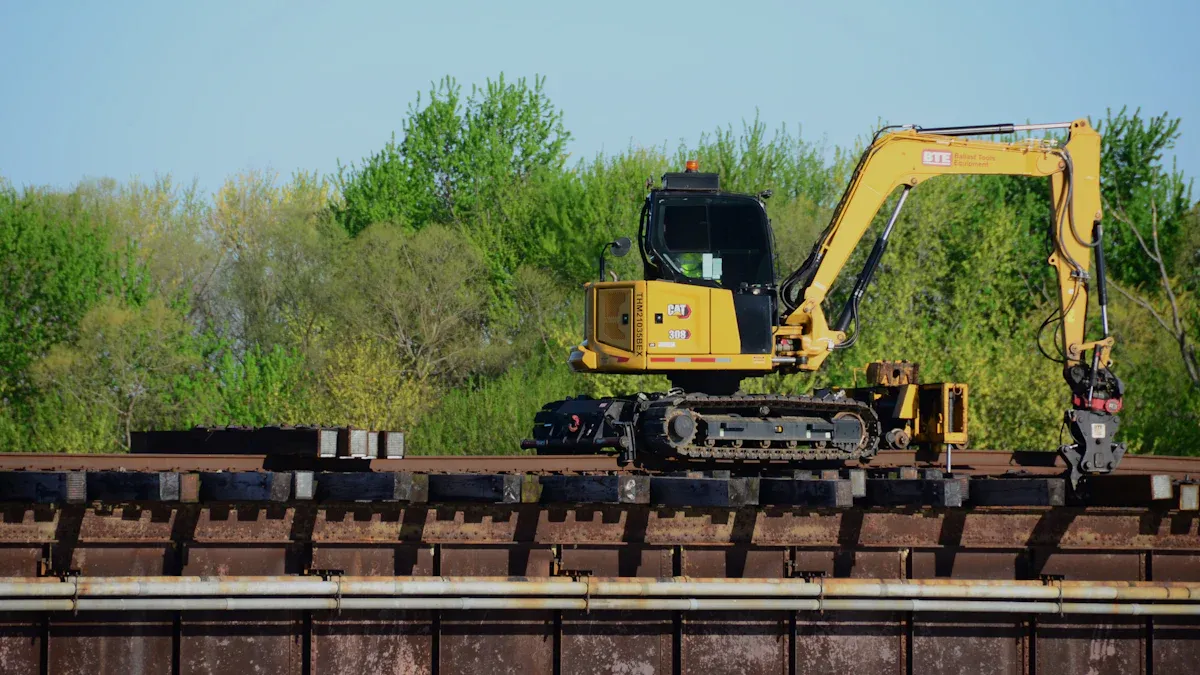
A slewing excavator is heavy construction equipment. Its upper structure rotates 360 degrees. This rotation happens independently of its undercarriage. This unique design allows for precise material handling. Many models use a powerful Hydraulic Slewing system. This system ensures smooth, controlled movements. This design offers great versatility on job sites.
Key Takeaways
- A slewing excavator's top part spins all the way around. This helps it work in tight spots and move materials easily.
- The machine uses a special bearing and gears to spin its top. A hydraulic system powers this smooth movement.
- These excavators are very useful on job sites. They dig, lift, and clear land faster and safer than other machines.
Understanding the Slewing Excavator Mechanism
The Slewing Ring and Bearing
A slewing excavator's core rotational component is the slewing ring. This specialized rolling-element bearing is also known as a slewing bearing or turntable bearing. It manages axial, radial, and moment loads. This design allows smooth rotation around a fixed axis. Key components include inner and outer raceways, rolling elements (balls, cylindrical, or tapered rollers), a cage for spacing, and seals with lubrication.
The slewing ring effectively distributes loads. Applied loads transfer through the bearing's raceways. Rolling elements then transmit the load to the stationary raceway and mounting point. This mechanism supports heavy loads. It also ensures rotation with minimal friction. Rolling elements move smoothly between the inner and outer raceways. One raceway rotates relative to the other, minimizing friction and allowing low-resistance rotation. Slewing rings provide both axial and radial support. They handle axial loads, ensuring stability during lateral movements. They also withstand vertical loads, making them versatile for various applications.
A slewing bearing's service life typically ranges from 10,000 to 20,000 operating hours or more. Proper care and maintenance, including regular lubrication and inspection, can significantly extend this duration. Slewing ring bearings in heavy-duty applications like excavators face complex load spectrums. These include thrust, radial, and tilting moment loading. Factors such as structural design, manufacturing processes, material quality, load conditions, operating speed, environmental factors, and maintenance practices influence their lifespan. Demanding conditions and frequent rotations can lead to premature failure in these large-diameter bearings.
How the Upper Structure Rotates
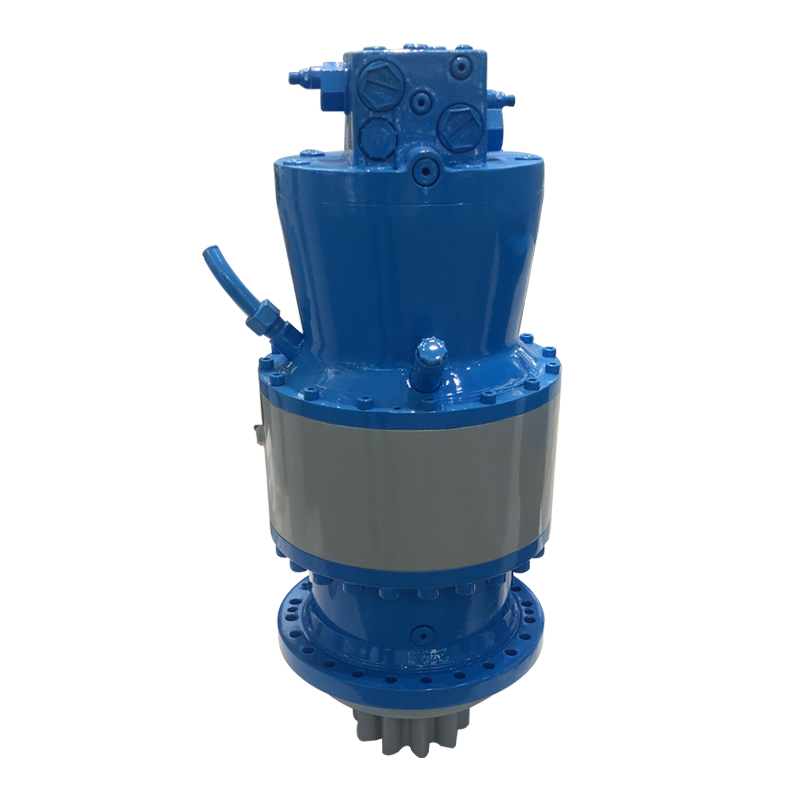
The slewing mechanism enables rotary functions in large-scale machinery like excavators. This system typically comprises three major parts: the drive unit, the transmission system, and the slewing bearing. The drive unit provides power. The transmission system, often using gears or chains, transmits this power. It delivers power to a large gear ring on the main body. This action causes the turntable to rotate around its central axis.
Modern hydraulic excavators commonly adopt hydraulic transmission. This provides smoother and more efficient rotary motion. The slewing gear ring is a fundamental part of this mechanism. It allows the excavator's upper structure to rotate. A driving pinion, a smaller gear, meshes with the slewing gear ring. The hydraulic motor drives this pinion, facilitating the rotation. Manufacturers also employ other gear types, such as worm gears and spur gears, in slewing drive solutions.
Powering the Rotation
The drive unit, typically an electric or hydraulic motor, provides the initial power. This power transmits through the transmission system. The transmission system reduces speed and changes direction. It then delivers this power to a large gear ring on the slewing bearing. A small pinion gear meshes with this large gear ring. As the pinion rotates, it drives the entire turntable or working platform. This causes it to rotate around its central axis.
In hydraulic excavators, a hydraulic pump supplies pressurized fluid to the system. A hydraulic motor then converts this hydraulic energy into mechanical rotation. This forms the core of the Hydraulic Slewing system. This efficient power transfer ensures precise and controlled rotation of the excavator's upper structure. The robust design of these components allows excavators to perform demanding tasks with high accuracy.
Advantages of Hydraulic Slewing Excavators
Enhanced Operational Flexibility
Hydraulic slewing excavators offer superior operational flexibility. Their 360-degree rotation capability allows precise positioning. This adapts to varying site conditions and project requirements. Operators can adjust the scraper orientation to match terrain contours. They access confined spaces and navigate around obstacles without compromising productivity. This eliminates time-consuming repositioning required by conventional equipment. Modern excavators with innovative Hydraulic Slewing systems and attachments handle various tasks. These include digging, crushing, lifting, and cutting. This reduces the need for additional equipment. Rotating couplers, tiltrotators, and tilting buckets further enhance complex maneuvers and precision work in tight spaces.
Increased Job Site Efficiency
The ability to rotate the upper structure without moving the entire machine significantly increases job site efficiency. Reduced machine repositioning leads to faster cycle times. This directly boosts productivity. Optimized gearing and low-backlash setups ensure smooth, accurate movement. This is crucial for safe and efficient positioning of heavy objects. This precision also speeds up repetitive tasks, boosting efficiency and reducing labor costs. Advanced Hydraulic Slewing systems offer exceptional control. This leads to accurate work in complex activities and minimizes rework. The ability to work with multiple attachments provides customized functionality for specific tasks. This improves workflows and reduces waste and error.
Improved Safety and Reach
Hydraulic slewing excavators also provide improved safety and reach. Slewing reducers control rotation, use robust bearings, and integrate brakes. This manages moment and off-center loads, preventing tipping and bending. This allows machines to lift more and reach farther. Reducing machine movements is a common cause of accidents. Tilt rotators allow operators to complete tasks without constantly changing the machine’s position. This reduces risks like collisions or striking workers. The excavator cab's 360-degree rotation significantly enhances operator visibility. Operators maintain a clear view of their surroundings without repositioning the entire machine. This improved visibility reduces blind spots. It decreases the risk of accidents on busy construction sites. The precise control offered by the Hydraulic Slewing system minimizes the likelihood of accidental strikes or spills.
Key Features and Applications
Distinctive Design Elements
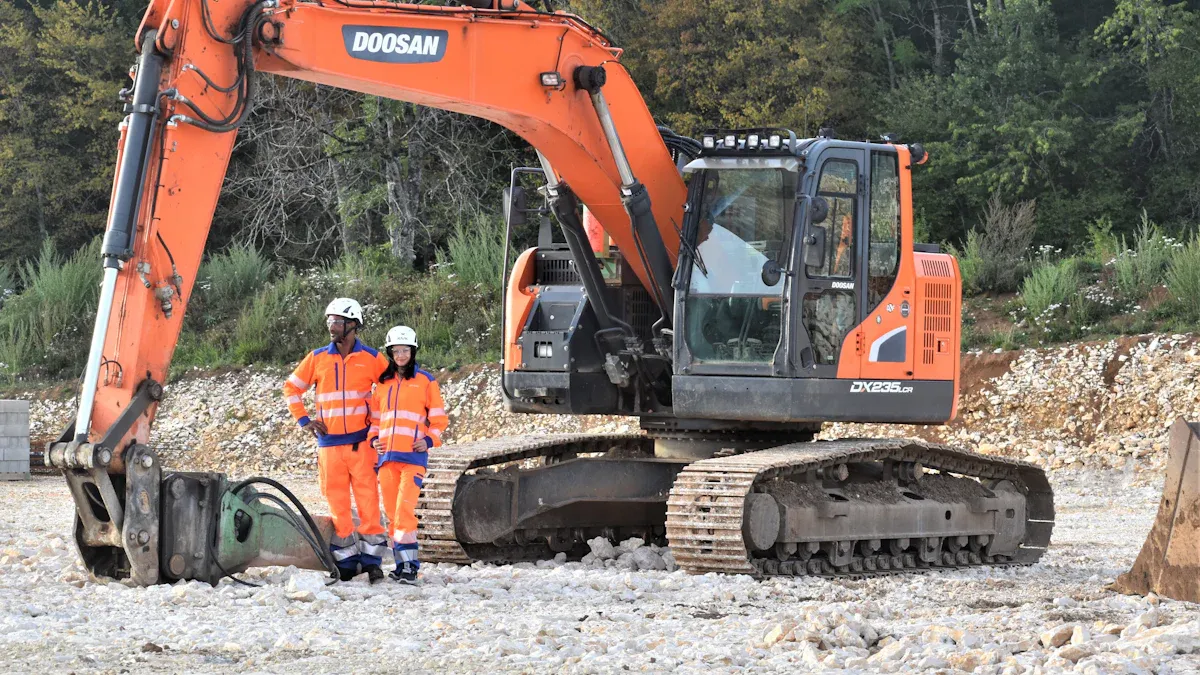
Slewing excavators possess several distinctive design elements. These features set them apart from other heavy machinery. The most prominent feature is their rotating upper structure. This structure sits on a robust undercarriage. It allows the operator to rotate the cab, boom, and bucket 360 degrees. This independent rotation provides unmatched maneuverability. Another critical design element involves the counterweight system. Counterweights ensure the excavator remains stable during heavy lifting and digging operations. Manufacturers use various counterweight designs to achieve optimal stability:
- Custom Fit Designs: These counterweights match specific excavator models. They ensure optimal structural compatibility and performance.
- Modular Weight Systems: These systems use easily attachable and removable modules. Operators adjust the excavator's weight for different tasks. This provides greater flexibility on job sites.
- Smart Weight Systems: These designs include IoT sensors. They continuously monitor stress, balance, and load impact. This provides real-time data to operators and fleet managers.
- Hydraulically Adjustable Counterweights: High-end models feature these counterweights. They dynamically shift during operation for real-time stabilization. This is especially useful in confined or hazardous environments.
- Fixed Counterweights: These attach permanently to the excavator.
- Removable Counterweights: Operators can detach these from the excavator. This offers flexibility.
- Adjustable Counterweights: These provide operational flexibility and portability for various job site situations.
The boom and arm configuration also represents a key design. Many slewing excavators feature a two-piece boom. This allows for greater reach and digging depth. The hydraulic system powers these movements. It provides precise control over the excavator's functions.
Common Uses in Construction
Slewing excavators are indispensable machines in the construction industry. Their versatility makes them suitable for a wide range of tasks. They excel at general excavation work. This includes digging trenches for utilities and foundations for buildings. Operators use them for grading and leveling land. They also load trucks with excavated material. The machine's ability to rotate its upper structure means it can dig and dump without repositioning the entire machine. This saves time and fuel. Demolition projects also frequently employ slewing excavators. They efficiently break down structures and clear debris. Road construction and maintenance also rely on these machines. They prepare roadbeds and manage materials.
Specialized Tasks and Industries
Beyond general construction, slewing excavators perform many specialized tasks across various industries. Their adaptability comes from the wide array of attachments they can utilize. These attachments transform the excavator into a multi-functional tool.
- Vacuworx SL2 Vacuum Attachment: This attachment handles concrete slabs, sidewalks, flat steel plates, and composite construction mats. It lifts up to 4,400 lbs and operates with a wireless remote.
- Werk-Brau Frost and Rock Ripper: This tool features a single-point tooth. It penetrates frozen ground, pavement, and tough soils. It also removes stumps, roots, and rebar.
- Fecon FMX36 Bull Hog Mulcher: This mulcher clears trees and brush in hard-to-reach areas. It shreds materials up to 5 inches in diameter.
- Danuser Mega Mixer: This material handling bucket mixes, scoops, and dispenses various construction materials. These include sand, gravel, dry topsoil, asphalt, mortar, and bag-mix concrete.
- Auger Attachment: This attachment is essential for precision drilling. It creates neat holes of various sizes and depths. Tasks include fencing, tree planting, and structural supports.
- Thumb Attachment: This enhances a standard bucket's ability to grip and lift irregular or bulky materials. These include logs, rocks, debris, and demolition waste. It provides superior control during material handling.
The Hydraulic Slewing system allows for precise control of these specialized attachments. This makes excavators valuable in industries like forestry, mining, and waste management. In forestry, they clear land and handle logs. Mining operations use them for overburden removal and material handling. Waste management facilities employ them for sorting and loading refuse. Their robust design and powerful Hydraulic Slewing capabilities make them ideal for demanding environments.
Slewing excavators are indispensable machines. Their rotational capability offers unmatched versatility and efficiency. These machines excel in various construction and industrial applications. They provide precise control and enhanced operational flexibility. This makes them crucial for modern job sites.
FAQ
What is the primary benefit of a slewing excavator?
Slewing excavators offer unmatched operational flexibility. Their 360-degree rotation capability allows precise positioning. This adapts to various site conditions and project requirements.
How does a slewing excavator's upper structure rotate?
A hydraulic motor drives a small pinion gear. This pinion meshes with a large gear ring on the slewing bearing. This action causes the upper structure to rotate around its central axis.
What industries commonly use slewing excavators?
Construction, forestry, mining, and waste management industries frequently use slewing excavators. Their versatility and powerful hydraulic slewing capabilities make them ideal for demanding tasks.
Post time: Oct-16-2025