
In early 2025, a ship operator in Batam contacted me with a recurring problem: three IYM-series anchor winches on their 8,000 DWT cargo vessel had developed shaft seal leaks within 18 months of commissioning. The leaking motors were losing approximately 2–3 litres of hydraulic oil per week of continuous anchor handling. The operator's initial diagnosis was "poor seal quality." But after reviewing the motor operating data — oil temperature profiles, case drain backpressure logs, and fluid analysis results — the root causes were not the seal material. They were three systemic factors that any marine winch OEM or operator can identify before the seal fails.
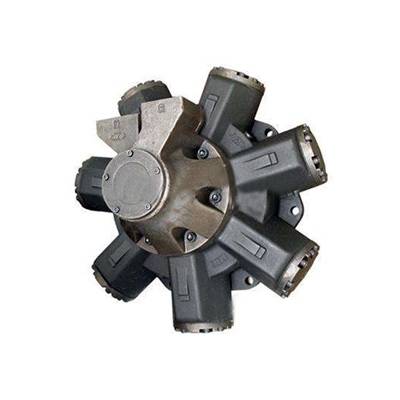
Understanding the Shaft Seal Operating Environment in Marine Winch Motors
Before diagnosing the root causes, it is necessary to understand what a shaft seal in a marine winch hydraulic motor experiences during continuous duty. The seal — typically a nitrile rubber (NBR) or polyurethane (PU) lip seal — maintains a dynamic seal between the rotating shaft and the stationary housing. The sealing lip rides on a hardened shaft surface at speeds ranging from 200 to 1,200 RPM, depending on the winch line speed and motor displacement.
The seal face is lubricated by a microscopic oil film — typically 1–5 micrometres thick — that separates the lip from the shaft. If this film is disrupted, the lip contacts the shaft directly, generating frictional heat that raises the local temperature at the lip surface by 30–50°C above the bulk oil temperature. At this elevated temperature, the seal elastomer degrades rapidly: NBR seals lose 50% of their tensile strength after 200 hours of operation at 110°C lip temperature.
Continuous duty magnifies these effects because the seal never enters a cool-down cycle. An intermittent-duty anchor winch — used for a few hours per voyage — allows the seal to cool between operations. A positioning winch or a constant-tension mooring winch operating continuously for 8–12 hours per shift does not. The thermal load on the seal is cumulative.
Root Cause #1: Excessive Case Drain Backpressure
The most common cause of shaft seal leakage in marine winch hydraulic motors is excessive case drain backpressure. It is also the most preventable.
Every hydraulic motor has a case drain line that returns internal leakage oil — the oil that bypasses the piston or gerotor clearance — to the tank. The shaft seal is designed to withstand a maximum case drain backpressure, typically 3–5 bar for standard motors and 7–10 bar for motors with heavy-duty seals. When backpressure exceeds this limit, the seal lip is pushed away from the shaft surface, creating a gap through which oil escapes.
In marine winch installations, three conditions cause excessive backpressure:
- Undersized case drain lines: A 1/2-inch (DN13) case drain line is adequate for a motor with 5 L/min internal leakage. A motor with 15 L/min leakage — typical for a high-displacement motor operating at 250 bar — generates over 10 bar of backpressure in a DN13 line that is 20 metres long with four 90° fittings. The pressure drop calculation follows the Darcy-Weisbach equation: Δp = f × (L/D) × (ρv²/2), and in many shipboard installations, the simple addition of two extra 90° fittings pushes the backpressure past the seal limit.
- Common case drain manifolds: When multiple winch motors share a single case drain manifold, the cumulative leakage flow from all motors creates backpressure at the manifold that exceeds the seal rating of each individual motor. This is a common design error in multi-winch installations — each motor is specified individually, but the case drain system is treated as a shared utility.
- Blocked or partially clogged return line filters: A clogged filter in the case drain return line can raise backpressure gradually over weeks, which makes the root cause difficult to identify when the seal eventually fails. The telltale sign is a rising case drain pressure reading on the motor test port over three to five months of operation.
Prevention: Specify the case drain line diameter so that the calculated backpressure at the maximum motor leakage rate (which may be 2–3 times the new-motor leakage rate after 5,000 operating hours) remains below 50% of the seal's rated backpressure. For the INC series, which incorporates a 10-bar rated shaft seal, we recommend DN20 case drain lines for any run exceeding 15 metres. Each motor should have an individual case drain return to the tank rather than sharing a manifold.
Root Cause #2: Oil Temperature Degradation of Seal Elastomers
The second root cause is thermal degradation of the seal elastomer due to sustained high oil temperature under continuous duty. This is distinct from the transient heat spike at the lip surface — it is a bulk material degradation that reduces the seal's mechanical properties across its entire cross-section.
Hydraulic oil temperatures in marine winch systems under continuous operation typically stabilise at 60–75°C in temperate waters. In tropical service — which covers most of Southeast Asia, the Middle East, and the Caribbean — the stabilised temperature is 75–95°C. At 80°C continuous operation, a standard NBR (nitrile butadiene rubber) seal loses approximately 30% of its tensile strength and 50% of its elongation at break within 1,000 hours. At 95°C, the same seal becomes brittle within 400 hours — the lip cracks rather than wears, producing a sudden, high-volume leak.
The Arrhenius equation (applied in ISO 6336-3 thermal rating guidelines) describes the relationship between temperature and elastomer degradation rate: each 10°C increase in continuous operating temperature approximately doubles the degradation rate. For a seal operating at 90°C versus 60°C, the service life is reduced by a factor of approximately 8× — meaning a seal that would last 8,000 hours at 60°C fails at approximately 1,000 hours at 90°C.
The degradation manifests as two distinct failure modes:
- Lip hardening and cracking: The seal lip loses elasticity and develops circumferential cracks. Oil seeps through the cracks during the standby period and forms a visible drip trail beneath the motor flange.
- Compression set: The seal material loses its ability to maintain contact pressure against the shaft. The leak develops gradually — a few drops per hour initially, progressing to a steady drip over several weeks. This failure mode is often misdiagnosed as a shaft wear problem when the shaft surface is actually within tolerance.
Prevention: For marine winch motors operating in continuous duty at oil temperatures above 70°C, specify seals made from hydrogenated nitrile butadiene rubber (HNBR) or fluorocarbon (FKM, commonly known as Viton). HNBR maintains useful mechanical properties at continuous temperatures up to 140°C, while FKM extends the range to 200°C. The material upgrade adds approximately 8–12% to the motor cost but extends the seal service life by a factor of 3–5× in elevated-temperature applications. The IPM series hydraulic motor offers HNBR seals as standard and FKM as a no-charge option, reflecting the marine market requirement for elevated-temperature seal durability.
Root Cause #3: Fluid Contamination — Abrasive and Chemical Wear
The third root cause is fluid contamination, which damages the shaft seal through two distinct mechanisms: abrasive wear and chemical attack.
Abrasive wear occurs when particulate contamination — silica particles from seawater ingress, wear debris from pump and valve components, or rust particles from the tank — is carried by the oil film between the seal lip and the shaft surface. The particles embed in the softer seal material (hardness Shore A 70–85) and score the shaft surface like a cutting tool. Once the shaft surface roughness (Ra) exceeds 0.4 micrometres, the seal lip cannot maintain the fluid film that lubricates the sealing interface. The seal fails by rapid wear: a seal that should last 5,000 hours fails in 300–500 hours after a single severe contamination event.
Marine winch systems are particularly vulnerable to contamination because:
- Deck-mounted winches have hydraulic hoses and fittings exposed to seawater spray, and a loose fitting can draw seawater into the system during the cooling phase of thermal cycling.
- Winch motors operate in the boundary lubrication regime during the start-stop transient, where the oil film is thinnest — particle contamination does the most damage in this regime.
- The case drain return line from the motor bypasses the main system filter on many installations, which means the contaminated leakage oil is returned to the tank without filtration.
Chemical attack occurs when the hydraulic fluid — or a contaminant carried by the fluid — chemically degrades the seal elastomer. The most common chemical aggressors in marine hydraulic systems — identified in ABS guidelines for hydraulic fluid conditioning — are:
- Water (seawater ingress): Hydrolyses the nitrile elastomer, breaking the polymer chains and reducing the seal's mechanical strength. Even 200 ppm of water in the oil accelerates NBR degradation by a factor of 2–3×.
- Oil additive depletion: The anti-wear (ZDDP) and antioxidant additives in the hydraulic oil deplete over time. Depleted oil becomes acidic, attacking the seal material. An oil with a total acid number (TAN) exceeding 2.0 mg KOH/g is chemically aggressive to standard NBR seals.
- Incorrect oil specification: The use of zinc-free (ashless) hydraulic oils — increasingly mandated in environmentally sensitive marine areas — requires seal materials compatible with the additive chemistry. HNBR and FKM seals are compatible; standard NBR may swell or shrink in zinc-free oil formulations.
Prevention: Install a 10-micron absolute (β10 ≥ 200) filter in the case drain return line from each winch motor, not just a 25-micron return-line filter at the tank. Implement a fluid analysis programme with quarterly sampling: test for particle count (ISO 4406 cleanliness code), water content (Karl Fischer, target < 200 ppm), and total acid number (TAN, target < 1.5 mg KOH/g). The IMB series hydraulic motor includes a standard case drain filter port and a sample valve, which simplifies the operator's fluid monitoring routine.
Diagnosis Protocol: Which Root Cause Is Active?
When a ship crew reports a shaft seal leak, the following diagnostic protocol identifies which root cause is dominant:
- Measure case drain backpressure at the motor test port with a calibrated pressure gauge (0–16 bar range) during normal winch operation. If the reading exceeds 5 bar (standard seal) or 7 bar (heavy-duty seal), Root Cause #1 is confirmed.
- Measure oil temperature at the motor case drain port using a contact thermometer or installed temperature sensor. If the temperature exceeds 75°C for NBR seals or 100°C for HNBR seals during continuous operation, Root Cause #2 is active and will accelerate the failure regardless of other factors.
- Submit an oil sample for particle count analysis (ISO 4406). If the code exceeds 22/19/16 (the typical target for marine hydraulic systems), contamination (Root Cause #3) is contributing to the seal wear. Check the water content — if it exceeds 500 ppm, seawater ingress is occurring.
In the Batam case I mentioned at the beginning of this article, the root cause was a combination of #1 and #2: the case drain backpressure averaged 6.2 bar (above the 5 bar seal limit), and the continuous oil temperature stabilised at 82°C (well above the NBR seal's 60°C design temperature). The solution was to upgrade to an INC-series motor with HNBR seals and a 10-bar case drain rating, and to increase the case drain line diameter from DN13 to DN20. The replacement motors have logged 4,000 hours without seal leakage to date.
On the anchor winch product page, we specify the required case drain line diameter and seal material for each motor option based on the duty cycle class, so the specification error that occurred in the Batam installation — specifying a standard-duty motor for a continuous-duty application — does not recur.
Design-Level Prevention in Hydraulic Motor Selection
The most effective prevention is selection of a hydraulic motor that is designed for continuous marine winch duty from the component level up. The following design features directly address the three root causes:
- Three-piece shaft seal arrangement: A primary lip seal handles normal operating pressure. A pressure-relief groove between the primary and secondary seals drains any oil that bypasses the primary seal back to case drain, preventing pressure build-up between the seals. An external wiper seal prevents external contamination from reaching the primary seal.
- Integrated case drain check valve: Prevents reverse flow and pressure spikes from damaging the shaft seal when the motor is in overrunning load condition — a common scenario during winch lowering operations.
- Hard-chrome-plated shaft surface: A minimum hardness of 58 HRC and surface finish of Ra 0.2 µm reduces abrasive wear from particulate contamination by 60–80% compared to unhardened shafts.
The hydraulic motor product range includes a configurator that allows the OEM to specify the seal material, case drain connection size, and shaft coating finish at the ordering stage, rather than treating them as post-order modifications — a workflow that reduces specification errors.
Frequently Asked Questions
What is the acceptable case drain backpressure for a marine winch hydraulic motor?
For standard hydraulic motors with nitrile rubber shaft seals, the maximum continuous case drain backpressure is 3–5 bar. Motors with heavy-duty seals (HNBR or FKM) can tolerate 7–10 bar. Any reading above 5 bar during normal winch operation indicates the case drain system is undersized or partially blocked and should be investigated before seal failure occurs.
How does oil temperature affect hydraulic motor shaft seal life?
Each 10°C increase in continuous operating temperature above 60°C doubles the seal elastomer degradation rate. A standard NBR shaft seal that lasts 8,000 hours at 60°C fails at approximately 1,000 hours at 90°C. This follows the Arrhenius relationship for elastomer ageing. Upgrading to HNBR or FKM seal materials extends the useful temperature range to 140°C and 200°C respectively.
Can a shaft seal leak be repaired without replacing the motor?
Yes — if the shaft surface is within tolerance (Ra ≤ 0.4 µm, no scoring or pitting) and the housing bore is undamaged. The seal can be replaced in-situ by removing the motor end cap and extracting the old seal with a seal puller. However, if the shaft surface is damaged by contamination scoring, the shaft must be either reground with hard chrome replating or replaced entirely. Shaft replacement typically costs 40–60% of a new motor and is justifiable only for motors larger than the 250–300 cc/rev displacement range.
What oil viscosity is recommended for marine winch hydraulic motors under continuous duty?
ISO VG 46 is the standard viscosity grade for most marine hydraulic systems operating at 30–60°C. For winch systems that sustain continuous operation above 70°C, ISO VG 68 is recommended to maintain adequate oil film thickness at the shaft seal interface. The viscosity at the seal operating temperature should never drop below 15 cSt to protect the seal lip from boundary lubrication wear. Synthetic hydraulic oils (HEES or HETG types) maintain viscosity more consistently across the temperature range than mineral oils.
How often should hydraulic oil be tested in a marine winch system?
For continuous-duty marine winch systems, oil sampling and analysis should be performed every 500 operating hours or quarterly, whichever comes first. The test suite should include particle count (ISO 4406), water content (Karl Fischer, target < 200 ppm), total acid number (TAN, target < 1.5 mg KOH/g), and viscosity at 40°C. A rising particle count between consecutive samples — even within the acceptable range — identifies a developing contamination ingress before it reaches the level that causes seal damage.
Does the winch duty cycle classification (ISO M3–M8) affect motor seal specification?
Directly. Winches classified as ISO M3–M4 (intermittent duty, 200–400 hours/year) can use standard NBR seals with case drain backpressure ratings of 3–5 bar. Winches classified as M5–M6 (moderate continuous duty, 800–1,500 hours/year) require HNBR seals with 7 bar case drain rating. Winches classified as M7–M8 (severe continuous duty, 6,000+ hours/year) require FKM seals, 10 bar case drain rating, and forced-lubrication gearboxes with oil cooling. Always cross-reference the motor seal specification with the winch duty cycle classification before finalising the hydraulic circuit design.
About the Author
Mr. Leo is a technical content specialist and export sales representative at INI Hydraulic Co., Ltd., one of China's leading manufacturers of hydraulic winches, slewing drives, and fluid power transmission systems. Through INI Hydraulic's YouTube channel and social media platforms, he produces hands-on technical content — including hydraulic system animations, winch load testing footage, and OEM procurement walkthroughs — that helps international buyers understand INI's product engineering before placing orders.
With a background in hydraulic transmission engineering and four years supporting offshore, marine, and construction machinery buyers across Southeast Asia, the Middle East, and Europe, Leo translates complex hydraulic spec sheets into practical procurement guidance for OEM engineers, shipyard procurement managers, and industrial equipment distributors.
Post time: Jul-23-2026