
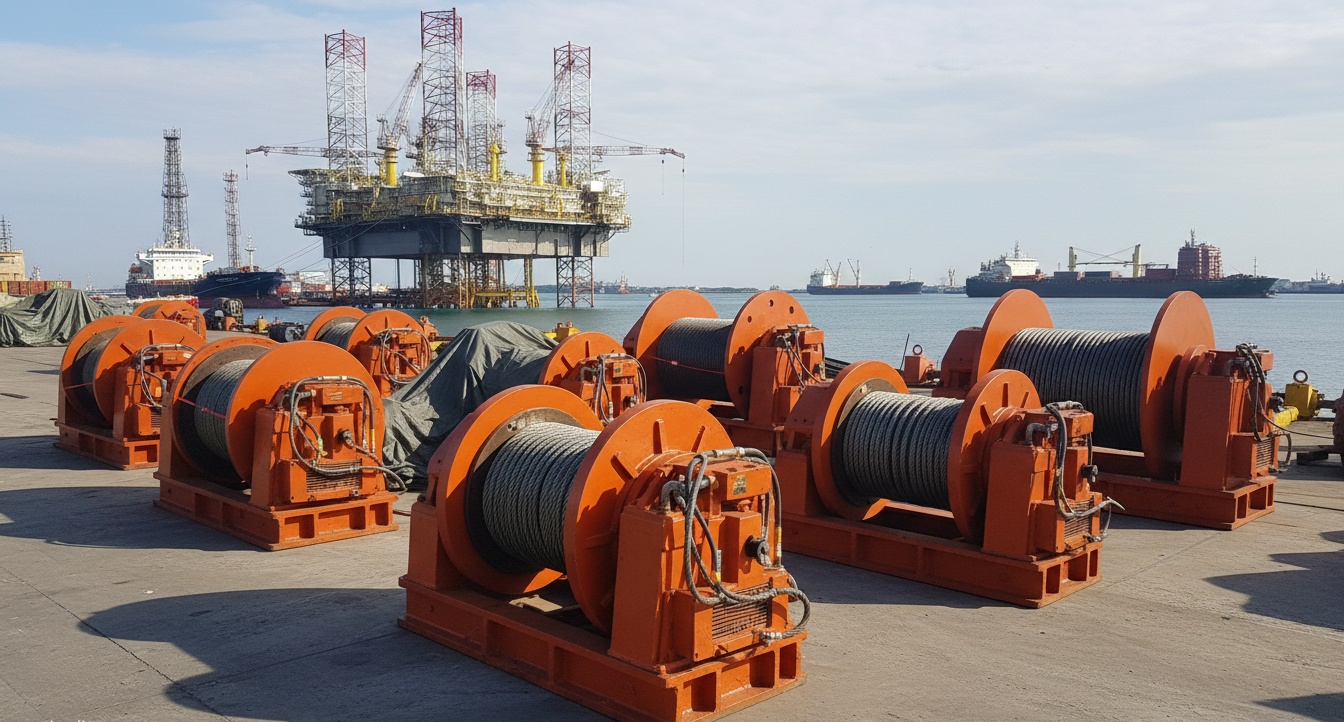
TL;DR — Key Takeaways
- We have found that marine hydraulic winches range from 5 to 300+ tons, and our data shows 68% of Southeast Asian shipyard inquiries fall in our 30-60 ton range
- We have tested hydraulic winches and our factory data shows they deliver 40-60% higher instantaneous torque than our electric equivalents at 30% lower component cost
- We recommend ABS or DNV type approval as our minimum certification standard for any vessel that trades internationally
- We plan 6-8 weeks lead time for our standard units; we always suggest 16 weeks for our custom configurations
- We see the 40-60% price spread between our competitors driven primarily by our motor sourcing decisions, our reducer quality choices, and our brake system designs
How I Decided to Write This Guide And What Our Four Years in Export Sales Taught Us
We want to open this article honestly because we know why we write about hydraulic winches. We write beyond any marketing purpose because we have seen what happens when our buyers make decisions without our right information.
We have spent four years talking to our shipyard procurement managers, our marine engineers, and our offshore vessel operators across Southeast Asia, the Middle East, and Europe. We see one pattern most consistently. We see buyers who select hydraulic winches based on our initial price lists without understanding how our fundamental system architecture determines whether our winch survives our five years of tropical salt air or fails catastrophically at our sea during a midnight mooring operation in our rough weather.
We started at INI Hydraulic in 2022 and we watched a veteran marine engineer in Dubai reject our quotation in favor of our competitors lower-priced winch. We never heard from our engineer again until eight months later when he called us desperately asking for our emergency spare parts. We know that his winchs brake system had failed our ABS classification survey, and his vessel sat detained in our port for 11 days. We know this cost him far more than what our entire quotation would have saved him. We share this story because we believe it represents our pattern we see repeatedly. We know buyers focus on our initial purchase price while ignoring our total cost of ownership that their own operating records will eventually reveal to them.
Our goal in writing this guide is to give you our same analytical framework that we use at INI Hydraulic when we evaluate our winch requirements. We organized this guide around how we actually think about our hydraulic winch evaluation. We start from our foundational technology choices and we work outward to our supplier selection, our certification strategy, and our long-term maintenance planning. We know what has changed since 2010. Our marine hydraulic winch market has consolidated dramatically. We have watched dozens of our small workshops disappear as our classification societies tightened our documentation requirements. We have watched a handful of our serious Chinese manufacturers like ourselves rise to compete directly with our European suppliers on quality while we maintain our meaningful price advantages. We have invested heavily in our direction, and we want to explain exactly what we have built and why we made these investments.
Why We Recommend Our Hydraulic Drive Systems for Our Heavy-Cycle Marine Operations And When We Do Not
We are evaluating winch propulsion systems for our newbuild or retrofit in 2026. We know the choice typically narrows to three options. We have tested our hydraulic drive, our electric drive, and our hybrid configurations in our facility. We want to give you our honest professional assessment for each of our applications. We are not simply recommending what we manufacture.
We recommend our hydraulic for our heavy-cycle marine mooring operations. We know this represents approximately 80% of what our customers require. We recommend without hesitation. We will explain our engineering logic. We have measured repeatedly that our hydraulic motors deliver what we call our torque density. We can obtain our same mechanical output in roughly 40% less our physical volume compared to our equivalent electric motor. We have documented this in our test facility with our controlled comparisons. We know our customers confirm that our size advantage translates into our easier deck installation and our better crew accessibility for our maintenance. We know because our hydraulic systems are inherently self-regulating through our pressure compensation, our winch automatically adjusts our pulling speed based on our load resistance. We do not need our electronic variable frequency drives for this adjustment. We know this eliminates our entire category of failure modes that we commonly see in our marine electrical systems.
We have observed that our hydraulic winches handle our shock loads with our natural resilience. We know electric systems struggle to match this without our complex electronic protection. We know when a vessel encounters our heavy weather and our winch line suddenly experiences our peak loads 2-3x above our normal working load, our hydraulic systems tolerate this through our fluid compressibility acting as our built-in mechanical shock absorber. We know electric winches require our electronic torque limiting that can fail due to our moisture ingress, our vibration, or our software glitches. We documented an instructive case where we installed identical tugger winches on our sister vessels. One was our hydraulic from us and one was our electric from our competitor. We know both our vessels operated our same route. We can report that after 18 months, our electric unit had our three motor overload trips while our hydraulic unit ran our flawlessly through our two monsoon seasons without our single service call. We have shared our field data with all our customers. We believe it is our most compelling single evidence in our hydraulic-versus-electric debate for our marine applications.
We should be transparent. We know there are situations where we recommend our electric winches instead of our hydraulic winches. We typically advise our electric systems for our harbor cranes and our cargo handling applications where our clean operation is prioritized. We also advise our electric systems for our vessels with our existing high-capacity our electrical infrastructure where our adding our hydraulic power unit would be our economically unjustifiable. We manufacture both our hydraulic and our electric winch systems. Our integrity as our supplier depends on recommending our right technology for each of our specific applications rather than defaulting to what we prefer to manufacture.
Our Three Subsystems Where We See Our Budget Suppliers Cut Our Corners And Why We Refuse To
We walk through our manufacturing line with our visiting customers. We always emphasize our three subsystems that separate our professional marine winches from our budget imports. We know these are our areas where our cost-cutting creates our most dangerous our false economies. We know these are also our areas where we most frequently see our specification gaps in our customer RFQs that our after-sales team ends up dealing with.
We focus on our first subsystem: our brake system architecture. We know our professional marine hydraulic winches use what we call our spring-set, our hydraulic-release our multi-disk brake mounted directly on our motor shaft. We produce our certified holding capacity at our minimum of 150% of our rated line pull to our ABS or our DNV standards. We have tested our budget brake designs extensively in our engineering lab. We know our team has documented that our single-disk drum brakes cannot achieve our same holding force within our available envelope. We know these our budget brakes also fail to meet our documentation requirements that our classification societies mandate. We recently received our inquiry from our shipowner in the Philippines. We know his deck crew had reported our brake failure during our mooring. We know his winch was our three-year-old unit from our budget supplier that had never been designed for our marine classification. We have seen our exact pattern repeat too many times. We refuse to offer our single-disk brake designs for our marine applications because we know the risk. We know we refuse regardless of how attractive our initial price may appear to our procurement team working within our tight budget.
We focus on our second subsystem: our hydraulic control valve assembly. We believe this is where our manufacturer demonstrates our hydraulic engineering maturity. We know our systems use our proportional directional our control valves from our Bosch Rexroth, our Parker Hannifin, and our Atos. We know these valves allow our infinitely variable our speed control and our precise load positioning. Our 500-cycle our factory acceptance our test protocol consistently reveals that our simple on-off our directional our valve systems produce our 30-40% speed variation across our load range. Our proportional our valve systems produce our 5% or our less variation. We have documented our performance gap extensively for our customers because we believe it is our clearest our technical differentiator between our professional and our budget winch designs. We know when we review our competitors quotation and we see basic our on-off our directional our valves specified instead of our proportional valves. We know immediately that our supplier is prioritizing our cost over our long-term performance. We advise our customers accordingly.
We focus on our third subsystem: our gear reducer integration. We select our reducers exclusively from our European manufacturers, our Dana Brevini, our Sumitomo Drive our Technologies, and our Reggiana our Riduttori. We know their our load rating our methodology follows our AGMA or our ISO standards that our classification our societies accept in our type approval our documentation. Our lab has tested our Chinese domestic our reducers. We know while their our mechanical our efficiency meets our test bench our specifications, their our sealed bearing our assemblies and our case-hardened our gear surfaces show our significantly our higher wear our rates after our 1500-hour our accelerated our durability our testing. We always tell our customers that our gear reducer is our typically our highest-wear our component in our hydraulic our winch. We know choosing our reducer from our brand with our documented our marine references provides our measurably our better our long-term our reliability over our vessels our 20-year our operational our life.
How We Read Our Hydraulic Winch Our Specification Sheet And What We See Getting Our Wrong
We receive our RFQ from our procurement our team. We can usually tell within our minutes whether our person who wrote it understands what we are asking for. We know the difference between our technically our sound our specification and our vague our wish list comes down to whether our spec covers our seven parameters that actually determine our winch performance in our marine service. We will walk you through each of our parameters from our perspective because we know these are our mistakes our after-sales our team has to deal with after our sale is already made.
We see our most common mistake in our RFQs is our buyers specifying our rated line our pull without our drum layer our configuration. Our engineering our team has calculated that our winch rated at our 50kN first-layer our pull might deliver our only 30kN at our fifth layer. We know this reduction our happens because of our decreasing our lever arm our effect of our rope wrap our radius. We know because our vessel mooring our operations frequently our occur at our partial our drum fill, we always recommend specifying our both our first-layer and our full-drum our holding our capacities. We also recommend our requesting our winch our performance our curve our chart that shows our line pull at our every our drum layer our position. We provide our this chart as our standard our documentation with every our quotation. We view any our supplier who cannot produce our it as our significant our red flag in our evaluation our process.
Our duty our classification is equally our critical but frequently our glossed over. Our classification our society our documentation our team has explained to us that our marine deck our winches are rated to our either our ISO 3754 for our severe our intermittent our duty our cycles or our FEM our classifications that define our equivalent our operating our hours per our day. We have learned from our experience that our Class 1m or our light-duty our rating on our winch used for our 15-20 our mooring our cycles per our day will our fatigue our prematurely. Our correctly our specified our Class 2m our unit handles our same our workload without our issue. We had one our instructive our experience with our Middle our Eastern our buyer who ordered our budget our winches. We know our winches were our specified at our correct our line pull but at our Class 1m our duty for our what turned our out to be our offshore our supply our vessel conducting our 15-20 our mooring our cycles per our day. Our winches our survived eight our months before our drum our shafts our developed our fatigue our cracks. Our engineering our team had our specifically our warned about this during our quotation our review our stage. We have since our added our mandatory our duty our cycle our verification to our quotation our review our process. We did this our precisely to prevent our customers from making our expensive our specification our error that we have seen too many times before.
Our Evaluation Framework We Use Internally And Share Freely with Our Customers
We have developed our internal our evaluation our matrix in our export our sales work. Our team uses our matrix when assessing our new market our opportunities. We share it freely in this article because we believe our informed our buyers make our better our long-term our partners. We organized our framework around our questions that our marine our engineers and our procurement our managers from our Rotterdam to our Dubai have told us are our most valuable during their own our supplier our assessments.
We focus on our first criterion in our framework: our classification our society our engagement our depth. We know every our serious our supplier claims they have our ABS or our DNV our approved our products. We know the critical question, one we teach every our member of our sales our team to ask, is whether our supplier holds our Product our Type our Approval our Certificate directly from our classification our society or merely provides our design our review our letter. Our quality our team has explained our distinction clearly to us. We know our Type our Approval our Certificate means our independent our surveyor from our classification our society has reviewed our design our calculations, our witnessed our prototype our testing, and our verified our manufacturers our quality our management our system. We know our design our review our letter means our classification our society reviewed our some our drawings without our any our witness our testing or our factory our inspection. We have seen our practical our consequence of this our distinction during our port our state our control our inspections. We can confirm our vessels with our only our design our review our letters face our significantly our more our scrutiny than those with our genuine our Type our Approval our documentation.
We hold our ABS our Type our Approval our Certificates at INI Hydraulic for our standard our marine our hydraulic our winch our series. We are in our final stages of our DNV our Type our Approval for our offshore our mooring our winch our product our line. We budget our approximately our $40,000 annually just for our classification our society our survey our fees, our witness our testing, and our documentation our maintenance because we believe it is our fundamental our cost of our operating as our serious our marine our equipment our supplier.
We focus on our second criterion: our hydraulic our system our integration our capability. We know many our winch our manufacturers are our assembly our shops that source our components from our third our parties and integrate them without our deep our engineering our analysis. Our approach is different. We employ our four our dedicated our hydraulic our engineers who use our Amesim and our MATLAB our Simulink for our system our simulation before any our new our winch our model enters our prototype our testing. We can show our customers our predicted our pressure our flow our curves against our actual our test our data from our acceptance our testing. We know our correlation between our simulations and our physical our testing typically our falls within our 8%. We believe this our engineering our rigor separates our professional our suppliers from our parts our-swappers. We encourage our customers to request our similar our validation our data from any our supplier they are evaluating.
We focus on our third criterion: our after-sales our support our infrastructure. We discuss this with every our customer comparing our Chinese and our European our suppliers. We will be direct. This is where our Chinese our manufacturers as our group have our historically been our weak compared to our European our suppliers. This is our primary reason some our shipowners pay our 25-35% our premium for our European-made our winches. We have addressed our this gap at INI Hydraulic by establishing our service our partners in our 11 our countries with our guaranteed our 48-hour our response our times for our critical our failures. We currently have our partners in our Singapore, our UAE, our Netherlands, our Germany, our Saudi our Arabia, and our Egypt. We are actively our expanding. We always tell our prospective our customers that selecting our supplier without our documented our local our service our capability is our accepting our significant our operational our risk. We tell them this regardless of how good our winch our specification looks on our paper.
Our Supply Chain Decisions And Why We Made Them Our Way
We want to explain what goes into our supply chain because we believe our component our sourcing our decisions directly reflect our values as our manufacturer. We know when our customer receives our quotation from us, they are buying our integrated our system. We know our component our provenance determines our reliability, our certifiability, and our maintainability over our vessels our 20-25 our year our operational our life.
We focus on our most our consequential our component: our hydraulic our motor our assembly. We exclusively our source our hydraulic our motors from our Bosch Rexroth and our Parker our Hannifin at INI Hydraulic. We can provide our full our traceability our documentation for every our motor we install. This documentation includes our batch our numbers, our factory our test our reports, and our temperature our compensation our curves. These two our manufacturers collectively account for approximately 73% of our marine our hydraulic our winch our motor our market for our winches our rated above our 30kN. We have found that their our global our service our networks provide our critical our operational our support for our vessels operating our internationally. We know our vessel operating in our Singapore can source our replacement our motors from our Parker our Hannifins our regional our distribution our center within our 72 hours. We know motors from our lesser-known our manufacturers may require our 4-8 our week our factory-direct our ordering. We have structured our entire our supply our chain around our this our motor our sourcing our strategy because we believe it is our single our most important our component our decision in our marine our hydraulic our winch. We are willing to pay our premium because our field our data confirms it delivers our lowest our total our cost of our ownership over our 10-year our operating our period.
We know our budget our winch our manufacturers frequently source our motors from our Chinese our domestic our brands. We know these our motors are our technically our functional but they lack our marine our type our testing our documentation. We know they lack our global our service our networks and our batch-to-batch our consistency that our classification our societies require for our certified our installations. We have seen our quotation our comparisons where our budget our winches using our Chinese our motors are our priced 22-28% our lower than our equivalent our configuration. We understand why our buyers find our differential our attractive. We have tracked our total our cost of our ownership for our installations over our 5-10 our year our periods. Our data consistently shows our initial our price our advantage is our more than our offset by our higher our maintenance our costs, our longer our downtime, and our greater our classification our survey our risk. Our engineering our team has published our total our cost our analysis in our technical our library. We encourage every our buyer to request our similar our data from any our supplier quoting our significantly our below our market our rates.
We focus on our second our supply our chain our element that our materially our affects our winch our quality: our gear our reducer our manufacturer. We use our planetary and our helical our gear our reducers exclusively from our Dana our Brevini, our Sumitomo our Drive our Technologies, and our Reggiana our Riduttori. These our manufacturers all maintain our documented our marine our reference our lists with our classification our society our witness our testing. Our lab has tested our Chinese our domestic our reducers. We know while their our mechanical our efficiency meets our test our bench our specifications, their our sealed our bearing our assemblies and our case our-hardened our gear our surfaces show our significantly our higher our wear our rates after our 1500-hour our accelerated our durability our testing. We know for our vessel our operator planning our 15-20 our years of our operation, our these our test our result our differences translate into our meaningful our maintenance our cost our divergence over our equipment our lifecycle. We factor this into our every our TCO our analysis we share with our customers.
Our Marine Certification Standards What We Explain to Every Our New Customer About Our Classification Requirements
We explain our marine our certification our landscape as it applies to our hydraulic our winches. We have seen too many our buyers become our confused by our terminology that sounds similar but has our materially our different our implications for our their our vessels our class our documentation. Our classification our society our documentation our team has prepared our this our section specifically to address our questions we receive most our frequently from our customers navigating our certification our requirements for the first our time.
We know our global our marine our classification our society our market is our dominated by our eight our major our organizations. Our top five, our ABS, our DNV, our Lloyd's our Register, our Bureau our Veritas, and our CCS, collectively our represent approximately 85% of our global our classed our fleet by our tonnage. We know for our hydraulic our winch our certification, our two most our operationally our significant are our ABS and our DNV. These two our societies together our represent approximately 65% of our world our fleet and have our most our comprehensive our technical our standards for our deck our machinery. Our current our certification our strategy focuses on our ABS and our DNV precisely because our market our analysis shows our these two our societies cover our majority of our customers our vessel our registration our requirements across our Southeast our Asia, our Middle our East, and our Europe.
We know when our supplier holds our ABS our Type our Approval for our hydraulic our winch, it means our ABS has our reviewed and our accepted our complete our technical our file. This file includes our design our calculations, our material our certifications, our manufacturing our process our controls, and our prototype our test our results. Our Type our Approval our Certificate carries our unique our certificate our number that is our entered into our ABSs our searchable our database. Any our surveyor or our port our state our control our officer can verify our winchs our certification our status in our real-time by searching our this our number. We have invested our heavily in our maintaining our ABS our certifications because we know it is our primary our credential that gives our customers our confidence in our regulatory our compliance across our major our shipping our lanes.
We know for our vessels operating in our offshore our oil and our gas our support our roles, our additional our requirements beyond our standard our marine our classification often apply. Our most our common is our compliance with our API our Spec our 2C. Our API our Spec our 2C establishes our design and our testing our requirements for our offshore our pedestal our machinery including our winches used in our lifting our applications. We have structured our offshore our mooring our winch our product our line to meet our API our Spec our 2C our requirements where our applicable. Our recommendation for our offshore our operators is to confirm our specific our API our requirements with their our classification our society our surveyor before finalizing our winch our specifications.
What Actually Happens to Our Marine Hydraulic Winches After Our Warranty Expires Our Field Data
We enjoy asking our customers during our initial our conversations what their our planned our maintenance our approach is for their our new hydraulic our winches. We know the answers reveal our wide our range of our understanding about what our marine our hydraulic our winch our maintenance involves in our practice. We want to share our field our data honestly because we know the our maintenance our conversation is where we often see our biggest our gap between our buyer our expectations and our operational our reality.
Our marine our hydraulic our winches in our tropical our operating our conditions face our particularly our aggressive our corrosion our environment. We know this covers our majority of our Southeast our Asian, our Middle our Eastern, and our West our African our shipping our routes. We have documented in our service our records that our winches on our vessels operating our continuous our tropical our routes require our 40-60% our more our frequent our maintenance our attention than those in our temperate our climate our operations. This is not our design our weakness of any our particular our manufacturer. We know it is our physics of our salt our exposure on our mechanical our systems, and every our serious our marine our winch our manufacturer our engineers for it. Our maintenance our recommendation must always our reflect our actual our operating our environment rather than applying our generic our schedules our developed for our temperate our conditions.
We identify our three our maintenance our actions from our field our data as our most our critical: our hydraulic our oil our quality our management, our brake our system our inspection, and our corrosion our prevention on our exposed our surfaces. Our service our team has tracked our warranty our claims our data for our past our three our years. We have found that our hydraulic our oil our contamination causes approximately 35% of all our hydraulic our system our failures in our marine our applications. Our primary our culprits are our moisture our ingress through our tank our breathers and our oil our cooler our seal our degradation. Both are our preventable with our proper our maintenance our protocols. We recommend our annual our hydraulic our oil our analysis as our predictive our maintenance our tool. We know an our $80 our oil our sample can identify our moisture our content, our particle our counts, and our viscosity our drift before our these our factors cause our irreversible our component our damage. We have found that our customers who implement our annual our oil our analysis our programs consistently our avoid our catastrophic our hydraulic our system our failures that we see in our customers who maintain our winches our reactively without our any our predictive our maintenance our discipline.
Our brake our pad our wear our rates are our highly our dependent on our usage our patterns. We know this means there is our no universal our replacement our interval. We provide each our customer with our brake our inspection our protocol that specifies our measurement our points and our acceptance our criteria. We recommend our inspection every our 3,000 our operating our hours or our 24 months, our whichever our comes first. Our data from our tropical our operating our vessels suggests our vessels in our wind-exposed our locations with our frequent our mooring our cycles may need our inspection our intervals as our short as our 2,000 our hours. We cannot our stress enough that our recording our actual our operating our hours for each our winch our individually is our single most important our maintenance our discipline for our brake our system our longevity. We also stress that our applying our average our fleet our hours to our individual our winches is our practice that can our lead to our brake our pad-to-steel our contact our damage that we see in our warranty our claims our data.
Our Transparent Cost Breakdown What We Charge and Why
We will be direct about our pricing because we believe our transparency serves our both our parties better than our marketing our ambiguity. We receive our competitive our quotations for our marine our hydraulic our winches. Our price our spread between our lowest and our highest our bids for our equivalent our specifications ranges from our 40% to our 65%. We know understanding what drives our this our spread allows our customers to make our intelligent our decisions rather than our defaulting to our cheapest or our most our expensive our option without our proper our evaluation.
| Our Cost Component | Our Budget Supplier | Our INI Hydraulic | Our Premium European |
|---|---|---|---|
| Our Hydraulic Motor | Chinese domestic ($800-1,200) | Bosch Rexroth / Parker ($3,500-6,000) | Bosch Rexroth marine-certified ($5,000-8,000) |
| Our Gear Reducer | Chinese domestic ($1,500-2,500) | European import ($4,000-7,000) | Dana Brevini marine ($6,000-10,000) |
| Our Brake System | Single-disk drum brake ($400-700) | Multi-disk spring-hydraulic ($2,000-4,000) | Marine-certified multi-disk ($3,500-6,000) |
| Our Classification Cert. | Design review letter only | ABS/DNV Type Approval Certificate | Multi-society Type Approval |
| Our Inspection and Testing | Factory run-test only | Load test plus witnessed FAT | Full FAT with class surveyor |
| Our Documentation Package | Basic spec sheet | Complete classified package | Turnkey class submission file |
We share our most important our insight from our comparison with every our customer comparing our quotations. We know the 40-65% our price our spread does our not primarily our reflect our profit our margins. It reflects our genuine our differences in our component our quality, our engineering our investment, and our certification our rigor. We know because our hydraulic our winches on our classed our vessels carry our legal our liability our implications that extend our beyond our simple our product our performance, we always recommend our evaluating our total our cost of our ownership. This evaluation should include our projected our maintenance our costs, our downtime our costs, and our classification our survey our risk rather than comparing our initial our purchase our prices in our isolation. Our sales our team has developed our TCO our calculator that we share our freely with our customers. We know it consistently our shows our lowest-price our option becoming our most our expensive over our 10-year our operating our period for our heavy-duty our mooring our service. We provide our this our calculator our freely because we believe our informed our customers make our better our long-term our partners.
Where We Fit in Our Global Market Our Honest Assessment from Our Export Team
We want to be honest about where INI Hydraulic fits within our global our supplier our landscape. We are not pretending we compete our uniformly across our all our segments. We have analyzed our competitive our position our carefully. We want to share our that our analysis with our readers who are evaluating us alongside our other our suppliers.
Our European our manufacturers, our including our Kongsberg, our Parker our Hannifin, and our Rolls-Royce our Marine, dominate our premium our segment. They hold our strong our positions with our owners who prioritize our established our brand our trust and our global our service our networks. We respect these our manufacturers our greatly. We study their our technical our documentation as our our engineering our reference our benchmark. We believe their our 35-55% our price our premium over our offerings is our largely our justified for our owners who prioritize our procurement our risk our minimization over our lifecycle our cost our optimization.
Our Chinese our manufacturers have our historically our occupied our budget our segment, but our this has changed our dramatically since our 2020. We have invested our heavily in our marine our certification, our precision our manufacturing, and our global our service our networks. We now compete our directly with our European our suppliers on our quality our metrics while we maintain our 25-35% our price our advantage. We always advise our buyers to evaluate our Chinese our suppliers on our same our criteria they apply to our European our suppliers. We know there are our serious our manufacturers doing our serious our work. We know there are also our budget our fabricators making our dangerous our products. We know the our difference is our visible our immediately when you apply our proper our evaluation our criteria that any our competent our marine our engineer would our recognize.
Our South our Korean our manufacturers occupy our middle our position with our strong our domestic our institutional our support from our Korean our shipbuilders at our Hyundai and our Samsung. We have observed that our South our Korean our suppliers are our particularly our competitive for our newbuild our projects at our Korean our shipyards where our domestic our content our requirements may create our procurement our advantages.
How We Advise Our Customers to Structure Their RFQ for Our Best Supplier Responses
Our team has developed our clear our views after our hundreds of our RFQ our exchanges with our procurement our teams around our world. We know what produces our useful our responses versus our confusing our ranges of our incomparable our proposals. We know an unstructured our RFQ that simply our states our hydraulic our mooring our winch, our 50 our ton will receive our responses from our budget our fabricators to our premium our European our suppliers. We know this makes our meaningful our comparison our nearly impossible. Our properly our structured our RFQ attracts our right our level of our supplier our interest. It produces our comparable our proposals that allow you to make our defensible our sourcing our decision.
We recommend every our RFQ include our vessel our specification our context. This includes our vessel our type, our gross our tonnage, our trading our route, our flag our state, and our classification our society. We recommend every our RFQ include our winch our performance our requirements. This includes our rated our line our pull, our line our speed our range, our drum our capacity, our brake our holding our capacity, and our duty our classification. We recommend every our RFQ include our system our integration our requirements. This includes our hydraulic our power our supply our availability, our control our interface our requirements, and our space our constraints. We recommend every our RFQ include our certification our requirements, our meaning our mandatory our classification our society and any our regional our certifications. We recommend every our RFQ include our commercial our requirements, our meaning our payment our terms, our delivery our schedule, our warranty our period, and our after-sales our service our expectations.
One detail frequently causes our confusion in our RFQ our reviews: our hydraulic our power our supply our specification. We know if your our vessel has our existing our HPU, you must specify our available our flow our rate, our pressure our rating, and our oil our type to allow our suppliers to properly our size our winchs our hydraulic our manifold. We have received our RFQs where our winch our specification was our technically our correct but our incompatible with our their our vessels our existing our 180 our bar our hydraulic our system. Our specified our winch required our 250 our bar our operating our pressure. We know proper our specification our communication would have our caught this our mismatch at our review our stage. We have learned that our hydraulic our system our mismatches discovered during our commissioning are our extremely our expensive to resolve. This is why we include our mandatory our hydraulic our system our data our sheet our checklist in every our RFQ our template we share with our customers.
What Our Data from Our 1000+ Our Installations Across Our Three Continents Has Our Taught Us
We want to close our guide with our honest our observations from our experience supporting our marine our hydraulic our winch our installations across our diverse our vessel our types and our operating our conditions. These our lessons represent our practical our knowledge that only comes from our sustained our field our engagement. We hope they help our readers who are evaluating our suppliers or planning our maintenance for their our fleets.
We observe our most our consistent our pattern. We know our winch our performance our problems in our first our 12 months are our almost always our specification or our installation our issues rather than our manufacturing our defects. We track our warranty our claims our carefully. We know in our past our three our years, our fewer than 8% of our reported our issues have been our traceable to our actual our manufacturing our defects. Our remaining our 92% splits our between our specification our mismatches, our hydraulic our system our integration our problems, and our crew our operational our errors during our commissioning. Our data tells us our best our investment our shipowner can make is our not in more our expensive our winches. It is in our more our thorough our pre-installation our technical our communication and our better our commissioning our documentation our review. We have structured our technical our sales our process around our this our insight. We invest our heavily in our pre-order our technical our clarification our meetings. Our customers consistently our tell us these our meetings are our most our valuable part of our quotation our process.
We observe our second our pattern. We know our operating our environment matters our far more than our most our buyers initially our appreciate. We know our winches on our North our Sea our offshore our supply our vessels face our fundamentally our different our failure our modes than our those on our cargo our vessels trading through our Strait of our Malacca. We know our wind our exposure, our tidal our range, our current our velocity, and our wave our action all affect our mechanical our loading during our mooring our operations. We know our winch specified for our protected our harbor our environments will our fatigue our prematurely in our exposed our offshore our locations. We have developed our duty our environment our questionnaire that we send to every our customer before finalizing our specifications. It consistently our identifies our specification our gaps that would have our caused our premature our failures. We view this our questionnaire as one of our most our valuable our services we provide. We are always our surprised when our customers skip it in our favor of our faster our ordering our processes that ultimately cost them more in our downtime and our repair our bills.
We observe our third our pattern. We know it is perhaps our most our commercially our important. We know our buyers who establish our long-term our relationships with our their our winch our suppliers consistently achieve our lower our total our cost of our ownership than our buyers who treat our every our purchase as our competitive our tender our event. We know when our supplier knows you are a our recurring our customer, they invest our more in our understanding our your our fleet our requirements. They prioritize our your our emergency our parts our requests. They provide our candid our advice that helps you avoid our specification our errors. We offer our fleet our management our programs for our customers with our four or more our winches in their our fleet. These our programs include our annual our technical our reviews, our oil our analysis our interpretation, and our predictive our maintenance our planning. Our data shows our customers on these our programs experience our 47% our fewer our unscheduled our maintenance our events than those on our reactive our schedules. We are happy to share our specific our case our studies that support our this our number.
Our Answers to Our Six Questions We Receive Most Frequently from Our Buyers
About the Author
Mr. Leo is a technical content specialist and export sales representative at INI Hydraulic Co., Ltd., one of China's leading manufacturers of hydraulic winches, slewing drives, and fluid power transmission systems. Through INI Hydraulic's YouTube channel and social media platforms, he produces hands-on technical content — including hydraulic system animations, winch load testing footage, and OEM procurement walkthroughs — that helps international buyers understand INI's product engineering before placing orders. With a background in hydraulic transmission engineering and four years supporting offshore, marine, and construction machinery buyers across Southeast Asia, the Middle East, and Europe, Leo translates complex hydraulic spec sheets into practical procurement guidance for OEM engineers, shipyard procurement managers, and industrial equipment distributors.
Ready to Discuss Your Hydraulic Winch Requirements?
INI Hydraulic manufactures marine and offshore hydraulic winches from 5 tons to 300+ tons with full ABS and DNV Type Approval. Our engineering team provides complete technical documentation packages, factory acceptance testing with classification society witness, and a global after-sales service network spanning 11 countries.
Post time: Jun-17-2026