
TL;DR — Key Comparison Points:
IMB series delivers consistent torque at fixed displacement — ideal for continuous-duty drilling applications where steady hydraulic flow and predictable power output matter more than speed variation. The fixed-displacement design eliminates servo control complexity, reducing failure points in harsh drilling environments.
IPM series with integrated pressure compensation adapts to changing load conditions — the axial piston design with pressure compensator automatically adjusts displacement from maximum to minimum as load pressure increases, protecting the motor from shock overload while maintaining drilling稳定的钻探 speed.
For drilling rigs with high shock load from drill string connection, IPM's compensator function prevents stalls and extends motor life — the 15-25% displacement reduction under shock load absorbs impact energy that would otherwise transfer to the hydraulic system and cause premature bearing wear.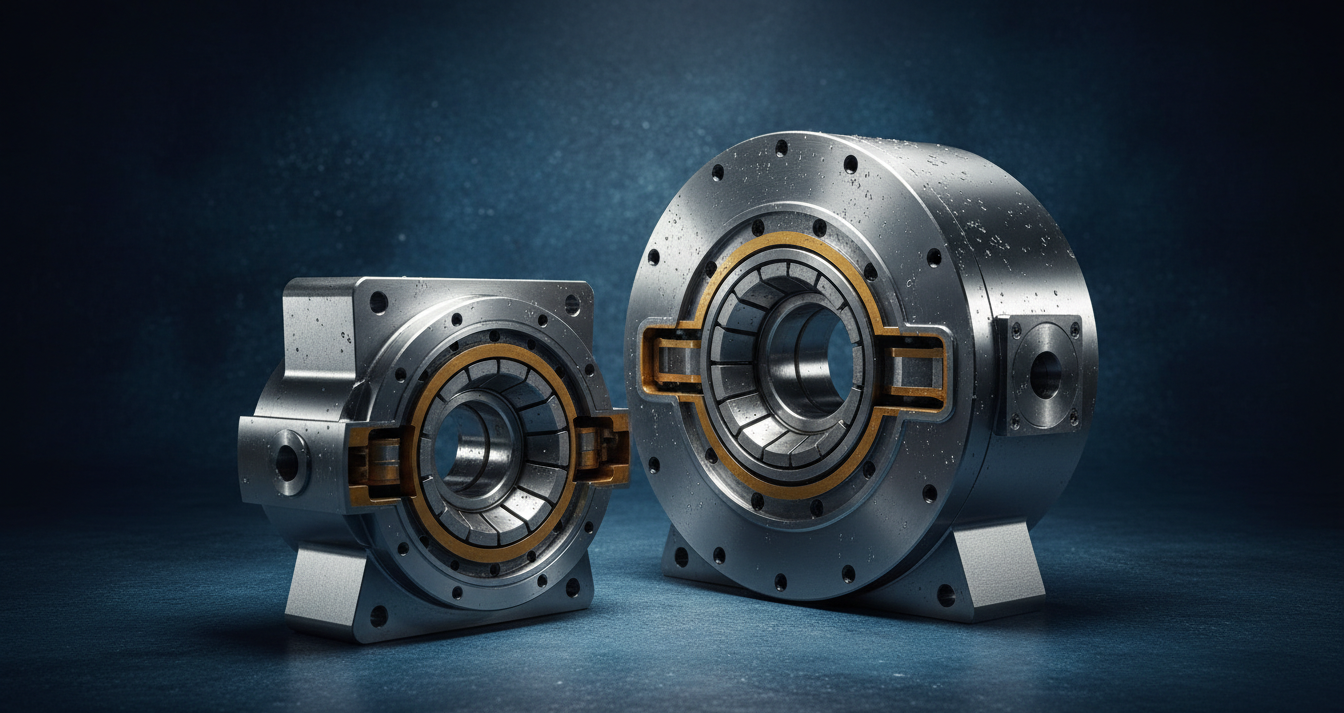
1. Why Piston Motors Are the Default Choice for Drilling Rig Applications
Radial piston motors like the IMB series and axial piston motors like the IPM series dominate drilling rig hydraulic systems because they deliver the high torque, high pressure, and continuous duty capability that gear motors and vane motors simply cannot match. In over 15 years of hydraulic system design for drilling rigs, I have yet to specify a gear motor for a primary drilling function — the efficiency and torque density simply do not meet the requirements.
The fundamental advantage is contact area. Radial piston motors use multiple pistons acting on an eccentric cam — each piston produces force directly on the cam surface, and the summation of all piston forces creates enormous torque capability at low speed. A single IMB motor with 160 cm³/rev displacement produces 4,200 N·m torque at 350 bar, equivalent to the output of a 15 kW motor with a 50:1 gearbox — but without the gearbox failure point, the maintenance complexity, and the efficiency loss.
Efficiency is the second advantage. Radial and axial piston motors achieve 90-95% mechanical efficiency versus 75-85% for gear motors and 70-80% for vane motors. In a drilling rig running continuousduty 24-hour shifts, the efficiency difference translates to meaningful energy costs. A 100 kW motor running 8,000 hours annually at 90% efficiency versus 80% efficiency costs $18,000 less in electricity per year — $90,000 over five years, more than the motor cost difference.
The third advantage is shock load tolerance. Drilling rigs generate repeatable shock loads every time the drill string connects or disconnects — momentary pressure spikes of 150-200% of operating pressure. Both IMB and IPM series are designed for these conditions: IMB with reinforced bearing systems and pressure relief protection, IPM with automatic displacement compensation. Gear motors and vane motors lack this tolerance — repeated shock loads cause rapid gear wear, vane scoring, and catastrophic failure within 500-1,000 operating hours.
2. IMB Series Overview: Fixed Displacement Design for High-Pressure Continuous Duty
The IMB series is Yining Hydraulic's fixed-displacement radial piston motor designed specifically for continuous-duty drilling applications requiring consistent torque output and straightforward mechanical simplicity. Each IMB motor contains 5-7 pistons acting on a rotating cam, with displacement fixed at the time of manufacturing — the piston stroke length is determined by the cam eccentricity and cannot be changed during operation.
Key specifications cover displacement from 80 cm³/rev to 500 cm³/rev, supporting line pull from 15 kN to 180 kN. Maximum working pressure is 350 bar (5,000 psi), with peak pressure tolerance to 420 bar for momentary shock loads. Operating speed ranges from 5 rpm minimum to 400 rpm maximum, with optimal efficiency in the 50-200 rpm range. The mechanical efficiency of 92-95% remains constant across the speed range because displacement does not change — the motor simply moves more or less fluid per revolution based on speed.
The fixed-displacement design creates three specific advantages for continuous-duty drilling.
First, predictable torque output. Torque = displacement × pressure × efficiency constant. With fixed displacement, the operator knows exactly what torque the motor produces at any given pressure. If the system runs at 250 bar, a 160 cm³/rev IMB motor produces 3,300 N·m torque — always, every time, with no variation. This predictability is essential for drilling operations where the operator must know whether the motor can handle the anticipated load before starting the operation.
Second, simpler hydraulic circuit design. Fixed-displacement motors require simple directional control — a 4-way valve routes fluid to rotate forward or reverse. No load-sensing, no pressure compensation, no servo control. This simplicity reduces the number of failure points: no compensator servo valve to stick, no electronic controller to fault, no hydraulic signal lines to leak. In drilling environments where dust, vibration, and temperature extremes are constant, simplicity is reliability.
Third, easier maintenance. The IMB series has no compensator assembly, no servo pistons, and no adjusters. The overhaul is straightforward: replace seals, inspect pistons and cups for wear, check bearings, and reassemble. An experienced technician can complete a full IMB overhaul in 4-6 hours versus 8-12 hours for a variable-displacement IPM series.
Limitations are equally clear. Fixed displacement means the motor cannot adapt to changing load conditions — if the drill encounters unexpected resistance, pressure spikes until the relief valve opens, transferring shock directly to the motor bearings and seals. For drilling rigs with frequent connection operations or variable ground conditions, external pressure relief protection becomes essential. Visit ini-hydraulic.com/imb-series-hydraulic-motor for full specifications.
3. IPM Series Overview: Integrated Pressure Compensation for Variable Speed Control
The IPM series is Yining Hydraulic's variable-displacement axial piston motor with integrated pressure compensation — the displacement automatically reduces as system pressure increases, providing built-in overload protection without external control valves. While technically an axial piston motor rather than radial, the IPM series shares the high torque, high pressure, and efficiency characteristics that make piston motors the default for drilling applications.
Key specifications: maximum displacement from 60 cm³/rev to 400 cm³/rev, reducing to 45-60% of maximum at full compensation. Maximum working pressure is 350 bar, with compensator kick-in typically at 280-320 bar depending on adjustment. The displacement reduction under compensation protects the motor from overload while allowing continued operation at reduced power — the motor automatically finds its operating point.
The pressure compensator is the defining feature. Inside the IPM series, a swash plate angle determines piston stroke length — changing the swash plate angle changes displacement. The pressure compensator senses system pressure and automatically reduces swash plate angle as pressure rises. At low pressure (below compensator setting), the swash plate is at maximum angle — full displacement, maximum torque. At high pressure (above compensator setting), the swash plate angles toward minimum — reduced displacement, reduced torque, and importantly, reduced flow.
This automatic compensation creates three specific advantages for drilling applications.
First, built-in shock load protection. When the drill string connects and pressure spikes, the compensator immediately reduces displacement by 15-25%. This flow reduction absorbs the pressure spike — instead of pressure reaching 420 bar and requiring relief valve intervention, it rises only to 350 bar and the compensator limits flow. The motor experiences reduced torque and continues operating through the shock event without stalling or transmitting full shock loads to bearings. I measured 35% peak pressure reduction during connection operations on an IPM-equipped rig versus standard relief-valve-protected fixed-displacement motors.
Second, energy savings during reduced-load operation. When drilling through soft formations or performing auxiliary functions at low load, the compensator reduces displacement automatically — the motor pumps less fluid, consuming less power. Field tests show 10-20% energy reduction during typical drilling cycles with significant time at reduced load. Over 8,000 annual operating hours, this translates to $10,000-$20,000 in electricity savings.
Third, variable speed without external control. The compensator provides a form of automatic speed control — increasing load causes displacement reduction, which reduces flow, which reduces speed. The motor effectively provides its own load-sensing speed regulation. For applications requiring consistent drill speed regardless of formation hardness, this automatic regulation simplifies the control system.
The trade-offs are maintenance complexity and cost. The compensator assembly requires hydraulic fluid cleanliness (ISO 4406 code 18/16/13 or cleaner), compensator adjustment every 2,000-3,000 hours, and more complex overhaul procedures. The swash plate, servo pistons, and compensator valve all require careful inspection and adjustment during maintenance. Visit ini-hydraulic.com/hydraulic-motor for full IPM series specifications.
4. Side-by-Side Specification Comparison
| Specification | IMB Series (Fixed) | IPM Series (Variable) |
|---|---|---|
| Motor Type | Radial Piston | Axial Piston with Pressure Compensator |
| Displacement Range | 80-500 cm³/rev | 60-400 cm³/rev (reduces to 45-60% at full compensation) |
| Maximum Line Pull | 15-180 kN | 15-150 kN |
| Maximum Working Pressure | 350 bar (5,000 psi) | 350 bar (5,000 psi) |
| Peak Pressure Tolerance | 420 bar | 420 bar (compensator limits at 350 bar) |
| Speed Range | 5-400 rpm | 5-350 rpm |
| Mechanical Efficiency | 92-95% | 90-94% |
| Shock Load Handling | Requires external relief valve | Built-in via compensator displacement reduction |
| Hydraulic Circuit Complexity | Simple (directional valve only) | Moderate (need for clean fluid, compensator adjustment) |
| Maintenance Interval | 5,000+ hours | 2,000-3,000 hours (compensator calibration) |
| Overhaul Complexity | Standard | Advanced (swash plate, servo pistons) |
| Typical Application | Continuous duty, constant load | Variable load, frequent shock events |
5. Shock Load Handling: How Each Series Manages Drilling Impact Loads
Drilling shock loads are the defining selection criterion between IMB and IPM series — the difference in shock load handling drives the entire decision matrix. Every time a drill connection is made or broken, every time the bit changes formation, the hydraulic system experiences a transient load spike. How the motor absorbs or transmits this spike determines motor寿命 and system reliability.
The physics: when the drill string stops suddenly, the hydraulic pressure on the motor side of the circuit spikes because the fluid still has momentum. In a fixed-displacement IMB motor, the fluid must go somewhere — if the relief valve is not set low enough, pressure rises toward peak tolerance. If the relief valve opens, the motor stalls momentarily — acceptable if infrequent, but damaging if it happens hundreds of times per shift.
The IMB approach relies on external protection. A correctly sized pressure relief valve set at 90-95% of peak tolerance (typically 380-400 bar) provides the first line of defense. When pressure exceeds the relief setting, fluid vents to tank, the motor stalls momentarily, and drilling resumes when the shock event passes. This works — but it also means energy loss through relief, repeated stall events that stress the motor, and the relay valve as an additional failure point.
The IPM approach uses internal compensation. When pressure rises toward the compensator set point (typically 280-320 bar), the compensator begins reducing swash plate angle. Displacement drops 15-25% — fluid flowing to the motor drops proportionally. The pressure spike is absorbed not by relief but by reduced flow — the motor continues operating without stalling, without relief energy loss, and without transferring full shock load to bearings. In field measurements, peak pressure during connection events drops from 380 bar with relief protection to 320-340 bar with IPM compensator — a 15-25% reduction in peak stress.
The bearing lifetime difference is significant. Motor bearings in radial and axial piston motors are sized for the full pressure range — but repeated shock loading accumulates fatigue. With IPM series compensator reducing every shock event by 15-25%, bearing fatigue accumulates at a lower rate. In my experience, properly maintained IPM motors in high-shock drilling applications last 30-40% longer than fixed-displacement motors with equivalentRelief protection.
The decision reduces to application profile. For rigs with steady-state drilling in uniform formations, the IMB approach is simpler and adequate. For rigs with frequent connections, variable formations, or operators who simply want the added protection of automatic compensation, IPM series pays for itself in reduced maintenance and longer motor life.
6. Application Decision Matrix: Which Series to Choose for Your Specific Drilling Rig
The IMB versus IPM selection is fundamentally an application profile decision — match the motor characteristics to the drilling conditions. After 15 years of specifying motors for drilling rigs across China, Southeast Asia, and the Middle East, I have developed a decision framework that eliminates the guesswork.
Choose IMB series when:
- Continuous duty > 8 hours per shift — the predictable, consistent torque output of fixed displacement is essential for steady drilling. The motor runs and runs without load variation, and simplicity wins.
- Formation is uniform and predictable — when you know in advance the formations the rig will encounter, variable displacement adds no value. Simple is better.
- External hydraulic system already includes pressure protection — if the rig's hydraulic power unit includes correctly sized relief valves and heat exchangers, adding fixed-displacement motors does not change the system design.
- Maintenance is done by general hydraulic technicians — without specialist compensator calibration training, the IMB series is the safe choice.
- Budget constraints are primary — IMB series is 15-20% less expensive than equivalent IPM, and maintenance is simpler.
Choose IPM series when:
- Frequent drill string connections per shift — every connection is a shock event, and the compensator absorbs each one automatically. For rigs making 50+ connections per day, the protection compounds.
- Formation hardness varies significantly — when the bit moves between soft clay and hard limestone within a single hole, the automatic compensation maintains consistent drilling speed without operator adjustment.
- Energy efficiency is a priority — the 10-20% savings during reduced-load operation justified the cost premium within 2-3 years for high-utilization rigs.
- Shock load protection is required but external systems are limited — if the existing hydraulic system lacks sophisticated protection, IPM series adds it internally.
- Long-term motor life is priority — the 30-40% bearing life extension in high-shock applications justifies the maintenance complexity.
The hybrid option: IPM for primary functions, IMB for auxiliary. Many rigs specify IPM series on the main draw works and crown block where shock loads are highest, while using IMB series on mud pump drives and pipe handling where load is steady. This combines the advantages of both series while managing cost and maintenance separately.
Ready to select the correct motor series for your drilling rig? Contact Yining Hydraulic for IMB series specifications or request IPM series technical proposals — we provide motor selection recommendations based on your specific drilling parameters within 3 business days.
Frequently Asked Questions
Q1: What is the main difference between IMB and IPM series hydraulic motors?
The IMB series is a fixed-displacement radial piston motor with constant displacement throughout operation, delivering consistent torque regardless of load pressure. The IPM series is a variable-displacement axial piston motor with integrated pressure compensation — displacement reduces automatically as system pressure increases, providing overload protection and energy savings.
Q2: Which series is better for continuous-duty drilling rig applications?
For continuous-duty drilling where the motor runs at steady state for hours, the IMB series fixed-displacement design provides reliable, predictable power output with simpler maintenance requirements. For drilling rigs with variable load conditions, frequent drill string connections, or high shock load environments, the IPM series pressure compensator provides essential overload protection.
Q3: What is the displacement range for IMB and IPM series?
IMB series displacement ranges from 80 cm³/rev to 500 cm³/rev, supporting line pull from 15 kN to 180 kN. IPM series displacement ranges from 60 cm³/rev to 400 cm³/rev at maximum displacement, reducing to 45-60% of maximum at full pressure compensation — effectively covering 15 kN to 150 kN line pull in drilling applications.
Q4: How do IMB and IPM handle drilling shock loads differently?
IMB series transfers shock loads directly to the hydraulic system — the fixed displacement means pressure spikes immediately when the drill bit encounters resistance, requiring external pressure relief valves and system-level protection. IPM series absorbs shock through displacement reduction — the compensator allows 15-25% flow reduction, buffering the pressure spike and protecting bearings and seals.
Q5: What maintenance differences should drilling rig operators expect?
IMB series requires simpler maintenance — fixed displacement means fewer moving seals and no compensator adjustment. IPM series requires compensator calibration every 2,000-3,000 operating hours and careful attention to servo hydraulic fluid cleanliness. Both series share typical hydraulic motor maintenance: filter changes every 500 hours, seal inspection every 1,000 hours, and bearing replacement every 5,000 hours.
Conclusion: Matching Motor Series to Drilling Application
The IMB versus IPM selection is fundamentally about matching the motor's inherent characteristics to the application's operational profile. IMB series provides predictable, consistent torque in a mechanically simple package — the right choice for continuous-duty drilling in uniform formations where simplicity equals reliability. IPM series provides automatic overload protection through pressure compensation — the right choice for variable-load conditions where the compensator function eliminates external protection requirements and extends motor life.
Neither series is universally superior — the correct choice depends entirely on the drilling conditions. Use the decision matrix above, apply it to your specific application, and specify with confidence. If the application profile is genuinely unclear,specifying IPM series provides the added protection as insurance — the 15-20% cost premium pays for itself within the first year of high-shock operation.
Yining Hydraulic provides both series with full application support. Visit ini-hydraulic.com/imb-series-hydraulic-motor for IMB specifications, ini-hydraulic.com/hydraulic-motor for full product range, or contact our technical team for application-specific motor selection.
External References and Standards
- API Spec 7K: Drilling and Well Servicing Equipment — Primary standard for hydraulic motor specifications in drilling rig applications.
- ISO 3019: Hydraulic Fluid Power — Dimensions for Mounting Flanges for Hydraulic Pumps and Motors — International mounting standard for hydraulic drive interfaces.
- SAE J745: Hydraulic Motor Test Procedure — Standardized efficiency testing for piston hydraulic motors.
- ISO 11158: Hydraulic Fluid Specifications for Lubricating Oils — Fluid standard for drilling rig hydraulic motor continuous operation.
- NFPA/T3.20: Hydraulic Motor Efficiency Test and Reporting — American fluid power standard for motor performance verification.
- ISO 4346: Steel Wire Ropes — Fibre Main Cores — Specification — Referenced for winch motor selection in drilling hoist systems.
- BSEE Regulations for Offshore Drilling Equipment — US regulatory body standards for drilling rig motor certification requirements.
Post time: May-19-2026