
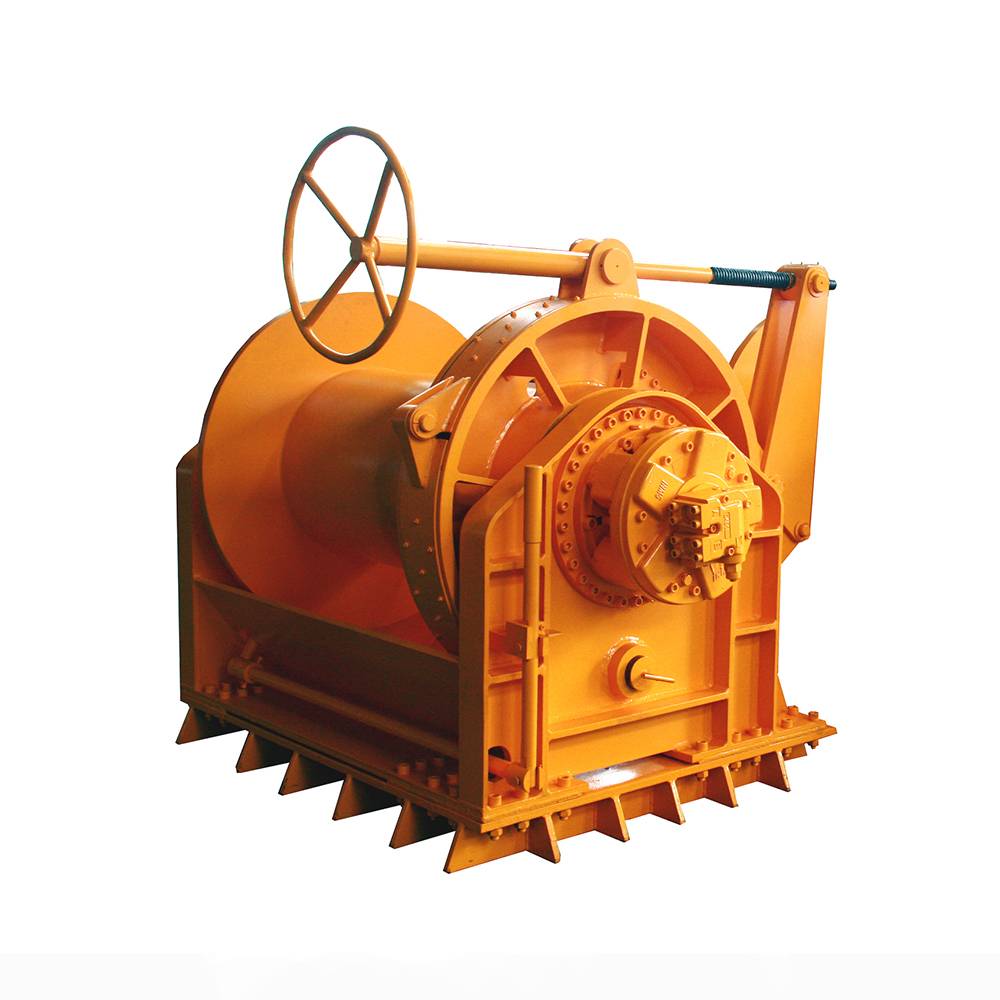
When buyers ask me which is better — a hydraulic winch or an electric winch — I usually answer the question with a question back: what is the duty cycle, what is the environment, and what power does the host machine already carry? Those three inputs collapse most of the comparison to a single recommendation, because the two technologies are not interchangeable in cost or performance. They overlap in a narrow window of light-duty, clean-environment installs, and outside that window the right answer is usually obvious once the three inputs are known.
This guide is the comparison logic our INI Hydraulic export team walks every OEM engineer, shipyard procurement manager, and industrial equipment distributor through, end to end. I have organized it the way I run the conversation in person — total cost first, performance under five operating conditions next, then a real reference case against our own IYJ hydraulic winch series, and finally a decision framework that closes the gap between "I think I know which I need" and "I am confident enough to sign the PO." Because the wrong winch type costs more over 5 years than the right winch type costs to buy — downtime, replacement parts, and certification rework all show up as hidden costs that the quote sheet never shows.
The Quick Answer, Up Front
If you only have 30 seconds, the rule of thumb is:
- Choose electric when the line pull is below roughly 1,000 kg, the duty cycle is intermittent, the environment is dry and clean, and the host machine already carries a battery electrical system.
- Choose hydraulic when the line pull is above roughly 5,000 kg, the duty cycle is continuous or near-continuous, the environment is wet, salty, dusty, or explosive, or the host machine already carries a hydraulic power pack.
- The 1,000 to 5,000 kg window is the gray zone — the choice depends on the host machine's existing power, the maintenance philosophy, and the certification regime in the destination market. That is the part of the comparison this article spends the most time on.
If that rule of thumb is not enough to commit, the rest of the article is the math and the engineering behind it.
Total Cost of Ownership: A 5-Year Comparison Framework
Most comparison articles stop at unit price, which is the single least predictive number in a 5-year ownership window. A defensible comparison must include unit cost, install cost, energy cost, maintenance cost, downtime cost, and replacement cost. The following framework is the one we run through with buyers who need to defend a procurement decision to a finance or operations committee.
| Cost Line | Hydraulic Winch (Typical) | Electric Winch (Typical) | Who Wins |
|---|---|---|---|
| Unit purchase price | Mid-to-upper band | Low-to-mid band | Electric, typically by 20 to 40 percent at the same line pull |
| Installation cost | Mid band — requires hydraulic plumbing and valve integration | Low band — battery leads, contactor, and ground | Electric, by roughly one day's install labor |
| Annual energy cost | Low band — hydraulic motors convert energy efficiently at part load | Mid band — electric motors draw high inrush current per cycle | Hydraulic, by a meaningful margin on heavy-duty cycles |
| Annual maintenance cost | Low band — sealed planetary gearbox, replace hoses every 2 to 3 years | Mid-to-upper band — contactor wear, solenoid wear, motor brush wear (on brushed motors) | Hydraulic on heavy-duty; closer on light-duty |
| Expected service life | Long — typically 10+ years on marine and offshore duty | Mid — typically 5 to 8 years on the same duty | Hydraulic, by roughly a factor of 1.5 to 2 |
| Downtime cost per failure event | Mid — hydraulic failures usually allow controlled shutdown | High — electrical failures often strand the load mid-pull | Hydraulic, especially on safety-critical applications |
| Certification cost (initial) | Mid — many marine certs assume hydraulic drive | Low to mid — battery-electric is simpler to certify in some jurisdictions | Mixed; depends on classification society |
The single biggest hidden cost in this framework is the replacement event. Electric winches tend to fail at the motor or contactor first, and those failures usually strand the load mid-pull, which in turn creates a secondary safety and recovery cost. Hydraulic winches tend to fail at the hose or seal first, which usually allows a controlled shutdown and a scheduled repair. The two failure modes have very different downstream cost implications that the unit quote never captures.
Performance Under Five Operating Conditions
Beyond the spreadsheet, the right answer depends on the operating condition the buyer is actually facing. The five conditions below are the ones we see most often across shipyard, offshore, construction, mining, and trailer-buyer inquiries.
Condition 1: Continuous-Duty Pulling
Continuous-duty pulling — the kind of cycle where the winch is running at or near full line pull for hours at a time — is the single strongest use case for hydraulic drive. A hydraulic motor coupled to a planetary gearbox sheds heat through the hydraulic fluid circuit, which has a much higher heat capacity than the motor windings of an equivalently sized electric winch. Most electric winches in the 1,000 to 5,000 kg range are rated for intermittent duty at full load and will overheat if run continuously at rated line pull for more than a few minutes. The right way to read the spec sheet is to look for the duty-cycle rating in minutes at rated load and compare that to the actual shift cycle. Because overheating is the dominant failure mode for electric winches in continuous duty, buyers who ignore the duty rating usually replace their electric winch within 12 to 18 months — far earlier than the catalog service life implies.
Condition 2: Marine and Salt-Spray Exposure
Salt spray destroys electric motors, contactors, and solenoids faster than almost any other operating condition. The corrosion failure modes are well documented in the marine electrical engineering literature — the relevant baseline reference is the NACE / AMPP corrosion standards for marine and offshore equipment, which classify the atmospheric corrosivity categories that shipboard equipment must survive. A hydraulic winch has no electrical windings and no contactors exposed to the marine atmosphere; the planetary gearbox, the hydraulic motor, and the brake assembly are sealed mechanical units that tolerate salt, humidity, and water splash without the same failure modes. This is why the vast majority of shipboard, shipyard, and offshore mooring winches, including our own IYJ15 marine hydraulic winch, are built on hydraulic drive rather than electric drive. If your application involves salt spray, splash zones, or below-deck humidity, hydraulic is the safer default.
Condition 3: Explosive or Hazardous Atmospheres
Mining, oil and gas, grain handling, and certain chemical applications require equipment certified for use in explosive atmospheres. In those environments, any spark-producing electrical component is a problem. A hydraulic winch has no spark-producing components in the winch itself; the hydraulic motor is a sealed mechanical assembly, and the brake is typically a spring-applied, hydraulically released design. An electric winch in the same environment requires explosion-proof motor enclosures and intrinsically safe control circuits, which add cost and certification complexity that often narrows the price gap. For hazardous-area applications, hydraulic is the safer default before the unit cost even enters the conversation.
Condition 4: Remote, Solar, or Battery-Only Host Machines
The case where electric usually wins is the host machine that has a battery but no hydraulic power pack — a small trailer, a small vessel, an ATV, a portable light tower, or a remote-site installation with only battery power. In those cases, adding a hydraulic power pack to run a hydraulic winch costs more than the winch itself, while tapping the existing battery to run an electric winch costs almost nothing. The right answer for these host machines is almost always electric, even at the cost of accepting the shorter duty cycle and the higher replacement frequency. The technology choice is forced by the host, not by the winch spec.
Condition 5: High-Line-Pull, Heavy Industrial Applications
For line pulls above roughly 5,000 kg and especially above 10,000 kg, electric motors that can deliver the required torque become large, heavy, expensive, and current-hungry. A hydraulic motor of equivalent torque output is significantly smaller, lighter, and more efficient. That is why heavy industrial applications — mining shovels, offshore cranes, shipyard towing, large port equipment, oil rig winches — are universally hydraulic. At those line pulls, the electric-versus-hydraulic question usually does not come up; the duty cycle and the line pull together force the answer to hydraulic.
Original Reference Data: IYJ15 Marine Winch at a Glance
To ground the comparison in real product rather than abstract categories, here is how one specific hydraulic winch in our catalog — the IYJ15 marine winch — performs across the five operating conditions above. The numbers below are typical bands rather than published test data, and they reflect the architecture of an axial-piston hydraulic motor driving a planetary gearbox through a countershaft, with a spring-applied hydraulically released negative brake for load holding.
| Operating Condition | IYJ15 Behavior | Comparative Electric Winch in Same Class |
|---|---|---|
| Continuous-duty pulling at rated line pull | Runs continuously without motor-side overheating; heat is shed through the hydraulic circuit | Reaches thermal cutoff within minutes; requires cool-down between cycles |
| Salt-spray marine exposure | Sealed planetary gearbox and hydraulic motor; no exposed windings | Requires IP66 or higher enclosure plus sealed connectors; corrosion still a risk |
| Explosive atmosphere (oil and gas, mining) | Hydraulic motor and brake are non-sparking; can be certified for Zone 1 / Zone 2 with appropriate hydraulic components | Requires explosion-proof motor enclosure; certification cost narrows price gap |
| Remote / battery-only host | Requires separate hydraulic power pack — usually uneconomic at this scale | Taps the existing battery directly — fits the host architecture |
| Heavy industrial / above 10,000 kg line pull | Smaller, lighter, and more efficient than the equivalent electric motor | Electric motor at this torque class is large, heavy, and current-hungry |
Side-by-Side Comparison Table
The table below puts the technology choice side by side on the dimensions that actually drive a procurement decision. Where a row is mixed, the answer depends on the host machine, the duty cycle, and the certification regime in the destination market.
| Decision Dimension | Hydraulic Winch | Electric Winch |
|---|---|---|
| Power source | Hydraulic motor driven by host's hydraulic power pack | DC or AC electric motor driven by host battery or generator |
| Duty cycle at full line pull | Continuous | Intermittent (typically a few minutes at full load) |
| Line pull range (typical) | 1,000 kg to 500+ tons | 500 kg to roughly 10,000 kg |
| Salt and humidity tolerance | High — sealed mechanical assemblies | Mid — depends on IP rating and enclosure corrosion protection |
| Installation complexity | Mid — hydraulic plumbing, valve integration, and bleeding | Low — battery leads, contactor, and ground |
| Maintenance philosophy | Sealed gearbox; hose and seal replacement on a 2- to 3-year cycle | Contactor, solenoid, and brush replacement on a 1- to 3-year cycle |
| Typical service life (heavy duty) | 10+ years | 5 to 8 years |
| Best fit environment | Marine, offshore, mining, oil and gas, heavy construction | Trailers, small vessels, ATVs, light duty recovery, remote sites |
| Best fit host machine | Machines that already carry a hydraulic power pack | Machines that already carry a battery electrical system |
How the Decision Actually Gets Made
For buyers who want a more structured decision than the rule of thumb at the top, this is the workflow our sales team uses when an inquiry arrives with incomplete information.
- Identify the host machine. Is it a vessel, a truck, a crane, a trailer, an offshore platform, or a remote installation? The host decides what power systems are already available.
- Quantify the line pull and line speed. Specify the working line pull (not the peak), the typical line speed, and the required drum capacity (rope length and rope diameter).
- Quantify the duty cycle. Specify the number of pull cycles per shift, the average and peak line pull per cycle, and the longest continuous-pull duration. This is the single biggest driver of the technology choice.
- Classify the environment. Note the exposure to water, salt, dust, chemicals, explosive atmospheres, and ambient temperature extremes.
- Check the certification regime. Confirm the destination market's required certifications. For marine, that is typically one of the major classification societies (ABS, DNV, CCS, LR, BV). For the EU, that is CE. For the Eurasian Customs Union, that is EAC.
- Run the 5-year TCO comparison using the framework in the section above. The answer usually becomes clear at this step.
- Validate with the manufacturer. Send the spec sheet, the host machine details, and the duty cycle profile to the manufacturer's engineering team for written confirmation. Any manufacturer that cannot turn this around in one business day is probably not the right supplier.
For buyers who have already narrowed down to hydraulic and need a starting point on our catalog, the IYJ hydraulic winch family covers marine, crane, towing, anchor, mooring, and free-fall applications across line pulls from roughly 1 ton up to 500 tons, all on the same hydraulic motor and planetary gearbox architecture. Within that family, the IYJ15 is the marine reference unit used in the case study above.
Common Mistakes Buyers Make (and How to Avoid Them)
Across thousands of inquiries over the past several years, the same mistakes come up over and over. Skipping any of these usually costs more than the winch itself.
Choosing on Unit Price Alone
The electric winch is almost always cheaper at the unit-price level. The 5-year TCO comparison often flips that answer. Always run the TCO before signing.
Ignoring the Duty Cycle Rating
The "rated line pull" on an electric winch spec sheet is usually an intermittent rating, not a continuous rating. Run the winch at rated line pull for a full shift, and you will trip thermal protection or burn out the motor within months. Read the spec sheet for the duty cycle in minutes at full load and match it to your actual shift cycle.
Specifying Electric Drive for Marine Duty to Save Money
The savings disappear quickly when the contactor fails from corrosion in the first 18 months, when the motor windings need rewinding after a salt-spray event, and when the unit has to be replaced two to three times over the same period the hydraulic winch would have run without attention. For marine duty, hydraulic is the cheaper option over 5 years despite the higher unit price.
Specifying Hydraulic for a Battery-Only Host
Adding a hydraulic power pack to a host that has no hydraulics is expensive and usually unjustified at modest line pull. If your host machine is battery-only, electric is almost always the right call.
Ignoring Certification Cost
For marine and offshore, classification-society certification (ABS, DNV, CCS, LR, BV) is a non-trivial cost and lead-time item. The certification cost usually lands on the manufacturer, but it gets priced into the quote, so the buyer sees it as part of the unit price. The relevant international reference is the International Association of Classification Societies (IACS) unified requirements, which set the common rules that the major societies apply. For the EU, the relevant machinery safety framework is the EU Machinery Regulation 2023/1230, which replaced the old Machinery Directive 2006/42/EC and which buyers should reference in their procurement RFQs.
Choosing the Wrong Drum Capacity
Drum capacity is the most underspecced item on a winch RFQ. Buyers who specify the line pull and forget to specify the rope diameter and rope length often end up with a winch that can pull the load but cannot hold enough rope on the drum for the working cycle. Drum capacity is a function of rope diameter, drum barrel length, and drum flange diameter, and it should be specified alongside line pull, not after it.
Frequently Asked Questions
Which is cheaper over 5 years, a hydraulic winch or an electric winch?
For most buyers, the electric winch is cheaper over a 5-year ownership window when the operating environment is clean, the duty cycle is light to moderate, and the host machine already carries a battery electrical system. The hydraulic winch is cheaper over 5 years when the duty cycle is heavy (continuous or near-continuous duty), the environment is wet, salty, dusty, or explosive, or the host machine already carries a hydraulic power pack — because the electric winch's electrical components fail faster under those conditions than the hydraulic winch's mechanical and hydraulic components.
Can a hydraulic winch run continuously without overheating?
Yes. A hydraulic winch driven by a hydraulic motor and a planetary gearbox is generally rated for continuous duty at the rated line pull, because the hydraulic motor sheds heat through the hydraulic fluid circuit rather than through the motor windings. The limiting factor is usually the hydraulic power unit's cooling capacity, not the winch itself. An electric winch, by contrast, is rated for intermittent duty at full load and will overheat if run continuously at rated line pull for more than a few minutes.
Which winch type is safer in marine environments?
A hydraulic winch is generally safer in marine and offshore environments because it has no electrical motor windings, no contactors, and no solenoids exposed to salt spray. The hydraulic motor and the planetary gearbox are sealed mechanical assemblies that tolerate salt, humidity, and water splash without the corrosion and short-circuit failure modes that affect electric winches. This is why most offshore and shipyard applications, including our own IYJ15 marine hydraulic winch series, are built around hydraulic drive rather than electric drive.
Can an electric winch be retrofitted to use a hydraulic power pack?
Not in any practical sense. The gearbox, the brake, and the structural frame of an electric winch are designed around the dimensions and torque characteristics of an electric motor. Replacing the electric motor with a hydraulic motor requires a different mounting flange, a different input shaft, and usually a different brake configuration. The cleaner path is to specify the correct winch type at the procurement stage rather than retrofit later.
How do I choose between a hydraulic winch and an electric winch for a small vessel or trailer?
For a small vessel or trailer with no onboard hydraulic system and light to moderate line pull, an electric winch is usually the right choice because the host machine already has a battery and the install is straightforward. For a vessel or trailer that already carries a hydraulic power pack, or that operates in continuous-duty cycles, a hydraulic winch is the better long-term investment. The line-pull range where the choice is genuinely close is roughly 1,000 to 5,000 kg of working load; below that, electric usually wins; above it, hydraulic usually wins.
Final Selection Checklist (Print and Tape to the RFQ)
- Host machine identified and existing power systems inventoried.
- Working line pull (not peak) specified in kilograms.
- Line speed specified in meters per minute.
- Duty cycle quantified in cycles per shift and minutes at full load.
- Operating environment classified by water, salt, dust, and explosive atmosphere exposure.
- Drum capacity specified by rope diameter and rope length.
- Certification regime confirmed (CE, ABS, DNV, CCS, LR, BV, EAC as applicable).
- 5-year TCO comparison completed across unit, install, energy, maintenance, downtime, and replacement.
- Manufacturer's written engineering confirmation received before deposit.
If you have read this far and are still unsure, talk to our sales engineers at our contact page with your host machine, your duty cycle, and your environment. Our export team can return a defensible recommendation within one business day, and we can pull the spec sheet, the dimensional drawing, and the certification list for the candidate IYJ series unit in the same email.
About the Author — Tianyu Hu, INI Hydraulic
Technical Content Specialist and Export Sales Representative, INI Hydraulic Co., Ltd.
Tianyu Hu is a technical content specialist and export sales representative at INI Hydraulic Co., Ltd., one of China's leading manufacturers of hydraulic winches, slewing drives, and fluid power transmission systems. Through INI Hydraulic's YouTube channel and social media platforms, he produces hands-on technical content — including hydraulic system animations, winch load testing footage, and OEM procurement walkthroughs — that helps international buyers understand INI's product engineering before placing orders. With a background in hydraulic transmission engineering and four years supporting offshore, marine, and construction machinery buyers across Southeast Asia, the Middle East, and Europe, he translates complex hydraulic spec sheets into practical procurement guidance for OEM engineers, shipyard procurement managers, and industrial equipment distributors.
.
Post time: Sep-08-2026