
Choosing between a hydraulic winch and an electric winch is one of the most consequential decisions in heavy equipment procurement. The wrong choice can lead to equipment failure, costly downtime, and serious safety risks. This guide cuts through the noise and gives you a direct, data-backed comparison so you can make the right call for your application.
What Is a Hydraulic Winch?
A hydraulic winch is powered by a hydraulic motor connected to the host machine's hydraulic system — typically the same system driving the vehicle's steering, boom, or track motors. Hydraulic fluid under pressure drives the motor, which turns the drum and pulls the cable.
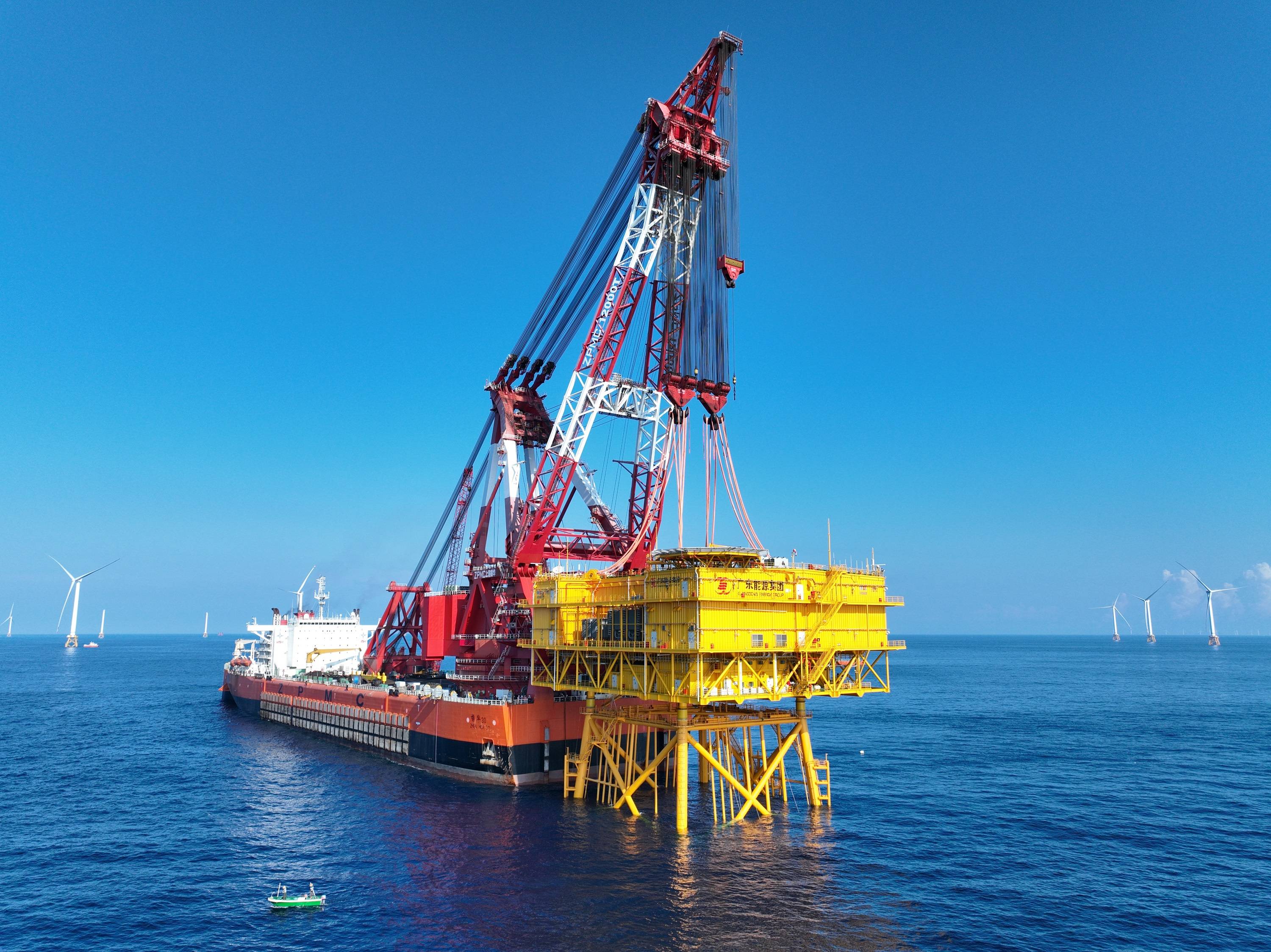
INI Hydraulic winch applied in offshore construction engineering vessel — continuous heavy-duty operation in marine environments.
Hydraulic winches are the standard choice for cranes, excavators, drilling rigs, offshore vessels, and any equipment that already runs a hydraulic power unit (HPU). They are designed for continuous-duty, high-load applications where overheating and duty cycle limitations are unacceptable.
What Is an Electric Winch?
An electric winch is powered by an electric motor, drawing current from the vehicle's battery or an external power source (12V, 24V, or 380V AC). Electric winches are simpler to install, require no hydraulic infrastructure, and are widely used in lighter-duty recovery, marine, and industrial lifting applications.
Head-to-Head Comparison
The table below summarizes the critical performance and operational differences between the two winch types.
| Feature | Hydraulic Winch | Electric Winch |
| Power Source | Hydraulic system / HPU | Battery or AC power supply |
| Line Pull Capacity | Up to 500+ tons | Typically under 20 tons |
| Duty Cycle | Continuous (100%) | Intermittent (10–30%) |
| Overheating Risk | Very low | High under sustained load |
| Operating Speed Control | Infinitely variable | Fixed or stepped |
| Performance in Cold/Wet | Excellent | Reduced battery performance |
| Installation Complexity | Requires hydraulic plumbing | Simple electrical connection |
| Upfront Cost | Higher | Lower |
| Maintenance | Hydraulic seals, fluid changes | Motor brushes, electrical system |
| Best For | Marine, crane, drilling, mining | Recovery, light industrial, dock |
5 Key Scenarios Where Hydraulic Wins
1. Continuous Heavy-Duty Operations
Electric winches have a duty cycle — they must rest between pulls to prevent motor burnout. A hydraulic winch has no such limitation. In applications like anchor handling, mooring, or deep-well drilling, the winch may need to operate for hours without interruption. Only hydraulics can deliver this.
2. Extreme Load Requirements
When your line pull requirement exceeds 20 tons, electric winches simply cannot compete. INI Hydraulic manufactures winches rated from 1.5 tons to over 500 tons, serving applications from forestry dozers to 1,200-ton dynamic compaction machines. The physics of hydraulic pressure allow for torque outputs that no electric motor of comparable size can match.
3. Hazardous or Explosive Environments
In oil and gas platforms, underground mines, and chemical plants, electric sparks are a serious hazard. Hydraulic winches produce no electrical sparks and are the only safe choice in ATEX/explosion-proof environments. This is non-negotiable in offshore drilling and petrochemical applications.
4. Marine and Offshore Applications
Saltwater corrodes electrical systems rapidly. Hydraulic components — with proper sealing and stainless hardware — are far more resistant to the marine environment. INI Hydraulic's offshore winches are deployed on construction vessels, scientific research ships, and anchor-handling tugs worldwide.
5. Integrated Machine Systems
If your crane, excavator, or drilling rig already has a hydraulic power unit, adding a hydraulic winch is a natural extension of the existing system. There is no need for additional power infrastructure, and the winch draws power only when operating — improving overall system efficiency.
When Electric Winches Make Sense
Electric winches are not without merit. For applications involving:
•Light recovery (under 5 tons) on 4x4 vehicles or small boats
•Workshop overhead lifting where a fixed AC power supply is available
•Dock and port mooring for smaller vessels
•Infrequent, short-duration pulls where duty cycle is not a concern
…an electric winch offers a lower upfront cost and simpler installation. The key is honest assessment of your actual duty cycle and load requirements.
Hydraulic Winch Selection Parameters: What to Specify
When sourcing a hydraulic winch, provide your supplier with the following parameters to ensure a correct match:
|
Parameter
|
Description
|
Example
|
|
Rated Line Pull
|
Maximum load at first layer (kg or ton)
|
15,000 kg
|
|
Line Speed
|
Required cable speed (m/min)
|
10–20 m/min
|
|
Drum Capacity
|
Wire rope diameter × total length
|
Ø26mm × 200m
|
|
Hydraulic Flow
|
Available flow from HPU (L/min)
|
80–120 L/min
|
|
Hydraulic Pressure
|
System operating pressure (bar)
|
200–280 bar
|
|
Brake Type
|
Spring-applied, hydraulic release
|
Automatic fail-safe
|
|
Environment
|
Marine, mining, onshore, ATEX
|
Offshore / saltwater
|
|
Mounting
|
Flange, base plate, custom
|
Skid-mounted
|
Pro Tip: Always specify the working load (not the maximum rated load) and include a safety factor of at least 1.5×. For offshore and lifting applications, regulatory bodies such as DNV, ABS, or Lloyd's may require certified load testing documentation.
INI Hydraulic Winch Product Range
INI Hydraulic, headquartered in Ningbo, China, designs and manufactures hydraulic winches for the most demanding global applications. Key product lines include:
•Standard Hydraulic Winches — 1.5T to 50T, for cranes, vehicles, and construction
•Offshore / Marine Winches — Anchor winches, mooring winches, towing winches
•Forestry & Mining Winches — High-torque, low-speed for dozer and underground applications
•Custom Multi-Drum Winches — For fishing vessels, dredgers, and specialized platforms
All products are available with optional features including free-fall control, automatic cable layering, remote control systems, and corrosion-resistant coatings.
Final Verdict
The choice between hydraulic and electric winches is not about brand preference — it is about matching the power delivery mechanism to the operational reality of your application.
If your application involves heavy continuous loads, hazardous environments, or integration with existing hydraulic machinery, a hydraulic winch is the correct and only viable choice. If your needs are light, intermittent, and electrically convenient, an electric winch may suffice.
When in doubt, consult with an application engineer. INI Hydraulic's technical team can review your specifications and recommend the optimal winch configuration for your project.
Post time: Mar-09-2026