
- The 2026 hydraulic winch market is shaped by five structural shifts: offshore wind energy driving marine winch demand; Tier 4 EPA / EU Stage V compliance accelerating fleet replacement cycles; electric-hybrid hydraulic winch adoption in regulated ports; predictive maintenance sensor integration becoming a spec-level decision; and Chinese OEM manufacturers gaining share in fleet procurement globally.
- Fleet buyers who spec on first cost alone are writing a maintenance liability into the 10-year fleet contract. The 10-year TCO for a hydraulic winch in commercial marine service is typically 2–3× the first cost — which means a 20% first-cost saving translates into a net cost over a full fleet cycle.
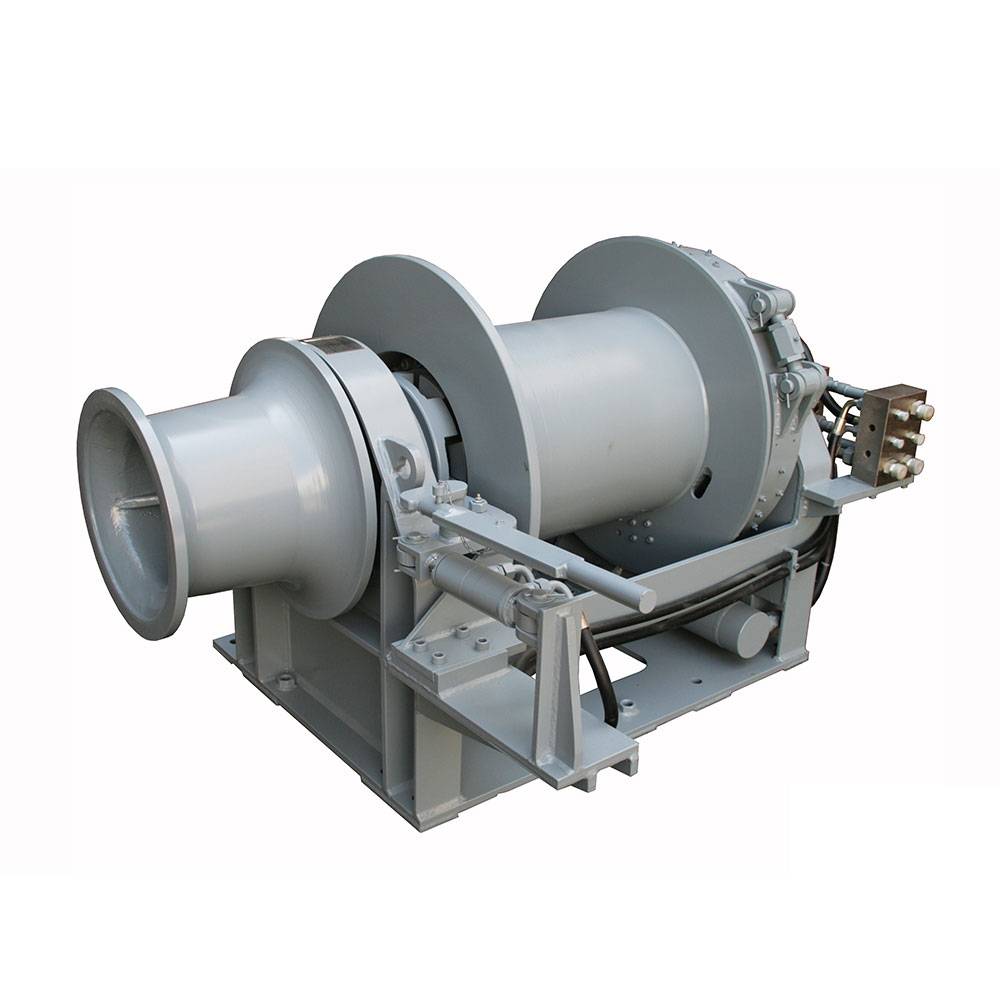
- The 2026 winch product lineup from INI Hydraulic covers marine, construction, and offshore applications — from the IYJ24 marine winch latest model to mooring, anchor, and free-fall winch series — with the engineering documentation and classification certifications that fleet procurement requires.
- INI Hydraulic's market experience spans offshore, marine, and construction machinery buyers across Southeast Asia, the Middle East, and Europe, with hands-on technical content and OEM procurement support that helps fleet buyers navigate the 2026 spec landscape.
The Five Structural Shifts Shaping the 2026 Hydraulic Winch Market
The hydraulic winch market in 2026 is not the same market it was five years ago — and fleet buyers who are still spec'ing winches using 2019-era procurement frameworks are leaving money on the table and creating maintenance liabilities they have not accounted for. Five structural shifts are driving the change simultaneously, and understanding their combined effect is the first step to writing a 2026 winch specification that survives a 10-year fleet audit.
The five shifts:
- Offshore wind energy construction expanding the marine winch addressable market
- Tier 4 EPA / EU Stage V compliance deadlines accelerating fleet replacement cycles
- Electric-hybrid hydraulic winch adoption in emissions-regulated port operations
- Predictive maintenance sensor integration becoming a spec-level procurement decision
- Chinese OEM manufacturers gaining share in global fleet procurement
Each shift is covered below in the sequence that matters for fleet buyers making procurement decisions in 2026.
Shift 1 — Offshore Wind Energy Is Expanding the Marine Winch Market
The offshore wind energy construction boom is the single largest demand-side driver in the marine hydraulic winch market in 2026. Fixed-bottom and floating offshore wind installations globally require vessel support, cable laying, anchor handling, and mooring operations — all of which consume hydraulic winches at a rate that is measurably higher than conventional marine applications.
The practical implication for fleet buyers: the offshore wind segment is drawing marine winch capacity out of the conventional ship-assist and cargo-handling market, which means lead times for high-specification marine winches are extending. Fleet buyers who need mooring winches, anchor handling winches, or free-fall winches for conventional marine operations are increasingly competing for manufacturing slots with offshore wind contractors who are willing to pay a premium for the latest models.
The offshore wind demand effect also has a geographic dimension. The North Sea, the Baltic Sea, the US East Coast, Taiwan Strait, and the South China Sea are the active offshore wind construction zones in 2026 — and fleet buyers operating in those regions are feeling the supply constraint more acutely than buyers in other geographies.
Shift 2 — Tier 4 EPA and EU Stage V Are Accelerating Fleet Replacement Cycles
The Tier 4 EPA (US) and EU Stage V (Europe) emissions standards for off-road diesel engines have been in effect for several years, but their practical impact on hydraulic winch fleet replacement is hitting now — because the hydraulic power units (HPUs) that pair with winches in fleet operations are reaching the end of their serviceable life simultaneously with the winch mechanisms themselves.
The result is a compounding replacement event: fleet operators who would normally have replaced only the winch are finding that the HPU also requires replacement to meet current emissions standards, which shifts the economics of the replacement decision. A fleet that planned for a winch replacement is now facing an HPU + winch replacement, which changes the TCO calculation and, in some cases, creates an opportunity to spec electric-hybrid alternatives that were not commercially viable options in previous fleet cycles.
Shift 3 — Electric-Hybrid Hydraulic Winches Are Entering Mainstream Fleet Spec
Electric-hybrid hydraulic winches — where an electric motor drives the primary hydraulic pump, with a diesel engine as secondary / backup power — have moved from an experimental option to a mainstream spec item in regulated port operations in 2026. The driver is straightforward: port operations in emissions-controlled zones (EU Stage V areas, California, Singapore, Shanghai port restricted zones) are under regulatory pressure to reduce diesel emissions from non-road mobile machinery, and the hydraulic winch is a significant load item in typical port duty cycles.
The performance case for electric-hybrid is well-supported by operational data from early adopters. In typical port duty cycles — where the winch operates intermittently with defined idle periods — electric-hybrid configurations reduce diesel fuel consumption by 20–30% compared to conventional diesel-hydraulic systems. The electric motor handles the primary cycle, and the diesel engine starts only when the winch approaches peak load or when the electric supply is interrupted.
The practical barriers to adoption are real but narrowing. Electric-hybrid winches require port infrastructure investment (shore power or stable electrical supply at the berth), higher first cost, and more complex maintenance procedures. For fleet buyers operating in ports with established electrical infrastructure, the economics are now compelling enough to justify the spec. For fleet buyers operating from conventional berths with no electrical supply, the hybrid spec is premature.
Shift 4 — Predictive Maintenance Is a Procurement Decision, Not an Afterthought
Predictive maintenance — using inline sensors (oil temperature, pressure differential, brake wear indicators, vibration monitors) to detect incipient component failure before it causes an unplanned downtime event — is increasingly available as a factory option on mid-range and premium hydraulic winches in 2026. The sensor hardware and the data telemetry are now reliable enough for fleet deployment, and the fleet management software ecosystem has matured to the point where the data can be integrated into standard maintenance scheduling platforms.
The practical benefit for fleet buyers is a measurable reduction in unscheduled downtime events. Field data from fleets that have deployed predictive maintenance on hydraulic winches in commercial marine service shows 30–40% fewer unplanned maintenance events compared to equivalent fleets running calendar-based scheduled maintenance. For fleet operations where a single unplanned winch failure can strand a vessel or halt a construction sequence, the operational value of that downtime reduction is real and quantifiable.
The adoption barrier is no longer hardware — it is the fleet's software and maintenance process integration. Predictive maintenance generates a continuous stream of condition data, and that data is only useful if the fleet maintenance team has a process to act on it. Fleet buyers who are evaluating predictive maintenance options should ask the OEM for the specific sensor package, the data output format (CAN bus, analog, wireless), and the integration requirements with standard fleet management platforms before writing the spec.
Shift 5 — Chinese OEM Manufacturers Are Gaining Share in Global Fleet Procurement
The global hydraulic winch market has historically been served by a concentrated group of European, Japanese, and North American manufacturers for premium fleet applications. That structure is shifting in 2026, as Chinese OEM manufacturers — led by producers with established engineering capabilities, classification society certifications, and export sales infrastructure — are winning a measurable share of fleet procurement contracts globally.
The competitive basis is straightforward: Chinese hydraulic winch OEMs offer comparable engineering specifications to established manufacturers at a lower first cost, with increasingly robust documentation and compliance packages that meet the procurement requirements of fleet buyers in regulated markets. INI Hydraulic's market experience across Southeast Asia, the Middle East, and Europe is representative of the broader shift — Chinese manufacturers are no longer competing only on price; they are competing on engineering documentation, classification certifications, and the OEM procurement support infrastructure that global fleet buyers require.
The caveat for fleet buyers is that the Chinese OEM landscape is not homogeneous. The difference between a Chinese manufacturer that can deliver fleet-grade quality and documentation and one that cannot is significant — and fleet buyers who select a supplier on first cost alone without auditing the engineering capability, quality management system, and classification certifications are exposed to the downside of that approach. The buyers who are winning with Chinese OEMs in 2026 are the ones who apply the same procurement discipline to Chinese suppliers as they would to any other tier-one manufacturer.
What Fleet Buyers Should Spec in 2026 — Decision Framework
| Spec Decision Point | 2024 Logic | 2026 Logic |
|---|---|---|
| Emissions compliance (HPU) | Replace like-for-like | Evaluate electric-hybrid HPU if operating in emissions-regulated zone; specify full circuit replacement, not winch alone |
| Predictive maintenance sensors | Optional upgrade | Standard spec for commercial marine and offshore; evaluate CAN bus data integration requirements before purchase |
| Marine classification | Required for flagged vessels | Required for all marine winches regardless of flag; classification society cert should be explicit in procurement docs |
| Brake safety factor | 1.5× minimum | 1.5× minimum; 2× for anchor handling and heavy mooring; specify explicitly in RFQ |
| Supplier selection | Established OEM brand | Apply same engineering + QM + classification audit to Chinese OEMs as to traditional tier-1; document the audit in procurement file |
| Delivery lead time | 10–12 weeks | 14–20 weeks for high-specification marine winches in 2026; start procurement 4–6 months before planned installation |
| 10-year fleet TCO model | First cost + estimated maintenance | Full TCO: first cost + scheduled maintenance (500h / 1,000h / 2,000h intervals) + unscheduled repair (historically 2–3× first cost over 10 years) + fluid consumption |
INI Hydraulic's 2026 Winch Product Lineup — What Fleet Buyers Need to Know
INI Hydraulic's 2026 winch product lineup covers the full range of hydraulic winch types that fleet buyers in marine, offshore, and construction applications need to evaluate:
- IYJ-N Series winch — standard-duty hydraulic winch for general marine and construction applications; the entry point in the INI hydraulic winch range.
- IYJ Hydraulic Winch — the core INI hydraulic winch platform, available in multiple configurations for crane, marine, and industrial applications.
- IYJ24 Series Marine Winch — the IYJ24 marine winch latest model, engineered for offshore, marine, and construction machinery; the IYJ24 represents INI's current-generation marine winch platform with enhanced brake safety factor and precision hydraulic circuit design for fleet procurement specifications.
- IYJ-C Series mooring and positioning winch — designed for vessel mooring operations where precise line tension control is required; a standard spec item for port fleet operations.
- IYM Series Anchor Winch — heavy-duty anchor handling winch for commercial vessels; the anchor winch configuration for fleet buyers specifying anchor handling capability.
- IYJ-L Free Fall Winch — emergency free-fall winch configuration for lifeboat and rescue equipment; requires classification society certification as a safety-critical item.
- Dual hydraulic winch systems — paired winch configurations for applications requiring synchronized multi-winch operation; common in offshore construction and heavy-lift marine applications.
The full product range is supported by INI Hydraulic's engineering documentation, classification society certifications, and export documentation package — the procurement stack that fleet buyers need for commercial marine and offshore specification compliance.
Tianyu's Perspective — What Four Years of Offshore Winch Sales Has Taught Me
My name is Tianyu Hu. I am a technical content specialist and export sales representative at INI Hydraulic, and I spend most of my week talking to fleet buyers about exactly the specification and procurement questions this article covers. I also produce the hands-on technical content — hydraulic system animations, winch load testing footage, OEM procurement walkthroughs — that helps international buyers understand INI's product engineering before they place orders.
Three patterns I see in every conversation with fleet buyers evaluating their 2026 hydraulic winch procurement.
1. Fleet buyers who use first cost as the primary spec filter tend to call me back in 18 months with an unscheduled repair problem
The hydraulic winch market has enough price competition that a fleet buyer can always find a lower first cost. What the lower first cost usually means is a lower-specification brake system, a simpler planetary gear train, or a less precise hydraulic circuit — the components that determine how often the winch comes off the fleet for unscheduled maintenance. A fleet buyer who saves 15% on first cost and accepts an unspecified brake safety factor is making a maintenance decision, not a procurement decision. The maintenance decision shows up 18–24 months later, at the least convenient time, at two or three times the original first-cost saving in repair costs.
2. The fleet buyers who get the best outcomes are the ones who share their duty cycle data
When a fleet buyer comes to INI with detailed duty cycle data — line pull, line speed, cycle frequency, ambient temperature range, salt air exposure — the resulting specification is precise and the winch that arrives performs as specified. When a fleet buyer comes with a description of the application and a budget, the resulting specification is a compromise that usually involves some over-engineering (paying for capacity that is not needed) and some under-engineering (missing the specific duty condition that will dominate the winch's service life). The 30 minutes a fleet buyer spends documenting their duty cycle before the first RFQ is worth 30 hours of avoided maintenance grief later.
3. The classification certification question should be asked before the order, not after
Classification society certification — ABS, DNV, Lloyd's Register, CCS, or BV, depending on the vessel flag and trading area — is a mandatory requirement for commercial marine hydraulic winches. The certification confirms that the winch meets the structural, material, and performance requirements that the classification society has specified for the vessel's operating area. Fleet buyers who treat classification as a post-delivery documentation requirement rather than a pre-order procurement requirement tend to discover that the winch they purchased does not meet the classification society's requirements for their specific application — which is an expensive problem to solve after the winch has been installed.
The INI Hydraulic market experience covers offshore, marine, and construction machinery buyers across Southeast Asia, the Middle East, and Europe, with the classification documentation, engineering support, and OEM procurement walkthroughs that fleet buyers in each region require. For fleet buyers evaluating the 2026 hydraulic winch procurement cycle, starting that conversation early — 4–6 months before the planned installation date — is the single most valuable procurement practice I can recommend.
Frequently Asked Questions
1. What is driving hydraulic winch demand growth in 2026?
Three concurrent demand drivers are shaping 2026: offshore wind farm construction expanding the marine winch market, infrastructure spending in Southeast Asia and the Middle East driving construction winch demand, and fleet replacement cycles in Europe and North America prompted by Tier 4 EPA / EU Stage V compliance deadlines. The combination is producing above-average demand growth in the marine and offshore segment and steady growth in the construction segment.
2. How does Tier 4 EPA / EU Stage V affect hydraulic winch specification?
Tier 4 EPA (US) and EU Stage V (Europe) emissions standards are increasingly influencing winch specification because the hydraulic power units paired with winches must meet the same emissions tier as the prime mover. Fleet buyers in regulated markets are finding that older hydraulic power unit designs no longer qualify, which is accelerating fleet replacement cycles even where the winch mechanism itself remains serviceable.
3. Should fleet buyers spec electric-hybrid or full-electric hydraulic winches in 2026?
Electric-hybrid hydraulic winches are the practical 2026 spec for most fleet buyers. Full-electric winches are technically viable but come with higher first costs and require stable shore-power infrastructure. Electric-hybrid — where an electric motor drives the hydraulic pump, with a diesel prime mover as backup — delivers emissions reductions of up to 30% in typical fleet duty cycles while preserving the reliability and overload tolerance that fleet operations depend on.
4. What maintenance cycle should a fleet buyer budget for hydraulic winches?
Fleet hydraulic winches in commercial marine and construction service typically require scheduled maintenance at 500-hour intervals for fluid and filter changes, with brake and gear inspections at 1,000-hour intervals. The 2,000-hour mark is the typical point for major component overhaul — brake shoes, seals, and planetary gear inspection. Fleet buyers who build these intervals into their maintenance budgets avoid the surprise cost events that disrupt fleet operations.
5. How do I evaluate hydraulic winch total cost of ownership over a 10-year fleet cycle?
The 10-year fleet TCO for hydraulic winches has four lines: first cost (winch, hydraulic power unit, installation), scheduled maintenance (fluid, filters, brake inspection, seal replacement), unscheduled repair (proportional to build quality and duty severity), and hydraulic fluid consumption. Fleet buyers who spec on first cost alone tend to discover that the scheduled and unscheduled maintenance lines are 2–3 times larger than the first-cost line over 10 years.
6. What brake safety factor should a fleet buyer specify for marine hydraulic winches?
Marine hydraulic winches should carry a minimum brake safety factor of 1.5× the maximum working load, per common maritime classification society requirements. For heavy-duty marine operations — anchor handling, mooring on large vessels — a 2× factor is the typical specification. The brake safety factor should be explicitly called out in the winch specification, as it is a key safety item in marine classification surveys.
7. What is the typical delivery timeline for a fleet hydraulic winch order from a Chinese OEM?
A typical fleet order for hydraulic winches from a Chinese OEM runs 6–10 weeks for standard catalog configurations and 10–16 weeks for custom OEM specs. Fleet buyers with scheduled replacement cycles should initiate the procurement process 4–6 months before the planned installation date to account for sample approval and sea freight transit.
8. How is predictive maintenance changing hydraulic winch fleet management in 2026?
Predictive maintenance using sensor data — oil temperature, pressure differential, vibration — can reduce unscheduled downtime events by 30–40% in well-monitored fleets. The adoption barrier is the fleet management software integration required to act on the sensor data. The baseline predictive maintenance package — oil temperature sensor, pressure differential switch, and brake-wear indicator — should be a standard procurement requirement for commercial marine winches in 2026.
Conclusion — Start the 2026 Procurement Cycle Earlier Than You Think
The single most valuable piece of advice I can give a fleet buyer entering the 2026 hydraulic winch procurement cycle is this: start earlier than you think you need to.
Lead times for high-specification marine hydraulic winches are running 14–20 weeks in 2026, up from 10–12 weeks in 2023. The offshore wind demand boom is drawing manufacturing capacity into that segment, and the Tier 4 / EU Stage V fleet replacement wave is producing concurrent demand across all segments. A fleet buyer who waits until the existing winch is at end-of-service to start the procurement process will either accept an extended downtime event or pay a premium for expedited production — neither of which is a good outcome.
Three concrete steps fleet buyers can take before the existing winch fails:
- Document the duty cycle. Line pull, line speed, cycle frequency, ambient conditions. This 30-minute exercise is the foundation of an accurate specification and the single most effective tool for avoiding over-specifying (paying for capacity not needed) or under-specifying (buying a winch that works harder than its design duty).
- Evaluate the full hydraulic circuit. Winch, HPU, hose assemblies, and sensor package. Replacing only the winch while the HPU is at end-of-service is a procurement error that creates a second replacement event 18–24 months later.
- Apply the same supplier audit to Chinese OEMs as to traditional tier-1 manufacturers. Engineering capability, quality management system, classification certifications, and export documentation. The buyers who are winning with Chinese OEMs in 2026 are the ones who audit first and negotiate second.
The INI Hydraulic 2026 winch product lineup is available for fleet evaluation, with the IYJ24 marine winch latest model representing the current-generation marine specification. INI Hydraulic's market experience spans Southeast Asia, the Middle East, and Europe, with the engineering documentation and classification certifications that global fleet procurement requires.
Request a fleet hydraulic winch quotation
INI Hydraulic provides fleet-grade hydraulic winches for marine, offshore, and construction machinery applications — with classification certifications, engineering documentation, and OEM procurement support for global fleet buyers.
Tianyu Hu
Technical Content Specialist & Export Sales Representative · INI Hydraulic Co., Ltd.
Tianyu Hu is a technical content specialist and export sales representative at INI Hydraulic Co., Ltd., one of China's leading manufacturers of hydraulic winches, slewing drives, and fluid power transmission systems. Through INI Hydraulic's YouTube channel and social media platforms, he produces hands-on technical content — including hydraulic system animations, winch load testing footage, and OEM procurement walkthroughs — that helps international buyers understand INI's product engineering before placing orders. With a background in hydraulic transmission engineering and four years supporting offshore, marine, and construction machinery buyers across Southeast Asia, the Middle East, and Europe, he translates complex hydraulic spec sheets into practical procurement guidance for OEM engineers, shipyard procurement managers, and industrial equipment distributors.
Post time: Sep-15-2026