
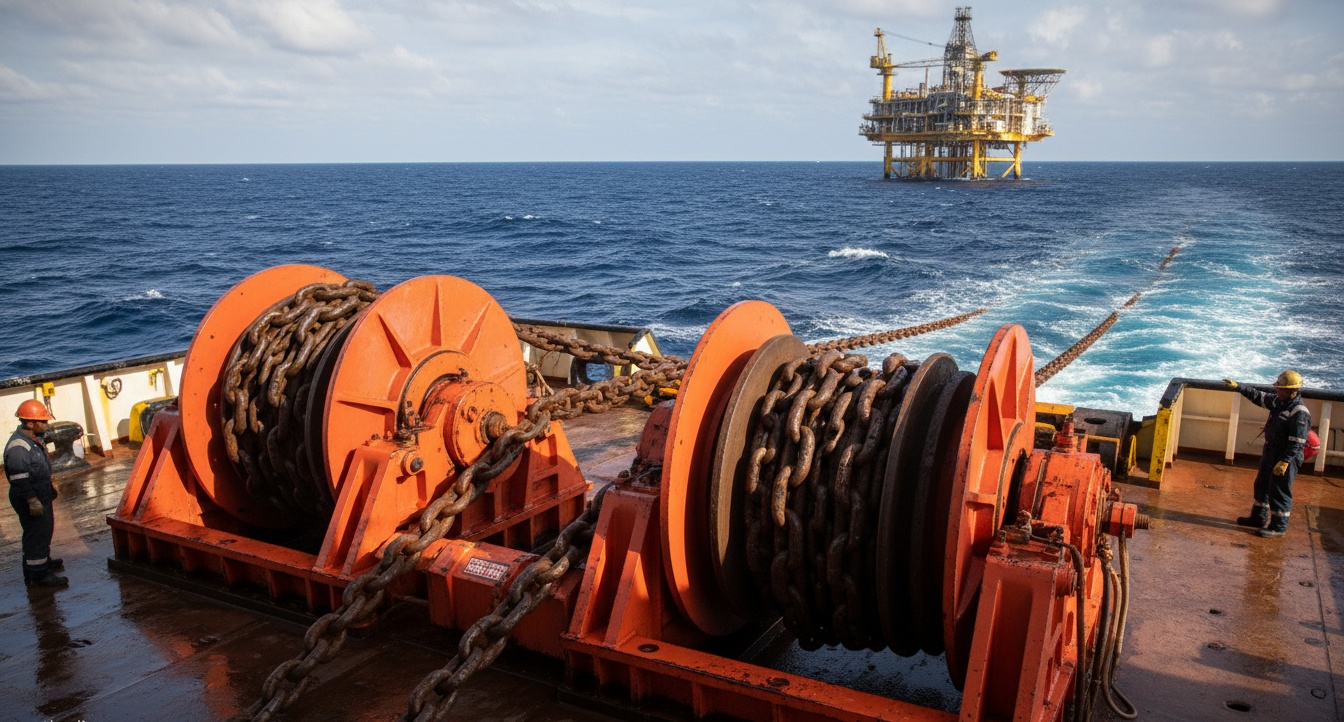
When it comes to anchoring and mooring operations in deepwater environments, the margin for error shrinks dramatically. A single equipment failure can mean a delayed schedule, an environmental incident, or worse — a runaway rig. That's why offshore operators and vessel owners are increasingly turning to dedicated hydraulic winch systems purpose-built for anchor handling tugs (AHTs), with line pulls ranging from 200kN to 800kN. These machines aren't just stronger versions of deck winches; they're engineered from the ground up to handle the extreme shock loads, rapid line retrieval, and sustained braking demands that deepwater rig mooring imposes. This article examines the key technical requirements, design considerations, and operational advantages that define modern hydraulic winches for anchor handling tug applications, and why selecting the right unit directly impacts project economics and safety outcomes on the water.
Understanding the Anchor Handling Tug Winch Requirement
Anchor handling is one of the most demanding marine operations performed regularly in the offshore sector. An anchor handling tug is tasked with transporting, positioning, and setting anchors that can weigh anywhere from 15 to 60 metric tons, with associated chain and wire lengths that may extend to well over 2,000 meters in ultra-deepwater plays. The winch system must manage this load through water column drag, perform controlled drops at precise locations, and then hold the full load in a parked condition indefinitely — often in significant sea states.
The fundamental difference between a standard cargo winch and an anchor handling winch lies in its duty cycle and load profile. Where a general-purpose winch operates intermittently under relatively predictable loads, an anchor handling winch is subjected to unpredictable shock loads as the anchor swings through the water column, cyclic fatigue from repeated tension cycles, and holding brake demands that can persist for hours without relief. Add to this the thermal challenge of sustained braking, and it becomes clear why the hydraulic winch for anchor handling tug applications requires a distinctly engineered solution.
The 200kN to 800kN Pull Envelope
Modern anchor handling tugs operate across a wide spectrum of offshore projects, from shallow shelf work at 100 meters depth to ultra-deepwater installations at 3,000 meters and beyond. The line pull requirement scales accordingly. A vessel handling anchors for a 200-meter semi-submersible drilling rig might operate comfortably with a 200kN to 350kN winch, while a purpose-built deepwater construction vessel handling large gravity-based structure anchors or subsea mooring systems for floating LNG terminals can require pull capacities of 600kN to 800kN.
This pull envelope isn't arbitrary — it directly relates to the anchor's holding capacity plus the hydrodynamic drag of the mooring line itself through the water column. For example, a deepwater floating production unit's mooring system might feature polyester rope or chain assemblies that generate significant drag forces even in moderate currents. The winch must not only retrieve the anchor but also overcome this combined drag, which in deepwater can represent a substantial fraction of the total line pull demand. Hydraulic systems excel here because their mechanical advantage can be tuned precisely to the vessel's operational profile through careful selection of motor displacement, gear ratios, and drum geometry.
Hydraulic Drive Architecture: Why Hydraulics Dominate Anchor Handling
There is a reason virtually every serious anchor handling tug afloat today is equipped with a hydraulic winch system rather than an electric or diesel-mechanical alternative. The answer lies in the fundamental characteristics of hydraulic drive technology when confronted with the anchor handling load profile.
Torque Density and Shock Load Tolerance
Hydraulic motors deliver extremely high torque density relative to their physical size. This is critical on a working deck where space is at a premium and every square meter of deck plate carries an opportunity cost. A hydraulic motor driving a planetary gearbox can produce the same output torque as an electric motor three times its physical volume, while simultaneously being far more tolerant of the shock loading that defines anchor handling operations.
When an anchor is deployed from the stern roller and begins its descent through the water column, the tension in the winch wire fluctuates rapidly as the anchor swings and the vessel pitches. An electric drive system with a rigid mechanical coupling will transmit these shock loads directly into the motor windings and drive electronics. Hydraulic systems, by contrast, naturally damp these loads through the compressibility of hydraulic fluid and the compliance built into hose assemblies, protecting the drivetrain from peak loads that would otherwise damage electric motor insulation or overload power electronics.
Precise Speed Control Under Variable Load
Anchor handling winch operators need to make split-second decisions about line tension, and they need their equipment to respond immediately and predictably. A hydraulic winch for anchor handling tug crews offers what offshore professionals call "feels right" — the ability to modulate line speed from near-zero to full running speed without hesitation, across the entire load range from zero tension to maximum brake hold. This is achieved through variable displacement piston pumps and motors, which allow the operator to command a specific drum speed and have the system deliver it regardless of whether the winch is handling a 50kN residual load or a 600kN anchor in free fall.
The IYJ-L Series Hydraulic Winch with Free Fall Function exemplifies this design philosophy. Built with a dedicated free-fall mode that allows rapid anchor deployment without the mechanical resistance of the normal drive path, it incorporates a spring-applied, hydraulically released multidisc brake mounted directly on the high-torque side of the drivetrain. This arrangement ensures that even if the ship-service hydraulic system loses pressure momentarily, the brake remains engaged, preventing any uncontrolled anchor drop — a non-negotiable safety requirement on any modern offshore vessel.
Free Fall Function: Operational Necessity in Deepwater
One of the defining technical features of modern anchor handling winches is the free fall capability. In deepwater anchor handling, the time required to lower an anchor 2,000 meters to the seabed at normal retrieval speed could consume hours of valuable vessel time. Free fall mode allows the winch brake to be manually released, allowing the anchor and its associated chain and wire to drop under gravity — controlled, but unimpeded by motor drag.
Once the anchor reaches the seabed and the wire goes slack, the operator re-engages the brake and the winch transitions to normal retrieval mode to take up any residual slack and begin tensioning. This operational sequence can reduce a multi-hour anchor deployment to a matter of minutes, directly impacting vessel productivity on day-rate contracts where every hour of delay carries a substantial financial penalty.
Braking Systems and Thermal Management
The brake system on a high-capacity anchor handling winch is arguably its most critical component from an operational safety standpoint. These winches typically employ a dual-circuit braking architecture: a spring-applied, hydraulically released multidisc parking and emergency brake, supplemented by a motor-controlled retardation circuit that modulates line speed during normal lowering operations.
Thermal management is a significant challenge in anchor handling duty. Sustained braking in high-load conditions generates considerable heat, and on an offshore deck there is no convenient location to mount a large heat exchanger. Modern designs address this through friction material selection that maintains consistent coefficient of friction across a wide temperature range, and through hydraulic system architecture that routes return flow through the motor case to provide intrinsic cooling. Some operators additionally specify auxiliary oil coolers as standard equipment rather than optional extras — a decision that invariably proves wise on vessels engaged in intensive mooring operations for offshore wind foundation installation or decommissioning work.
The IYJ-N Series Integrated Hydraulic Winch takes this integrated approach further by combining the hydraulic power unit, control manifold, and winch machinery into a single package that reduces on-site installation complexity. This kind of integrated design minimizes the potential for hydraulic leaks — a genuine concern on a moving vessel deck — and ensures the power unit and winch are properly matched from the factory rather than assembled from disparate components in the field.
Meeting International Safety Standards
Offshore vessel equipment is subject to increasing regulatory scrutiny, and anchor handling winches are no exception. The DNV Maritime classification society maintains comprehensive rules for offshore vessels, including specific requirements for windlass and winch systems. These rules address not only the structural capacity of the winch itself but also the braking system performance, control system integrity, and the documentation required to demonstrate fitness for purpose.
From January 2026, DNV has introduced new safety requirements for anchor handling winches that include enhanced testing protocols and documentation standards. These requirements reflect the industry-wide focus on mooring safety following several high-profile incidents involving anchor handling operations, and they represent a meaningful step change in the evidence burden that manufacturers and vessel operators must satisfy. A winch that meets these updated requirements demonstrates that the equipment has been validated through a structured testing program rather than relying solely on calculation-based design verification.
Regulatory Classification and Documentation Requirements
Anchor handling winches installed on classed vessels must satisfy the documentation and testing requirements of the relevant classification society. For vessels operating under DNV GL classification, the winch documentation package must include design calculation reports, materials traceability documentation, welding procedure specifications for structural fabrication, and witnessed factory acceptance testing records. The January 2026 updated safety requirements introduced by DNV add a further requirement for witnessed brake holding capacity tests at the manufacturer's test facility prior to shipment.
This documentation burden serves a genuine safety purpose. The historical basis for the updated requirements includes several high-profile mooring incidents where winch brake failures contributed to uncontrolled vessel movements, resulting in damage to subsea infrastructure and, in one notable case, a dropped anchor that required a complex deepwater recovery operation costing several million dollars. The enhanced testing protocols — which include static holding load tests at 1.5 times the rated load and dynamic braking performance tests under simulated operational conditions — are designed to verify that the brake system performs consistently across its operating life rather than merely at the point of factory acceptance.
Buyers procuring hydraulic winches for newbuild anchor handling vessels should confirm with their classification society which version of the rules applies to their project and factor the extended testing timeline into their construction scheduling. Classification societies typically require a minimum of eight weeks from completed testing to document issuance, and someflag states require additional equivalency assessments before the equipment can be approved for use on vessels registered under their flag.
Selecting the Right Winch for Your Anchor Handling Fleet
Choosing a hydraulic winch for an anchor handling tug is not simply a matter of selecting the highest pull capacity available. The winch must be matched to the vessel's specific operational profile, including the typical anchor weights and mooring configurations it will handle, the sea states expected in its operating region, and the deck space and power availability constraints imposed by the vessel's design.
Sizing Considerations and Common Pitfalls
One of the most common mistakes in winch selection is oversizing — specifying a winch with substantially more capacity than the vessel will ever require. This carries hidden costs beyond the initial purchase price: higher weight means reduced cargo or equipment payload capacity, greater power consumption translates to higher fuel costs, and larger equipment may impose structural loads on the winch foundation that the ship's hull was not designed to accommodate.
A properly sized hydraulic winch for anchor handling tug applications should be selected based on the maximum expected working load at the specified water depth, with an appropriate factor of safety applied to account for shock loading and dynamic effects. The Society of Naval Architects and Marine Engineers (SNAME) and ISO 3821 provide standardized methodologies for this calculation, and reputable manufacturers will support customers through this sizing process as part of the pre-sale technical engagement.
Aftermarket Support and Spare Parts Availability
For offshore vessel operators, equipment uptime is a direct driver of financial performance. A winch that is out of service for want of a seal kit or hydraulic filter element represents an operational loss that far exceeds the cost of carrying appropriate spares inventory. When evaluating winch suppliers, the maturity and geographic coverage of the aftermarket support network should be weighted heavily alongside the headline specifications of the equipment itself.
Operators should also consider the integration between the winch hydraulic system and the vessel's central hydraulic supply. Some winches are designed as self-contained units with their own dedicated power pack, while others are intended to draw from the ship's common hydraulic system. Each approach has merit: dedicated power packs offer operational independence but add complexity, while common-supply designs reduce equipment count but create interdependency where a winch issue may affect other deck machinery.
Aftermarket Support and Lifecycle Cost Considerations
For offshore vessel operators, the hydraulic winch represents a significant capital investment, but the true cost of ownership extends far beyond the initial purchase price. A well-structured aftermarket support agreement can substantially reduce the total lifecycle cost of the winch while improving vessel availability and reducing the risk of unplanned operational downtime.
The hydraulic components inside the winch — piston pumps, motors, directional control valves, and brake assemblies — all have finite service lives that are directly affected by hydraulic fluid cleanliness, operating temperature, and load cycling patterns. Establishing a proactive maintenance schedule based on the winch manufacturer's recommended service intervals, rather than waiting for failure symptoms to appear, typically extends component life by 30 to 50 percent compared to reactive maintenance approaches. This improvement in component longevity translates directly to reduced maintenance costs and improved vessel scheduling reliability.
Spare parts inventory management is another area where offshore operators can significantly impact their total cost of ownership. A hydraulic winch that is out of service for want of a brake pad set or a hydraulic filter cartridge represents an operational loss that can easily exceed the value of the missing parts by a factor of ten or more on a day-rate charter vessel. Maintaining a minimum stock of critical spare parts — including seals, brake pads, hydraulic filters, and electrical sensors — on board the vessel or at the nearest port with adequate logistics connectivity is a standard practice among well-managed offshore fleets.
When evaluating winch suppliers, operators should review the supplier's global service network coverage, response time commitments for emergency technical support, and the availability of field service engineers with specific experience on the supplier's winch model range. The maturity of the supplier's technical documentation — including illustrated parts catalogs, maintenance procedures, and hydraulic circuit diagrams — directly affects the quality of both planned maintenance and emergency repairs.
Conclusion
The hydraulic winch is the heart of any anchor handling tug's operational capability. In deepwater mooring applications where anchor weights, water depths, and line pulls continue to increase, the demands placed on these machines will only intensify. Selecting a winch with the right pull capacity — whether 200kN, 400kN, 600kN, or 800kN — requires matching not just the raw number to the operational requirement, but also the braking performance, control system sophistication, and aftermarket support infrastructure that ensures the winch delivers reliable service over the vessel's operating life. Purpose-built hydraulic winches for anchor handling, with their superior torque density, shock load tolerance, and precise speed control, represent the clear standard for serious offshore mooring operations.
For technical specifications on the IYJ-L Series with free fall function or the IYJ-N Series integrated hydraulic winch, visit INI Hydraulic's product pages at en.china-ini.com/IYJ-L-Series-Hydraulic-Winch-with-Free-Fall-Function.html and en.china-ini.com/IYJ-N-Series-Integrated-Hydraulic-Winch.html.
About the Author
Mr. Leo is a senior offshore equipment specialist and technical writer with extensive experience in marine hydraulic systems, mooring technology, and offshore vessel operations. He has worked with vessel operators, shipyards, and classification societies across the Asia-Pacific and North Sea regions, contributing to technical standards development and equipment procurement guidance for offshore energy projects.
Post time: Jun-05-2026