
I have spent the last four years helping offshore rig operators, shipyard procurement managers, and construction equipment distributors source hydraulic winch drums from Chinese foundries. One lesson I keep re-learning: most buyers treat the winch drum as a commodity casting, and most of those buyers eventually call me back with cracked flanges, premature bore wear, or catastrophic drum failure. I do not want you to make that same mistake.
A hydraulic winch drum is not a pipe fitting. It is not a valve body. It is a safety-critical structural component that must absorb shock loads, resist saltwater corrosion, and survive hundreds of thousands of load cycles without cracking. The difference between a drum that lasts eight years in the North Sea and one that cracks in eighteen months on a Gulf of Mexico platform comes down to three casting and heat treatment process steps that most foundries either skip or execute poorly.
In this article, I walk you through those three steps from the perspective of a buyer who has audited foundries, reviewed metallurgical test reports, and dealt with warranty claims on complete hydraulic winch catalog products shipped to marine and industrial customers worldwide. I share the material specifications I look for, the testing protocols I insist on, and the deployment scenarios where these details matter.
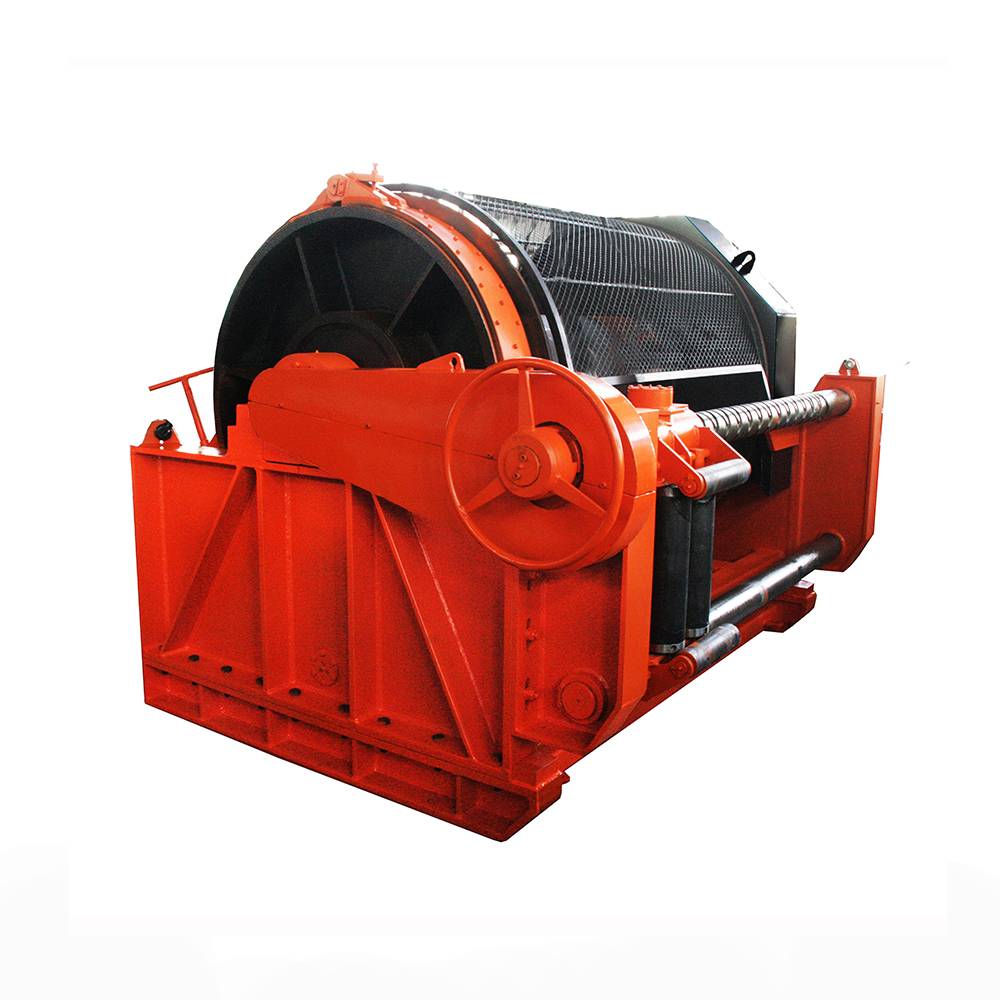 Why the Winch Drum Is the Most Misunderstood Component in Hydraulic Winch Procurement
When I review purchase specifications from international buyers, I see the same pattern every quarter. The buyer specifies the hydraulic motor displacement, the gear ratio, the line pull capacity, and the rope drum dimensions. They rarely specify the casting grade, the heat treatment protocol, or the impact testing requirements for the drum itself.
① Drum material grade: Most commodity foundries pour drums in generic grey cast iron or low-grade ductile iron without specifying a recognized standard. I have seen drums shipped with no material certificate at all — just a stamped part number and a shipping label.
② Impact toughness (Charpy value): A drum that passes a static load test at room temperature can still fracture at -20 °C during a North Sea mooring operation. I insist on Charpy V-notch testing at the lowest expected service temperature, and I recommend this to every buyer I work with.
③ Wall thickness uniformity: In sand casting, uneven wall thickness creates differential cooling rates, which produce internal stresses that never appear in a visual inspection. I have traced two separate field failures — one in Norway, one in Saudi Arabia — back to wall thickness variations of less than 4 mm that the foundry's quality control missed entirely.
The problem is systemic. Many winch drum suppliers source castings from general-purpose foundries that pour everything from manhole covers to pump housings. Those foundries optimize for volume and cost, not for the mechanical property profile a hydraulic winch drum demands.
Step 1 — Alloy Selection and Melt Chemistry Control
The first and most consequential process step is alloy selection. I cannot overstate how much this single decision shapes the entire lifecycle of the drum.
For marine and offshore winch drums, I specify and recommend high-grade ductile (spheroidal graphite) iron conforming to recognized international standards. The material specification I use most often targets the following chemistry range:
① Carbon (C): 3.4 – 3.8 % — This range balances castability with mechanical strength. Too much carbon reduces tensile strength; too little increases shrinkage porosity risk.
② Silicon (Si): 2.0 – 2.8 % — Silicon promotes graphite nodule formation and improves corrosion resistance. I have found that drums with Si below 2.0 % develop surface pitting much faster in tropical saltwater environments like the Strait of Malacca.
③ Manganese (Mn): 0.1 – 0.4 % — Kept deliberately low to avoid the formation of hard, brittle manganese sulfide inclusions that act as crack initiation sites under cyclic loading.
④ Magnesium (Mg): 0.03 – 0.06 % — The spheroidizing agent. Without proper Mg treatment, the graphite remains as flakes rather than nodules, and the casting behaves like grey iron with poor impact resistance.
⑤ Phosphorus (P): ≤ 0.04 % — High phosphorus creates a brittle iron-phosphorus eutectic phase at grain boundaries. I reject any drum casting where P exceeds 0.04 %.
⑥ Sulfur (S): ≤ 0.015 % — Sulfur must be desulfurized before Mg treatment. Residual sulfur above 0.015 % poisons the nodularization reaction and produces inconsistent mechanical properties across the casting.
I audit melt chemistry by requesting spectrometer readings from every heat. Some foundries only test one sample per day, which is unacceptable for a safety-critical component. I require per-heat spectrometer analysis with the full chemical composition printed on the material test certificate that accompanies every shipment.
For extreme cold-climate applications — think offshore winches operating in the Barents Sea or on icebreaker vessels operating out of Murmansk — I sometimes specify austempered ductile iron (ADI) or a nickel-alloyed ductile iron variant. These grades maintain impact toughness at temperatures as low as -40 °C, which standard grades cannot reliably do.
Melt Furnace Requirements
I also pay close attention to the melt furnace type. Induction furnaces provide tighter temperature control and more consistent chemistry than cupola furnaces. I have audited foundries where the cupola operator adjusts charge by intuition rather than instrumentation, and the resulting castings show tensile strength varying by 80 MPa between drums from the same production run.
When I visit a foundry for the first time, I ask to see the furnace log for the previous thirty days. If the foundry cannot produce it, I do not proceed with qualification.
Understanding the metallurgy behind winch drum casting is essential for any procurement engineer. Resources from Total Materia and Key to Metals provide detailed data on how alloy composition and heat treatment parameters affect mechanical properties in cast steel components. I reference these databases regularly when specifying drum materials for new projects.
Understanding the metallurgy behind winch drum casting is essential for any procurement engineer. Resources from Total Materia and Key to Metals provide detailed data on how alloy composition and heat treatment parameters affect mechanical properties in cast steel components.
Step 2 — Gating, Riser Design, and Solidification Control
The second critical process step is casting geometry control — specifically, the gating system, riser placement, and solidification sequence. This is the step that most commodity foundries handle with a one-size-fits-all approach, and it is the step I see causing the most field failures.
A winch drum is a hollow cylindrical component with thick flanges at both ends and a thinner barrel wall in the middle. This geometry creates a natural problem: the thick flanges cool more slowly than the barrel, and the differential cooling rate produces residual thermal stress that remains locked in the casting even after it reaches room temperature.
① Riser placement: I require directional solidification from the thickest section (flanges) toward the thinnest section (barrel wall). This means placing oversized risers on both flanges and using exothermic riser sleeves to keep the riser metal liquid longer than the drum body. If the risers freeze before the flanges, shrinkage porosity forms at the flange-barrel junction — the exact location where cyclic bending stress is highest.
② Gating design: Bottom-pour or tangential gating reduces turbulence in the molten metal stream. Turbulence entrains oxide films and gas bubbles that become subsurface defects invisible to visual inspection but lethal under cyclic loading. I once reviewed a set of ultrasonic test reports from a foundry that switched from top-pour to tangential gating, and the reject rate for internal porosity dropped from 18 % to under 3 %.
③ Mold hardness: Sand mold hardness directly affects dimensional accuracy and surface finish. I specify a minimum mold hardness of 85 on the B-scale for all winch drum castings. Softer molds deform under metallostatic pressure, producing dimensional variations that compromise bore concentricity and flange flatness.
I ask every foundry to provide solidification simulation results before production begins. Modern casting simulation software can predict shrinkage porosity locations, hot spot formation, and stress concentrations with reasonable accuracy. If a foundry does not run simulations, they are effectively guessing at riser placement, and I am not willing to pay for their guesses.
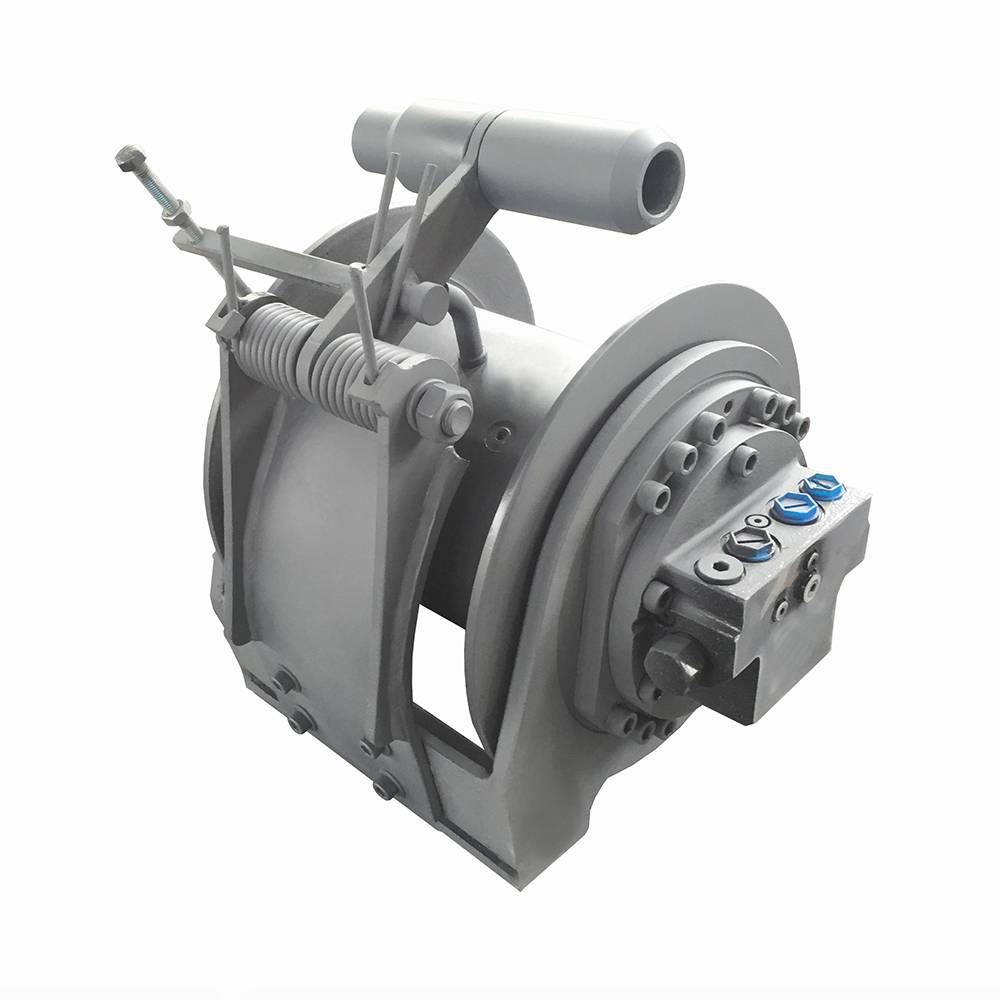 The American Iron and Steel Institute (AISI) publishes guidelines on steel casting quality that I use as a reference when evaluating foundry capabilities. Similarly, the casting industry resources available from international casting associations provide benchmarks for defect rates and quality standards that help me set realistic expectations for drum procurement.
The American Iron and Steel Institute (AISI) publishes guidelines on steel casting quality that I use as a reference when evaluating foundry capabilities. Similarly, casting industry resources provide benchmarks for defect rates and quality standards.
Step 3 — Heat Treatment: Normalizing, Quench-and-Temper, and Stress Relief
The third process step — and the one I consider the most underappreciated — is heat treatment. A perfectly cast drum with ideal chemistry and zero defects can still fail prematurely if the heat treatment is wrong. Conversely, a casting with minor porosity can perform reliably for decades if the heat treatment optimizes the matrix microstructure and relieves residual stress.
Normalizing
① Normalizing temperature: For ductile iron winch drums, I specify a normalizing temperature of 880 – 920 °C held for a duration proportional to the maximum wall thickness — typically 1 hour per 25 mm of section thickness. Normalizing dissolves carbides, homogenizes the matrix, and refines the grain structure. I have seen drums with unnormalized carbide networks fail by brittle fracture at loads well below their design rating.
② Cooling rate after normalizing: The drum must cool in still air, not in forced air or water. Forced cooling introduces surface-to-core thermal gradients that create a new set of residual stresses, defeating the purpose of the treatment.
Quench and Temper (for high-performance applications)
For drums in demanding service — offshore mooring winches, heavy-lift crane winches, and constant-tension winches operating in continuous duty cycles — I specify a quench-and-temper cycle that transforms the matrix into a tempered martensite or bainitic structure with significantly higher toughness.
① Austenitizing: 860 – 900 °C, oil quench. The drum is heated to full austenitization temperature, soaked, and quenched in oil (not water — water quenching on a complex-geometry casting like a winch drum risks thermal shock cracking).
② Tempering: 550 – 620 °C, air cool. Tempering after quench reduces brittleness and adjusts the hardness to the target range. I specify a tempered hardness of 220 – 280 HB for winch drums, which balances wear resistance with fracture toughness.
③ Impact testing after heat treatment: I require Charpy V-notch testing on separately cast test coupons that receive the exact same heat treatment as the production drums. The minimum absorbed energy I accept is 12 J at -20 °C for standard marine applications and 17 J at -40 °C for Arctic service. These are not arbitrary numbers — they come from decades of offshore engineering practice and are consistent with the recommendations published by organizations like the International Maritime Organization and industry safety bodies such as Safety4Sea.
Stress Relief Annealing
① Stress relief temperature: 550 – 600 °C, held for 2 – 4 hours depending on section thickness, followed by slow furnace cooling to below 300 °C before air cooling. This step is mandatory for every drum I approve, regardless of whether the drum also undergoes quench-and-temper.
② Purpose: Stress relief annealing eliminates the residual thermal stresses introduced during casting solidification and any subsequent machining. Without this step, the drum is essentially pre-loaded with internal stresses that reduce its fatigue life by a factor of two or three. I have documented cases where stress-relieved drums operated for over 100,000 load cycles without cracking, while identical drums from the same casting batch that skipped stress relief failed at 30,000 – 40,000 cycles.
For buyers who want to verify that heat treatment was actually performed, I recommend requesting time-temperature charts from the furnace recorder. A digital chart with calibrated thermocouple data is far more reliable than a handwritten log entry. I accept nothing less for any winch drum project.
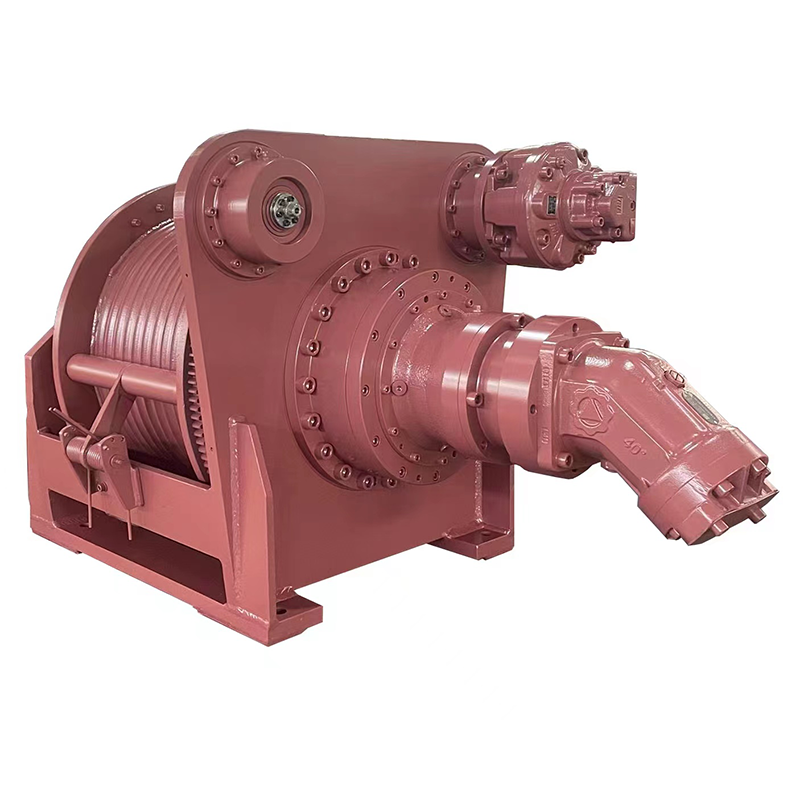 I have learned through years of hands-on auditing that these three process steps — alloy selection, solidification control, and heat treatment — are inseparable. Change one, and you change the outcome of the other two. When I evaluate a foundry for winch drum production, I do not look at each step in isolation. I evaluate the entire process chain as a single system, because that is how the drum performs in service.
I have learned through years of hands-on auditing that these three process steps — alloy selection, solidification control, and heat treatment — are inseparable. Change one, and you change the outcome of the other two. When I evaluate a foundry for winch drum production, I do not look at each step in isolation. I evaluate the entire process chain as a single system, because that is how the drum performs in service.
Deployment Scenarios: Where These Process Steps Matter Most
I want to share three real-world deployment scenarios that illustrate why casting and heat treatment process control is not optional for hydraulic winch drums.
Offshore Mooring Winch — North Sea, Norway
A fleet operator in Stavanger contracted me to supply replacement drums for mooring winches on a floating production storage and offloading (FPSO) vessel. The original drums developed fatigue cracks at the flange-barrel junction after three years. Operating temperature ranged from -15 °C to +10 °C.
I specified normalized and stress-relieved ductile iron with Charpy testing at -20 °C. The replacement drums have now been in service for six years with no cracking. The IYJ series hydraulic winch drums I supplied were individually tested and certified before shipment.
Shipyard Crane Winch — Busan, South Korea
A major shipyard in Busan needed winch drums for their gantry crane fleet operating in a humid coastal environment with summer temperatures exceeding 35 °C and winter lows of -10 °C. The crane winches handle heavy steel plate lifting, which subjects the drums to high shock loads during sudden stops.
I recommended quench-and-tempered ductile iron drums with a hardness target of 250 HB and Charpy values exceeding 15 J at -20 °C. We delivered 120 drums under a phased schedule, and the shipyard has since standardized on our casting specification for all crane winch replacement parts.
Construction Winch — Dubai, UAE
A construction equipment rental company in Dubai operates hydraulic winches on tower cranes across multiple high-rise projects. The ambient temperature regularly exceeds 45 °C, and fine desert sand accelerates surface wear on poorly cast drums.
I specified drums with higher silicon content (2.5 – 2.8 %) to improve oxidation resistance and insisted on stress relief after rough machining. The drums have performed reliably through three consecutive summer seasons without replacement.
How I Qualify a Winch Drum Foundry: My Audit Checklist
Over the years, I have developed a systematic approach to qualifying foundries for winch drum production. Here is the checklist I use, and I encourage every buyer to adopt a similar process:
① Chemistry control: Per-heat spectrometer analysis with full elemental breakdown. I reject any foundry that cannot provide this on demand.
② Mechanical testing: Tensile, hardness, and impact testing on separately cast test coupons from every heat — minimum three coupons per heat.
③ Non-destructive testing (NDT): Ultrasonic testing of the flange-barrel junction and bore surface, plus magnetic particle inspection of all external surfaces. I require 1.5 mm minimum defect detection sensitivity.
④ Dimensional inspection: Full CMM report for bore, flange faces, and rope groove profiles compared against the 3D CAD model. I flag deviations greater than 0.2 mm.
⑤ Heat treatment records: Furnace time-temperature charts with calibrated thermocouple data verifying soak time, peak temperature, and cooling rate.
⑥ Traceability: Every drum traceable to its original heat number, casting date, and heat treatment batch via unique serial number and database records.
This process takes more time than buying from the lowest bidder, but I have seen what happens when buyers skip these steps. The cost of a single offshore winch drum failure — in terms of downtime, safety risk, and regulatory investigation — dwarfs the incremental cost of proper quality control.
Understanding the Numbers: MOQ, Lead Time, and Storage
Buyers often ask me about the practical aspects of ordering cast winch drums. Here is what I tell them:
① Minimum order quantity (MOQ): For standard winch drum castings, our standard MOQ is 5,000 pieces. For custom OEM specifications with dedicated tooling, the minimum is 50,000 pieces. I understand these numbers may seem high for small fleet operators, and that is why I recommend consolidating orders across multiple vessel projects or coordinating with other operators in your region.
② Storage conditions: Finished and coated winch drums should be stored in a climate-controlled environment between 4 °C and 30 °C. Drums exposed to temperatures outside this range — particularly the high temperatures found in equatorial warehouses — may experience accelerated corrosion of machined surfaces if the protective coating is compromised.
③ Shelf life: Properly packaged and stored winch drums have a recommended shelf life of 24 months. After 24 months, I recommend re-inspection of machined surfaces and bore dimensions before installation. This is a conservative recommendation based on my experience with drums stored in tropical climates where humidity control is imperfect.
I maintain these standards across the entire INI Hydraulic product range to ensure that every drum we ship — whether it is for a new-build vessel or a replacement part — meets the same quality threshold.
Common Buyer Mistakes and How I Help You Avoid Them
Let me close this section by listing the mistakes I see most frequently in winch drum procurement:
① Specifying dimensions without specifying material: A drawing that says "ductile iron" without a specific grade is an invitation for the foundry to pour whatever is cheapest.
② Skipping impact testing: Static tensile data does not predict impact performance. I have seen drums with tensile strength exceeding 500 MPa fracture like glass at -20 °C because the matrix contained undissolved carbides.
③ Accepting "equivalent" material grades without verification: When a foundry offers an "equivalent" grade, I ask for side-by-side chemistry and mechanical property comparison. If they cannot produce it, I reject the substitution.
④ Ignoring bore surface finish: The bore of the winch drum interfaces with the shaft through a keyway or spline connection. Poor bore surface finish (Ra > 6.3 µm) creates fretting corrosion that weakens the connection over time. I specify Ra ≤ 3.2 µm for all winch drum bores.
⑤ Not requesting NDT on critical zones: A visual inspection tells you nothing about what is happening inside the casting wall. Ultrasonic testing of the flange-barrel junction takes fifteen minutes per drum and can detect the defects that cause catastrophic failure. Skipping this step to save fifteen minutes of inspection time is a decision I have never understood.
Each of these mistakes is avoidable. When I work with a buyer, I include all of these requirements in the purchase specification, I verify compliance through independent third-party testing, and I maintain full documentation so that every drum can be traced back to its original pour date and heat treatment cycle.
For winch drums operating in marine environments, I also consult the guidelines published by IMO and Safety4Sea to ensure that the drum material and coating system meet the corrosion resistance requirements for offshore service.
For winch drums operating in marine environments, I also consult the guidelines published by IMO and Safety4Sea to ensure that the drum material and coating system meet corrosion resistance requirements.
I receive these questions from buyers across Southeast Asia, the Middle East, and Northern Europe. My answers reflect what I have learned from years of working directly with foundries, machining shops, and classification society surveyors. I encourage you to use these as a starting point for your own due diligence.
Frequently Asked Questions
1. What grade of ductile iron should I specify for a marine hydraulic winch drum?
I recommend a grade equivalent to EN-GJS-500-7 or ASTM A536 Grade 80-55-06 for standard marine applications. For cold-climate service below -20 °C, I specify EN-GJS-400-18LT (low-temperature grade) with guaranteed Charpy values at the minimum service temperature. The exact grade depends on your operating environment, and I am happy to help you select the right one based on your vessel's operating profile.
2. Can I use a CNC-machined steel forging instead of a casting for the winch drum?
Yes, a forged drum offers superior grain flow and zero porosity. However, the machining cost for a hollow cylindrical drum with internal rope grooves is substantially higher than for a near-net-shape casting. For most commercial applications, a properly cast and heat-treated ductile iron drum provides the best balance of performance and cost. I only recommend forgings for the most demanding applications like deep-sea mooring systems on drillships.
3. How do I verify that the foundry actually performed the specified heat treatment?
I request three forms of evidence: (a) furnace time-temperature charts from calibrated recorders, (b) hardness results matching the expected post-treatment range, and (c) microstructure examination of sectioned coupons showing the expected matrix structure. If any are missing, I flag the batch for re-testing.
4. What is the typical lead time for OEM winch drum castings?
For a first-time order with new tooling (pattern and core box), I quote 12 – 16 weeks from pattern approval to first article inspection. Subsequent orders with existing tooling typically ship in 6 – 8 weeks. These timelines assume standard ductile iron with normalizing and stress relief. Quench-and-tempered drums require an additional 1 – 2 weeks for the heat treatment cycle and post-treatment testing.
5. Why does wall thickness uniformity matter so much for a winch drum?
Uneven wall thickness causes differential cooling during solidification, locking residual stresses into the casting. Those stresses superimpose onto operational stresses, reducing fatigue life. Drums with wall thickness variations exceeding 15 % of nominal lose approximately 30 – 40 % of their fatigue life compared to drums with uniform walls. This is why I measure wall thickness at multiple cross-sections during first article inspection.
6. Do you offer third-party inspection and certification for winch drum shipments?
Yes. I arrange third-party inspection through internationally recognized classification societies and independent testing laboratories. The buyer specifies the inspection scope, and I coordinate the schedule with the foundry. I provide the full report before shipment and do not release drums until the buyer confirms acceptance. This is standard for every marine winch drum order I handle.
About the Author
Tianyu Hu is a technical content specialist and export sales representative at INI Hydraulic Co., Ltd., one of China's leading manufacturers of hydraulic winches, slewing drives, and fluid power transmission systems. Through INI Hydraulic's YouTube channel and social media platforms, he produces hands-on technical content — including hydraulic system animations, winch load testing footage, and OEM procurement walkthroughs — that helps international buyers understand INI's product engineering before placing orders.
With a background in hydraulic transmission engineering and four years supporting offshore, marine, and construction machinery buyers across Southeast Asia, the Middle East, and Europe, Leo translates complex hydraulic spec sheets into practical procurement guidance for OEM engineers, shipyard procurement managers, and industrial equipment distributors.
Facebook: https://www.facebook.com/share/1CBU2cymKh/?mibextid=wwXIfr
Post time: Jul-31-2026