
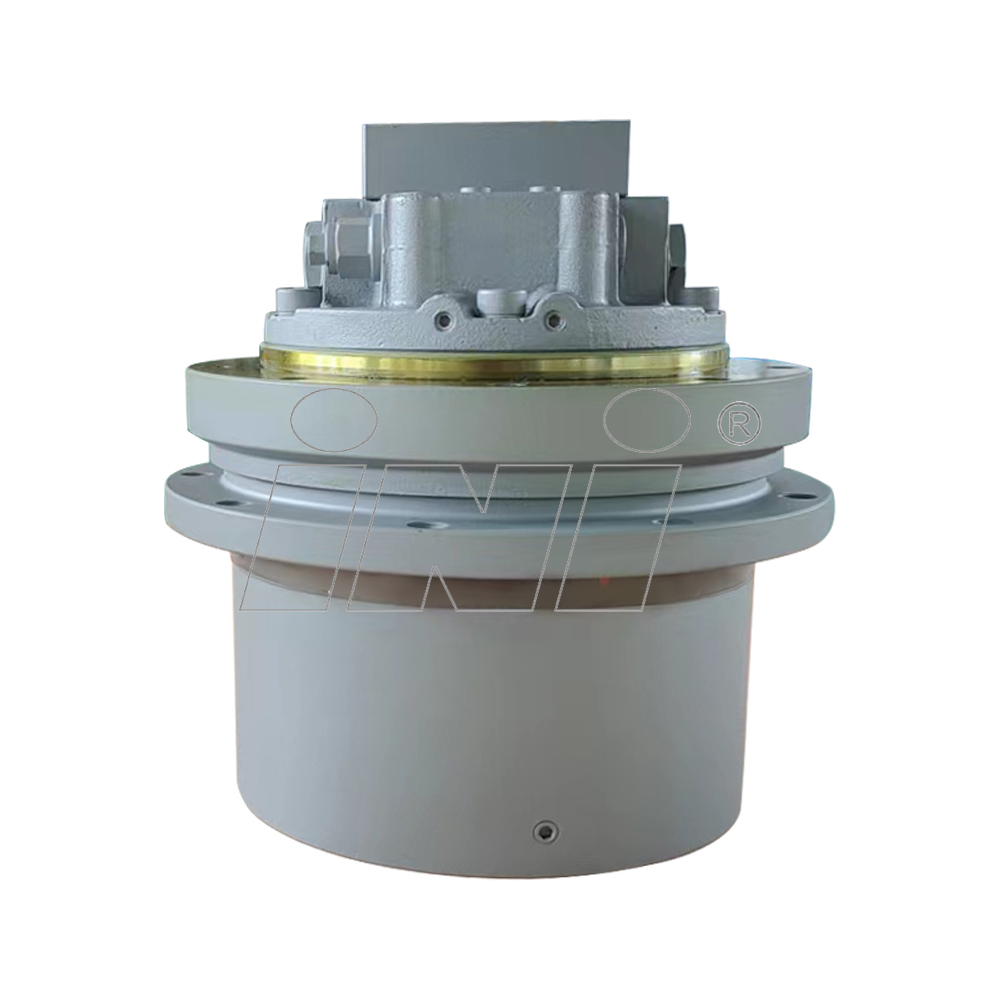
A hydraulic planetary gearbox specified for a port crane slew drive is not the same gearbox you would specify for a vessel mooring winch or for a construction vehicle track drive, even when the rated torque and speed numbers look similar on paper. The differences are in the duty cycle, the environmental exposure, the certification regime, and the lubricant and seal strategy. This guide works through a 3-scenario engineering decision matrix that maps port crane, vessel mooring, and construction vehicle specifications to the planetary gearbox parameters that actually drive selection. The matrix is industry-standard in approach — the specific torque, speed, and certification numbers are starting reference points and should be confirmed with the OEM service manual for any given machine.
TL;DR — Hydraulic planetary gearbox selection is application-dependent. Port crane applications prioritize high torque density, frequent reversal capability, and intermittent heavy-duty cycles. Vessel mooring applications prioritize continuous-duty moderate torque, marine atmosphere resistance, and DNV / ABS / CCS / LR certification support. Construction vehicle applications prioritize IP67/IP68 sealing, shock load resistance, and compact undercarriage packaging. The IGC-T series and adjacent INI Hydraulic planetary gearbox ranges cover all three scenarios with application-specific lubricant, seal, and certification configurations.
About the Author
Why Planetary Gearbox Selection Is Application-Dependent
Planetary gearboxes share a common architecture — a sun gear, planet gears, a ring gear, and a carrier — across all three application scenarios. What changes between scenarios is the duty cycle, the environmental exposure, and the certification regime, and these three variables drive most of the specification differences. Industry standard practice at OEM engineering centers is to evaluate these three variables first, then select the gearbox configuration that matches.
The duty cycle is the most fundamental variable. Port crane applications run intermittent heavy-duty cycles with frequent reversals; the gearbox experiences high torque peaks but has cool-down periods between cycles. Vessel mooring applications run continuous-duty moderate torque cycles with long static holds; the gearbox experiences moderate torque but rarely has a full cool-down. Construction vehicle applications run shock-loaded variable cycles with frequent direction changes; the gearbox experiences unpredictable torque spikes. Each pattern stresses different gearbox components — bearings, seals, lubrication — and requires different design margins.
The environmental exposure compounds the duty cycle difference. Port cranes are typically sheltered in machinery rooms but still see salt-laden marine atmosphere near port operations. Vessel mooring winches are fully exposed to marine atmosphere and may see spray, immersion, and freeze-thaw cycles. Construction vehicles see dust, mud, water immersion, and wide temperature swings. Each environment drives different seal specifications, lubricant choices, and surface protection requirements.
The certification regime is the third variable and often the most decisive at the procurement stage. Port crane gearboxes for OEM builders typically need CE marking and the OEM's own quality system certification. Vessel mooring gearboxes need DNV, ABS, CCS, LR, or BV type approval depending on the vessel flag state and classification society. Construction vehicle gearboxes typically need OEM-specific qualification but may also need regional compliance certifications for the target market. Industry standard practice is to confirm the certification requirement up front, because a gearbox that meets the torque and speed specification but lacks the required certification cannot be specified.
The 3-Scenario Decision Matrix Overview
The decision matrix below maps the three scenarios across six specification dimensions that drive planetary gearbox selection. Each dimension is rated for typical industrial configuration, with notes on what changes when the application severity increases.
| Specification Dimension | Port Crane (STS / RTG / RMG) | Vessel Mooring (Mooring Winch / Anchor Handling) | Construction Vehicle (Loader / Excavator / Truck) |
|---|---|---|---|
| Duty cycle pattern | Intermittent heavy-duty, frequent reversals | Continuous-duty moderate, long static holds | Shock-loaded variable, frequent direction changes |
| Typical torque range | High (slew drive up to 500 kNm; hoist higher) | Moderate (line pull driven; winch dependent) | Variable (wheel end up to 100 kNm; track drive similar) |
| Speed range | Low to moderate (slew 1-5 rpm; hoist higher) | Low (winch drum 0-30 rpm) | Low to moderate (track drive 0-50 rpm; wheel end varies) |
| IP rating (industry standard reference) | IP54 to IP65 (machinery room sheltered) | IP56 to IP66 (marine atmosphere, occasional spray) | IP67 to IP68 (dust, mud, water immersion) |
| Lubrication type | Oil sump with pump circulation for high-power units | Oil bath or grease depending on cycle | Oil bath with seal protection; semi-fluid grease for some units |
| Certification regime | CE marking, OEM quality system | DNV / ABS / CCS / LR type approval (vessel class dependent) | OEM-specific qualification, regional compliance (CE, etc.) |
The table summarizes typical industrial configurations for each scenario. Industry standard practice is to use this matrix as the starting reference, then refine each dimension against the specific machine specification, the target operating environment, and the certification requirements of the vessel or vehicle class. The matrix does not replace detailed engineering analysis, but it does give procurement and application engineering teams a common framework for evaluating candidate gearboxes across the three scenarios.
Scenario 1 — Port Crane Gantry / STS / RTG Specs
Port crane applications include ship-to-shore (STS) container cranes, rubber-tired gantry (RTG) cranes, rail-mounted gantry (RMG) cranes, and mobile harbor cranes. The planetary gearbox in a port crane typically serves one of three functions: slewing drive (rotating the crane upper structure relative to the lower), hoisting drive (lifting the container spreader or hook), and boom luffing drive (changing the boom angle). Each function has a different specification profile.
| Function | Typical Torque | Typical Speed | Reduction Ratio | IP Rating | Lubrication | Cycle Pattern |
|---|---|---|---|---|---|---|
| Slewing drive (STS / RTG / RMG) | 50-500 kNm | 1-5 rpm output | 100:1 to 500:1 (multi-stage) | IP54-IP65 | Oil sump; pump circulation for high-power | Intermittent; frequent reversal |
| Hoisting drive (container / bulk) | 100 kNm and up | 0-30 rpm output | 50:1 to 200:1 (multi-stage) | IP54-IP65 | Oil sump; forced lubrication | Intermittent heavy-duty; load holding critical |
| Boom luffing drive | 200 kNm and up | 0-3 rpm output | 100:1 to 400:1 (multi-stage) | IP54-IP65 | Oil sump; pump circulation | Intermittent; moderate reversal frequency |
| Gantry travel drive (RTG / RMG) | 20-80 kNm per drive | 5-20 rpm output | 30:1 to 100:1 | IP54-IP65 (with wheel end seal) | Oil bath or semi-fluid grease | Intermittent; long travel distances |
The slewing drive is the most common planetary gearbox application in port cranes, and the slewing drive specification is where most procurement teams focus. Slewing drives must hold position under wind load and dynamic load without drift, which requires the gearbox to have a high holding torque margin and a brake that is properly sized for the static and dynamic loads. Industry standard practice at port crane OEM engineering centers is to size the slewing drive gearbox for 1.5 to 2.0 times the maximum expected wind load torque, with the brake sized to hold 2.5 to 3.0 times the rated static load.
Scenario 2 — Vessel Mooring Winch / Anchor Handling Specs
Vessel mooring applications include mooring winches (holding the vessel at berth), anchor handling winches (deploying and recovering the anchor), and towing winches (tug operations and offshore platform supply). The planetary gearbox in a vessel mooring system typically serves as the reduction stage between the hydraulic motor and the winch drum, and the specification is driven by the line pull, line speed, and duty cycle requirements of the specific winch operation.
| Function | Typical Line Pull | Typical Line Speed | Reduction Ratio | IP Rating | Certification | Cycle Pattern |
|---|---|---|---|---|---|---|
| Mooring winch (single drum) | 50-500 kN first layer | 5-15 m/min first layer | 20:1 to 80:1 | IP56-IP66 | DNV / ABS / CCS / LR / BV (vessel class dependent) | Continuous-duty moderate; long static holds |
| Anchor handling winch | 100-800 kN first layer | 3-10 m/min first layer | 30:1 to 100:1 | IP56-IP66 | DNV / ABS / CCS / LR (anchor handling specific) | Intermittent heavy-duty; high shock loads |
| Towing winch (tug / AHTS) | 200-1000 kN first layer | 5-20 m/min first layer | 30:1 to 120:1 | IP56-IP66 | DNV / ABS / CCS / LR (towage specific) | Continuous-duty moderate to heavy; dynamic loads |
| Combined mooring / anchor winch | 100-500 kN first layer | 5-15 m/min first layer | 30:1 to 80:1 | IP56-IP66 | DNV / ABS / CCS / LR (combined function) | Mixed; depends on operational pattern |
Marine atmosphere resistance is the key differentiator between vessel mooring gearboxes and port crane gearboxes. Industry standard practice for marine gearboxes includes stainless steel or marine-grade aluminum housings, special seal compounds for salt resistance, and lubricant additives for moisture separation. The certification regime is also different: a port crane gearbox typically needs CE marking, while a vessel mooring gearbox needs type approval from the vessel's classification society. The certification process adds months to the procurement timeline and is non-negotiable for most vessel operators, which is why most OEM vessel builders work with a small set of pre-certified gearbox suppliers.
Reference for marine certification: ABS (American Bureau of Shipping) provides type approval for marine hydraulic equipment, and Lloyd's Register provides similar services for European and international vessel classes. China Classification Society (CCS) provides certification for Chinese-flag vessels and is increasingly recognized in international shipbuilding projects.
Scenario 3 — Construction Vehicle Wheel Loader / Excavator / Dump Truck Specs
Construction vehicle applications include wheel loaders, hydraulic excavators, articulated dump trucks, and crawler cranes. The planetary gearbox in a construction vehicle typically serves as the wheel end reduction (in wheel hub or axle-mounted configurations) or as the track drive reduction (in crawler excavator or crawler crane configurations). The specification is driven by the vehicle weight, the maximum traction force, and the undercarriage packaging constraints.
Three specification dimensions are particularly relevant for construction vehicle planetary gearboxes. First, the torque-to-weight ratio — construction vehicle gearboxes are weight-sensitive because every kilogram added to the unsprung mass affects vehicle performance and fuel economy. Second, the shock load capacity — construction vehicles see severe shock loads from rock impacts, potholes, and abrupt direction changes, and the gearbox must absorb these without premature failure. Third, the seal integrity under mud and water exposure — the undercarriage is the dirtiest part of the vehicle and the gearbox seals must keep contamination out under continuous exposure.
Industry standard IP ratings for construction vehicle undercarriage gearboxes are typically IP67 or IP68. IP67 protects against temporary immersion (up to 1 meter for 30 minutes) which is the minimum for dust-heavy and water-muddy environments. IP68 protects against continuous immersion and is specified for amphibious or frequently submerged equipment. For above-chassis planetary gearboxes in construction vehicles (slewing drives, winch drives, conveyor drives), IP65 is often sufficient because the unit is shielded from direct water jets by the machine body. The exact IP requirement should be confirmed with the machine OEM service manual.
The shock load capacity is typically specified as a peak torque rating that is 2 to 3 times the continuous torque rating. The peak torque rating is what protects the gearbox against the instantaneous shock loads from rock impacts or abrupt direction changes. Industry standard practice at construction vehicle OEM engineering centers is to size the gearbox for the expected peak load spectrum, not the average load, because under-sizing for peak loads is the most common cause of premature gearbox failure in construction vehicle service.
IGC-T Series Coverage: How the 3-Scenario Matrix Maps to INI Product Lines
INI Hydraulic's planetary gearbox product range spans the IGY series (high-torque heavy-duty industrial), the IGT series (medium-torque general industrial), and the IGC-T series (application-specific configurations). The IGC-T series is structured to map to the three scenarios in the decision matrix, with each application configuration including the seal type, lubricant type, and surface protection appropriate to the target environment.
For port crane applications, the IGC-T configuration typically includes oil sump lubrication with pump circulation for high-power units, IP54 to IP65 sealing suitable for sheltered machinery room installation, and CE marking plus OEM quality system certification. The torque range for port crane IGC-T configurations typically covers the slewing drive and hoisting drive ranges shown in Table 2.
For vessel mooring applications, the IGC-T configuration typically includes marine-grade seal compounds, lubricant additives for moisture separation, stainless steel or marine aluminum housing options, and classification society type approval support. The torque range for vessel mooring IGC-T configurations typically covers the mooring winch, anchor handling, and towing winch ranges shown in Table 3.
For construction vehicle applications, the IGC-T configuration typically includes IP67 or IP68 sealing, semi-fluid grease or oil bath lubrication depending on the mounting position, and OEM-specific qualification support. The torque range for construction vehicle IGC-T configurations typically covers the wheel end and track drive ranges described above.
The full INI Hydraulic planetary gearbox category page provides the complete product range across IGY, IGT, and IGC-T series. The dedicated IGC-T series product page covers the application-specific configurations discussed in this guide. Specific application fit, lead time, certification support, and pricing should be confirmed directly with the INI Hydraulic sales team for any given port crane, vessel mooring, or construction vehicle requirement.
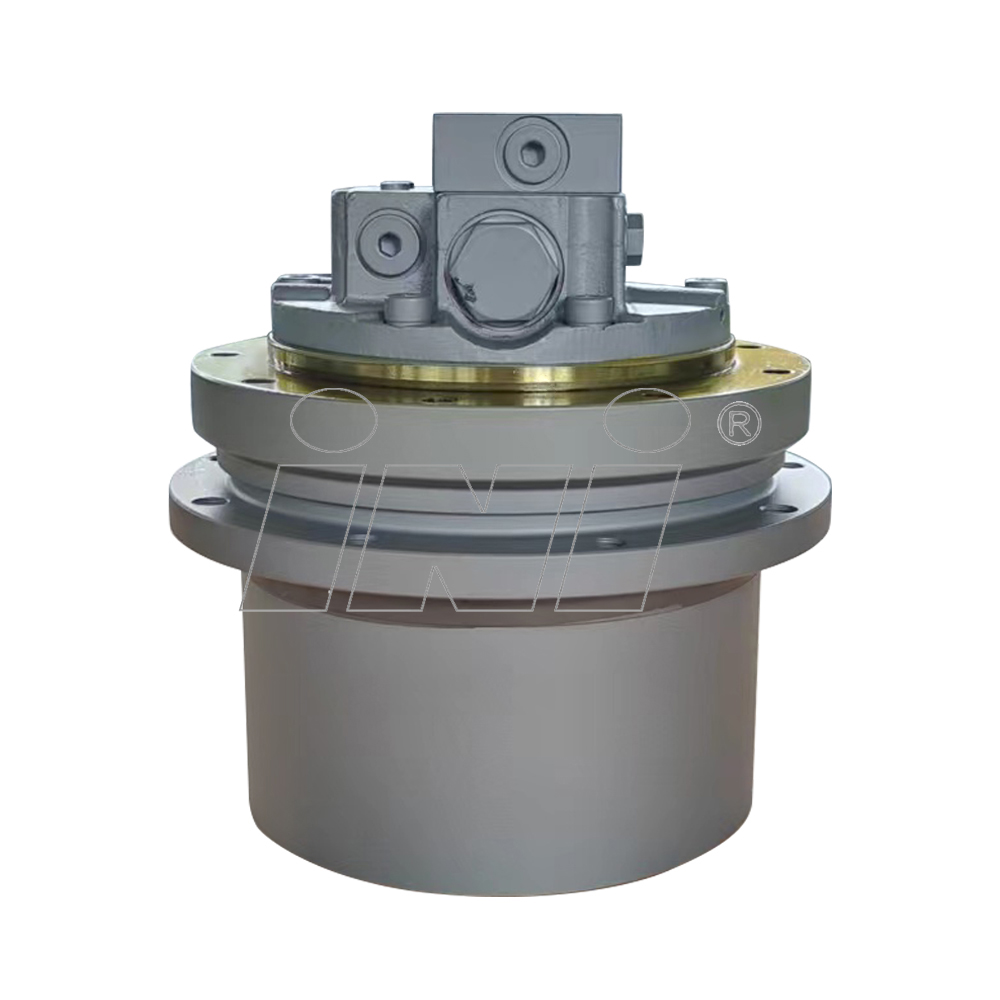
The Torque-Speed-Environment Tradeoff (industry-standard gearbox sizing)
Across all three scenarios, planetary gearbox selection involves a tradeoff between torque capacity, output speed, and environmental resistance. Industry standard gearbox sizing methodology evaluates these three variables against the application requirement, then selects the gearbox configuration that meets all three with the smallest oversizing. Oversizing is not free — it adds weight, cost, and package size without proportional benefit.
For torque capacity, the rule of thumb is to size the gearbox for 1.5 to 2.0 times the maximum expected continuous load, with the peak load margin handled by the gearbox's peak torque rating. For output speed, the rule of thumb is to select the gearbox that delivers the required output speed within 10% of the target, with the motor sized to provide the input speed at the gearbox's rated torque. For environmental resistance, the rule of thumb is to select the seal and lubricant configuration appropriate to the most severe expected operating condition, not the average condition.
Reference for hydraulic system test methodology in general: SAE J744 covers hydraulic valve test procedures and provides a general methodology applicable to hydraulic transmission component testing. ISO Standards Catalogue (mirror) provides general guidance on hydraulic system test methodology. The mirror source is used because direct ISO URLs returned WAF 403 from the AI's domestic IP during preparation.

OEM vs Aftermarket: What Changes in the Application Map
The 3-scenario decision matrix applies to both OEM (original equipment manufacturer) and aftermarket planetary gearbox applications, but the procurement process and the certification path differ. OEM applications typically involve a long-term supply agreement with the machine builder, where the gearbox is specified into the machine design from the beginning. Aftermarket applications involve replacing a worn or failed gearbox in an existing machine, where the replacement must match the original specification or be a documented upgrade.
For OEM applications, the procurement lead time typically includes gearbox design confirmation, sample testing, certification support (if applicable), and initial production batch delivery. The lead time can range from 3 to 12 months depending on the certification complexity and the production batch size. Industry standard practice is to involve the gearbox supplier in the machine design process early so that certification, mounting, and interface specifications can be locked before the machine design is frozen.
For aftermarket applications, the procurement lead time is typically shorter (4 to 12 weeks) because the design is already frozen and the replacement only needs to match the original specification. However, the specification match is critical — an aftermarket gearbox that is dimensionally similar but has different output speed, different mounting pattern, or different certification status can create compatibility issues that take longer to resolve than the original procurement. Industry standard practice is to provide the gearbox supplier with the original OEM part number, the machine model and serial number, and the failure mode (if known) to ensure the replacement matches the original specification.
Submit Your 3-Scenario Spec Request
For port crane, vessel mooring, or construction vehicle planetary gearbox requirements, the most efficient way to start a supplier conversation is to compile the seven specification items below and submit them to the INI Hydraulic sales team. The seven items cover the key dimensions from the decision matrix and allow the sales team to return an indicative configuration, lead time, and pricing within a few business days.
- Application scenario (port crane, vessel mooring, or construction vehicle, with sub-function)
- Required continuous torque (Nm) and peak torque (Nm)
- Required output speed (rpm) and input speed (rpm)
- Required reduction ratio and number of stages
- IP rating requirement (IP54, IP65, IP67, or IP68)
- Lubrication type preference (oil sump, oil bath, semi-fluid grease)
- Certification requirement (CE, DNV, ABS, CCS, LR, BV, OEM-specific)
Submit these seven items to 3-scenario planetary gearbox spec request. The sales team typically responds within two business days with an indicative IGC-T series configuration, lead time, and pricing for the submitted application.
Frequently Asked Questions
What is the difference between planetary gearbox and worm gearbox for port crane applications?
Industry standard distinction: planetary gearboxes deliver higher torque density per unit volume (typically 3-stage reduction ratios up to 5000:1 in a compact package), higher efficiency (typically 95% per stage), and coaxial input-output alignment that simplifies the drivetrain layout. Worm gearboxes are self-locking (helpful for vertical load holding without a brake), quieter in operation, and lower cost at low reduction ratios. For port crane slewing and hoisting duties where continuous-duty high torque and high efficiency matter more than self-locking, planetary is the dominant choice. The 3-scenario decision matrix presented here applies to planetary gearboxes specifically.
How does ambient temperature affect planetary gearbox selection for vessel mooring?
Ambient temperature matters for three reasons. First, the lubricant viscosity at low temperature increases the breakaway torque requirement at the motor shaft, which can stall a small motor if not sized for cold start. Second, sustained high temperature operation degrades the lubricant and accelerates seal wear; marine duty gearboxes typically specify sump temperature limits of 80-90°C continuous. Third, the differential thermal expansion between the steel gears and the cast iron or aluminum housing changes the gear mesh geometry; this matters most in extreme arctic or tropical deployments. Industry standard practice is to verify the operating temperature range against the gearbox rating, not just the ambient.
What IP rating is required for planetary gearbox in construction vehicle undercarriage?
Industry standard IP ratings for construction vehicle undercarriage planetary gearboxes (wheel end and track drive applications) are typically IP67 or IP68. IP67 protects against temporary immersion (up to 1 meter for 30 minutes) which is the minimum for dust-heavy and water-muddy environments. IP68 protects against continuous immersion and is specified for amphibious or frequently submerged equipment. For above-chassis planetary gearboxes in construction vehicles (slewing drives, winch drives, conveyor drives), IP65 is often sufficient because the unit is shielded from direct water jets by the machine body. The exact IP requirement should be confirmed with the machine OEM service manual.
Can the same planetary gearbox be used across port crane and vessel mooring?
Generally no, because the duty cycle, environmental exposure, and certification requirements differ. A port crane slew drive operates in intermittent heavy-duty cycles with high starting torque and frequent reversals; the gearbox is typically floor-mounted in a sheltered cab or machinery room. A vessel mooring winch drive operates in continuous-duty moderate-torque cycles with long holds at static load; the gearbox is exposed to marine atmosphere (salt, humidity, temperature swings) and may require DNV / ABS / CCS / LR type approval for the vessel class. Industry standard practice is to select the gearbox per scenario rather than try to find a universal unit, because the certifications, seals, and lubrication regimes are scenario-specific.
What is the typical service life of planetary gearbox in 24/7 port crane duty?
Industry standard expected service life for a planetary gearbox in 24/7 port crane duty (such as RTG crane slewing or STS crane hoisting) is typically 20,000 to 40,000 operating hours before major overhaul, assuming proper lubricant change intervals (typically every 2,000 to 5,000 hours depending on duty) and seal inspection. The actual life depends heavily on the load spectrum, the ambient temperature, and the contamination control of the lubricant. Continuous-duty crane applications at the high end of the load spectrum may see service life closer to 20,000 hours, while moderate-duty applications with clean lubricant and moderate ambient temperatures can exceed 40,000 hours before overhaul.
Does INI Hydraulic supply planetary gearboxes for OEM port crane builders?
Per the INI Hydraulic product portfolio, the company supplies hydraulic winches, slewing drives, and fluid power transmission systems including planetary gearboxes across IGY and IGT series, with the IGC-T series as a specific product line for application coverage. The 3-scenario decision matrix presented here maps typical port crane, vessel mooring, and construction vehicle specifications to the IGC-T series coverage. Specific OEM project capability, lead time, and certification support should be confirmed directly with the INI Hydraulic sales team for any given port crane, vessel mooring, or construction vehicle application.
Next Steps with INI Hydraulic
For planetary gearbox specification work across port crane, vessel mooring, or construction vehicle applications, the seven-item spec request in section 9 is the most efficient starting point. The INI Hydraulic sales team responds to structured spec requests within two business days with an indicative IGC-T series configuration, lead time, and pricing.
Submit Your 3-Scenario Planetary Gearbox Spec Request
Email the seven specification items to 3-scenario planetary gearbox spec request. The sales team responds within two business days with an indicative IGC-T series configuration.
Related products:
- Planetary gearbox category page — full IGY / IGT / IGC-T series coverage
- IGC-T series product page — application-specific configurations for the three scenarios
Post time: Aug-07-2026