
TL;DR — What You Need to Know
- Line pull range: INI Hydraulic supplies mooring winches from 100kN to 500kN, covering jack-up rigs, semisubmersibles, and FPSO vessels.
- Certification: IYJ-N series winches are ABS and DNV GL certified; CCS certification available for domestic China projects.
- Drive system: Fully hydraulic integrated drive with multi-disc spring-applied brakes; handles 1.5× rated load shock without failure.
- Typical delivery: 12–20 weeks for custom configurations; standard models ship in 6–8 weeks from order confirmation.
- MOQ: 1 unit for standard models; custom configurations require a minimum 2-unit commitment with 30% deposit.
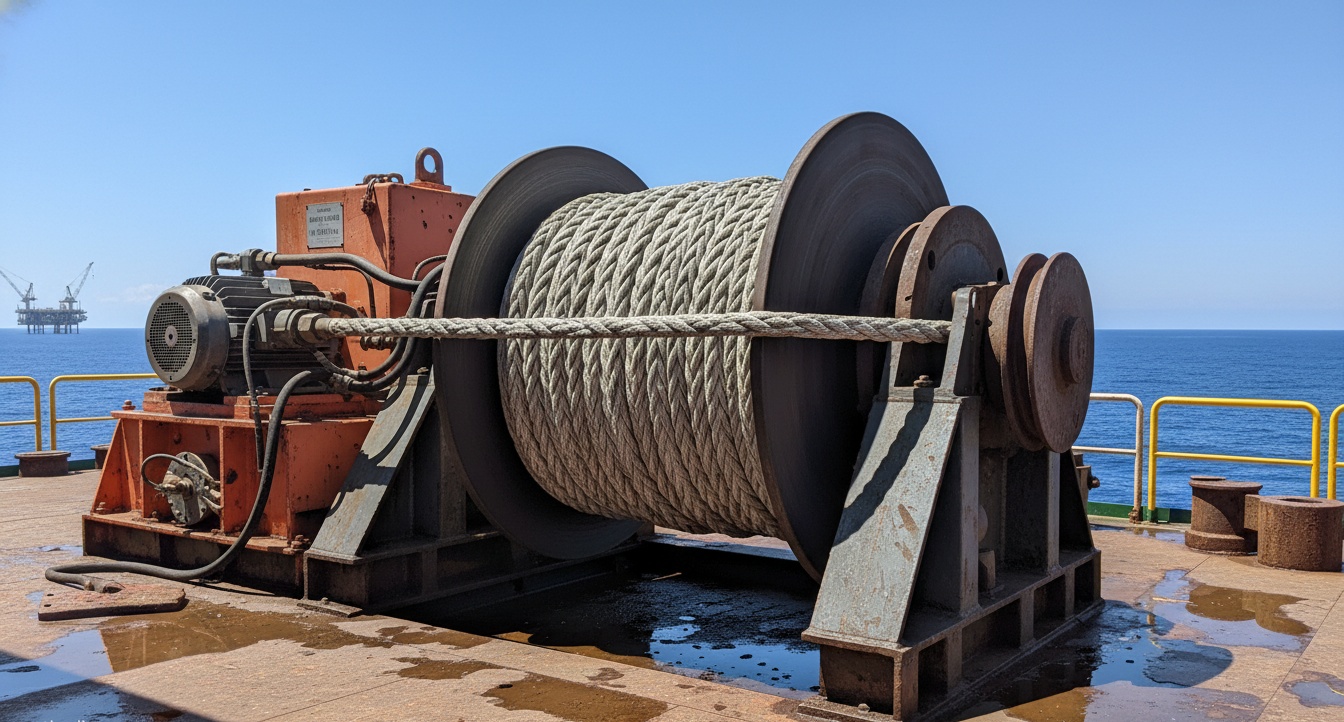
Choosing a hydraulic mooring winch supplier isn't just about finding someone who can build a 500kN winch. It's about finding a partner who understands the entire mooring system—how the winch interacts with the chain, the fairlead geometry, the hydraulic power unit, and the control system. When I started supporting offshore buyers four years ago, I watched projects get delayed because a supplier delivered a winch that didn't talk to the existing HPU. That lesson shaped how we engineer every INI Hydraulic mooring winch—we design for system compatibility first, then optimize the unit.
In this guide, I'll walk you through what actually matters when selecting a hydraulic mooring winch in the 100kN to 500kN range. We'll cover line pull selection, brake system requirements, certification standards, and how to evaluate a supplier's engineering depth. If you're evaluating INI Hydraulic, I'll also show you exactly what our IYJ-N series offers and how it compares to alternatives on the market.
What Determines the Right Line Pull for Your Offshore Platform?
The rated line pull of your mooring winch isn't chosen arbitrarily—it's a direct function of your platform's displacement, operability limits, and mooring pattern design. Generally, the larger the platform, the higher the line pull requirement.
Here's the practical breakdown I've seen across Southeast Asian, Middle Eastern, and European projects:
- 100–200kN: Workboats, anchor handling vessels (AHVs), and small jack-up rigs in benign sea states. These are also common for tensioning functions on platform mooring chains.
- 200–350kN: Semi-submersible platforms, accommodation rigs, and offshore wind installation vessels. At this range, you start dealing with catenary mooring systems combining steel chain and polyester rope.
- 350–500kN: FPSO vessels, drilling rigs, and large floating structures in harsh environments. These winches typically feature dual-drum configurations and require dedicated hydraulic power units.
Because the line pull determines almost every other component in the winch system—from the brake capacity to the gear ratio to the drum diameter—getting this number right is the single most important decision in the procurement process. Under-specifying means your mooring system can't hold station in extreme weather. Over-specifying means unnecessary cost and mechanical complexity. We've helped buyers recalculate their line pull requirements on three separate occasions, saving them from ordering equipment that was oversized for their actual environmental load conditions.
Why Offshore Operators Prefer Hydraulic Mooring Winches
I've had this conversation dozens of times with procurement managers weighing hydraulic versus electric drive. Here's the short answer from four years of supporting offshore projects: hydraulic wins for offshore mooring applications, and the reasons are both engineering and operational.
Because hydraulic systems deliver higher torque density per unit weight, offshore winches can achieve 500kN line pull in a footprint that electric motors simply cannot match. An equivalent electric mooring winch would require a significantly larger motor and gear reducer, adding both mass and inertia to a system where weight directly impacts platform structural costs.
Because hydraulic systems have inherent overload protection, the winch automatically limits peak torque when the load exceeds the preset threshold. This protects the mooring line from shock loads during sudden tension spikes—a common occurrence when vessel drift angles change rapidly in cross currents. I saw this play out on a project in the Gulf of Thailand where a sudden monsoon shift created a 40-tonne shock load on the mooring line. The hydraulic system absorbed it cleanly; an electric system with the same rating would have tripped its overload protection and dropped the line.
Because hydraulic brakes are failsafe by design, spring-applied hydraulic-released brakes automatically engage when the hydraulic system loses pressure. For mooring operations, this isn't a nice-to-have—it's a regulatory requirement under ABS Mooring Equipment Rules and DNV-OS-E301. Electric brakes require battery backup systems to achieve the same failsafe behavior, adding complexity and maintenance burden.
In practice, what I've observed on client sites is that hydraulic mooring winches require less frequent brake maintenance than electric alternatives in high-cycle applications. On an FPSO where the mooring winch cycles 20–30 times per month during weather windows, the hydraulic multi-disc wet brake lasts typically 2–3 years before relining, compared to 12–18 months for dry disc electric systems. The wet brake runs in an oil bath, which dissipates heat more effectively and reduces wear on friction materials.
Brake System Requirements: What Classification Societies Actually Require
This is the part of the specification that causes the most confusion among buyers, especially those sourcing winches for the first time for an offshore project. Let me cut through it.
Both ABS and DNV GL require that mooring winches meet the following minimum brake performance criteria:
- The holding brake must have a minimum holding capacity of 1.5× the rated line pull when static.
- The brake must be a failsafe design—applying automatically when hydraulic pressure is lost or power is cut.
- For winches with planetary gearboxes, a separate motor brake is required in addition to the drum brake.
- Brake performance must be type-tested by an accredited third-party laboratory, with test certificates submitted to the classification society.
INI Hydraulic's IYJ-N series uses a dual-brake configuration: a hydraulic spring-applied, multi-disc wet brake on the gear reducer output, plus a failsafe disc brake directly mounted on the drum hub. Both are tested to 1.8× rated load (exceeding the 1.5× minimum) and verified by ABS-type test reports. Because we build the brake system in-house, we control the testing and certification timeline—we don't wait on a third-party brake supplier to deliver certificates. That alone can cut 3–4 weeks off the delivery schedule for certified winches.
IYJ-N Series vs. IYJ Ordinary Series: Which Winch Fits Your Application?
When buyers come to us, they often ask whether they should choose the IYJ-N Series Integrated Hydraulic Winch or the IYJ Ordinary Hydraulic Winch. The answer depends on your application's complexity and operational context.
The IYJ-N series is our integrated winch—meaning the hydraulic motor, planetary gearbox, brake, and drum are assembled into a single compact housing. This design minimizes pipeline connections, reduces leakage risk, and simplifies installation. It's the preferred choice for:
- Offshore platform mooring where space on deck is limited
- Projects requiring quick installation (plug-and-play hydraulic connections)
- Applications needing precise speed control and load monitoring via integrated sensors
- Winches rated above 200kN where the mechanical loads demand an integrated structure
The IYJ ordinary series uses a separate motor and gearbox arrangement, which offers more flexibility in motor selection and easier field maintenance. For lower line pull applications (under 200kN) or retrofit projects where the existing HPU has specific pressure and flow characteristics, the ordinary series often delivers better value.
In my experience, buyers from the Middle East and Europe typically specify the N-series for newbuild projects, while Southeast Asian operators with mixed fleets prefer the ordinary series for its interchangeability with existing inventory. We work with both configurations equally—what matters is matching the winch to your system, not forcing a single product into every application. Honestly, there are cases where neither series is the right fit, and we'll tell you that upfront rather than sell you something that won't perform optimally.
Certification Checklist: What Your Winch Supplier Must Provide
Certifications are where the difference between suppliers becomes immediately apparent. I've seen winches that look technically correct on paper but arrive on site with incomplete certification packages, causing classification society delays that cost the project thousands per day.
For offshore mooring winches, here's what you should demand from any supplier:
- Type Approval Certificate (TAC): A document issued by ABS, DNV, or CCS confirming the winch design has been reviewed and tested against the society's rules. This is different from a workshop certificate—it's the classification society's formal endorsement.
- Material certificates (EN 10204 3.1): For critical load-bearing components—drum, gear blanks, pinions, and brake discs—the supplier must provide mill test certificates traceable to batch-level material testing.
- WPS and PQR: If the winch frame is fabricated, all welding procedures must be approved per AWS D1.1 or EN ISO 15614, with test results documented.
- Brake test report: Type-tested brake holding capacity with third-party witnessed testing, not just the supplier's internal report.
- Hydraulic system cleanliness certificate: Per ISO 4406 cleanliness code for hydraulic oil, confirming the system meets the cleanliness level required for servo valves and high-pressure components.
- Load test certificate: Each winch should be load-tested at 1.25× rated line pull at the factory before shipment. This is standard for INI Hydraulic's IYJ-N series.
INI Hydraulic provides all of the above as standard documentation packages for export orders. For CCS certification (required for domestic China offshore projects), we coordinate directly with China Classification Society surveyors and provide all inspection support documentation. Our typical certification lead time is 4–6 weeks for ABS and DNV GL type approvals, concurrent with production.
Customization: What Can Be Tailored for Your Project?
One of the most common questions I receive from international buyers is whether we can customize the winch for their specific project conditions. The answer is yes—and the scope of customization is broader than most buyers expect.
Here are the most frequently requested customizations for offshore mooring winches in the 100–500kN range:
- Drum groove geometry: Customized for specific wire rope diameters and construction (e.g., 26mm 6×36 WS, 28mm 6×41 WS). Proper groove geometry extends wire rope service life by preventing cross-landing and excessive wear.
- Hydraulic system pressure and flow: Winches can be configured for hydraulic systems operating at 21 MPa (standard) or 25 MPa (high-pressure for compact designs). We match the winch control characteristics to your HPU's flow rate to ensure smooth mooring operations.
- Control system: From simple lever controls to PLC-based automated mooring systems with load monitoring and data logging. Our IYJ-N series supports Modbus RTU and CANopen communication protocols for integration with ship or platform control systems.
- Paint and corrosion protection: Offshore environments demand C5-M marine-grade paint systems. We apply a standard 3-layer paint system (120μm DFT) and can customize to your paint specification (Hempel, International Paint, or AkzoNobel systems).
- Emergency stop configuration: Hardwired emergency stop circuits that cut hydraulic pressure and engage the failsafe brake within 0.5 seconds, per IEC 60204 safety standards.
Because our engineering team has experience across offshore, marine, and construction machinery applications, we often identify configuration details that buyers haven't considered. On a project in the Gulf of Oman last year, we recommended increasing the drum brake holding capacity to 1.7× rated load after reviewing the client's mooring pattern analysis—their original specification only met the 1.5× minimum, and we flagged that their particular water depth created higher-than-typical shock loads. That recommendation took us an extra day of engineering review, but it prevented a potential equipment failure.
How to Evaluate a Hydraulic Mooring Winch Supplier
Based on my experience supporting buyers across three regions, here's the evaluation framework I recommend. Don't just ask for a data sheet—dig into these areas:
1. Engineering capability: Can the supplier provide detailed calculations for the gear reducer, drum shaft, and brake system? Or do they just hand you a catalog sheet? At INI Hydraulic, we provide full calculation packages—including FEA (Finite Element Analysis) reports for the drum and frame—for all custom configurations above 250kN.
2. Traceability: Ask for a material traceability demonstration. Can they show you mill certificates linked to specific heat numbers on the actual components? For critical components like the drum and gear blanks, traceability isn't optional—it means the difference between a proven material lot and a black-box component.
3. Test facilities: Does the supplier have a load test bed capable of testing at 1.25× rated load? Many smaller manufacturers test at rated load only, which doesn't satisfy ABS-type test requirements. INI Hydraulic's test facility can accommodate winches up to 600kN with full load cell measurement and data logging.
4. After-sales support: Who do you call when the winch has an issue at 2 AM on a platform 100 nautical miles offshore? We provide direct WhatsApp and video support from our technical engineers—not a generic distributor. For critical offshore projects, we can also arrange a service engineer to be on-site during initial commissioning.
5. Spare parts availability: Ask for a recommended spare parts list with pricing and lead times. For hydraulic winches, the critical spares are brake pads, hydraulic seals, and solenoids. We keep these in stock for all standard IYJ-N models and ship within 48 hours for urgent requests.
Delivery Times, Pricing, and Terms for Export Orders
I won't pretend that lead times aren't a real concern in this industry. For custom hydraulic mooring winches in the 300–500kN range, our standard delivery is 16–20 weeks from confirmed order and approved drawings. For standard configurations from our IYJ-N series catalog, we're typically at 6–8 weeks.
Pricing depends heavily on line pull, certification requirements, and control system complexity. As a general reference for export orders (FOB Shanghai or CIF to destination port):
- 100–150kN standard configuration: Typically USD 28,000–45,000 per unit, depending on certification and control system.
- 200–300kN standard configuration: Typically USD 45,000–72,000 per unit.
- 350–500kN custom configuration: USD 72,000–120,000 per unit, depending on engineering complexity and classification requirements.
These are indicative ranges—your specific RFQ will receive a detailed quotation with model selection recommendations. Our payment terms for export are 30% deposit, 70% against copy of Bill of Lading. Letter of Credit (L/C) arrangements are accepted for orders above USD 50,000, subject to credit review.
One thing I always tell buyers: don't optimize purely on unit price. A winch that's 10% cheaper but arrives without proper ABS type approval will cost you more in classification society delays, third-party inspection fees, and project downtime. The total cost of ownership—including commissioning support, spare parts availability, and the supplier's responsiveness—matters more than the initial price difference.
Maintenance Best Practices for Offshore Hydraulic Mooring Winches
Proper maintenance isn't just about extending component life—it's about ensuring the winch performs when you need it most, during emergency mooring situations in deteriorating weather. Based on our field service experience and feedback from operators in the North Sea, Middle East, and Southeast Asia, here's what the maintenance program should look like:
Monthly inspections: Visual inspection of hydraulic hose condition (check for chafing, oil seepage, and fitting integrity), wire rope condition on the drum (look for broken wires, kinking, and corrosion), and brake pad wear indicator position. In marine environments, monthly inspection is critical—salt spray accelerates hydraulic hose degradation significantly faster than in onshore applications.
Quarterly service: Hydraulic oil sampling and analysis per ISO 4406 cleanliness codes. We recommend oil analysis every 3 months, or every 500 operating hours, whichever comes first. Key parameters: particle count, water content (Karl Fischer method), and acid number. Oil change intervals vary by operating environment—onshore or sheltered water, every 2,000 hours or 24 months; offshore exposed, every 1,000 hours or 12 months.
Annual overhaul: Full brake system inspection including pad thickness measurement, disc wear assessment, and spring force verification. Hydraulic system pressure testing and seal replacement for all static seals. Gearbox oil replacement if not using synthetic oil (for mineral oil systems, annual change is recommended in marine environments).
We provide detailed maintenance manuals with illustrated parts lists for all INI Hydraulic winches. Our technical team is available on WhatsApp for urgent troubleshooting, and we maintain video call capability for remote inspection guidance. For buyers in Southeast Asia and the Middle East, we also have service partners in Singapore, Dubai, and Bahrain who can provide on-site support.
Related Products from INI Hydraulic
- IYJ-N Series Integrated Hydraulic Winch — Fully integrated hydraulic drive with in-house manufactured motor, gearbox, and brake for offshore mooring applications 100–500kN
- IYJ Series Ordinary Hydraulic Winch (IYJ3A) — Split-drive configuration with separate motor and gearbox; ideal for retrofit and lower-line-pull applications
Frequently Asked Questions
What is the line pull range for offshore hydraulic mooring winches?
Offshore hydraulic mooring winches typically range from 100kN to 500kN line pull. Smaller platforms use 100–200kN units, while large FPSO vessels and drilling rigs require 300–500kN winches. INI Hydraulic's IYJ-N series covers this full range with modular drive configurations.
What certifications do offshore mooring winches need?
Offshore mooring winches must meet ABS (American Bureau of Shipping), DNV (Det Norske Veritas), or CCS (China Classification Society) certification. INI
How does hydraulic drive compare to electric for mooring winches?
Hydraulic mooring winches offer superior torque density, overload protection, and precise speed control for safe mooring operations. Electric winches are simpler to maintain but struggle with sustained high torque demands. In offshore environments, hydraulic systems handle shock loads and vibration better, which is why most offshore operators prefer hydraulic drive.
What brake system is required for offshore mooring winches?
Offshore mooring winches require dual brake systems: a hydraulic spring-applied brake on the motor and a failsafe disc brake on the drum. The brake holding capacity must exceed the rated line pull by a minimum of 1.5 times. INI Hydraulic IYJ-N series uses multi-disc wet brakes with spring-applied, hydraulic-released operation, tested per ABS mooring rules.
What maintenance intervals do hydraulic mooring winches require?
Hydraulic mooring winches require monthly visual inspections, quarterly hydraulic oil analysis, and annual full system checks. In salty marine environments, bi-annual inspections are recommended including brake pad thickness measurement, wire rope condition assessment, and hydraulic hose replacement.
About the Author: Mr. Leo
Mr. Leo is Technical Content Specialist and Export Sales Representative at INI Hydraulic Co., Ltd. With 4 years of experience supporting offshore, marine, and construction machinery buyers across Southeast Asia, the Middle East, and Europe, he specializes in hydraulic winches, slewing drives, and fluid power transmission systems. His background in hydraulic transmission engineering helps bridge the gap between technical specification and commercial procurement for international buyers.
Connect: YouTube | X (Twitter) | Pinterest
Post time: Jun-01-2026