
There is more than one way a class society engages with a marine winch. Type approval, unit certification, and per-order survey each cost a different amount of money, take a different amount of time, and fit a different procurement model. Here is the honest comparison, drawn from the certification files we keep at INI Hydraulic.
TL;DR — The 30-Second Answer
- Three pathways, three economics. Type approval is a one-time factory + design audit covering a model for 5 years. Unit certification is a per-ship certificate. Per-order survey is a per-vessel inspection with no certificate carryover.
- Type approval is justified at 8-10 vessels per year per model. Below that volume, per-order survey is cheaper. Above it, type approval wins on cost and on lead time.
- Type approval takes 6-12 months and costs tens of thousands of US dollars per model. Per-order survey takes 2-6 weeks per vessel at a much smaller per-shipment cost.
- IACS societies recognize each other's type approvals, with a streamlined review. A CCS-approved winch can generally be installed on a DNV-classed vessel.
- Non-IACS flag states usually require their own survey and rarely recognize foreign type approvals, so do the homework before you choose a pathway.
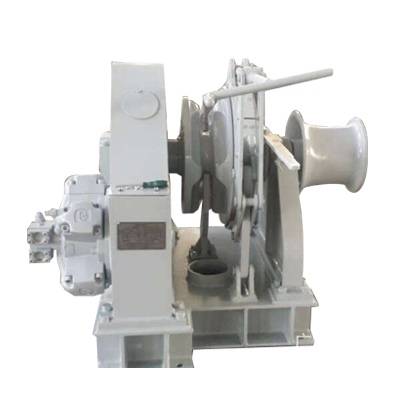
I have been writing and producing technical content for INI Hydraulic for the past four years, and the question I get asked most often from shipyard procurement managers is the one this article answers: what is the difference between type approval and per-order survey, and which one is right for our next build? The answer is not obvious from the brochures, because the two pathways look similar on paper — both end with a class society surveyor signing a certificate. The real difference is in the economics and the lead time, and that is the part the brochures skip.
This guide walks you through the three pathways, the cost and lead-time shape of each, the four situations where type approval is the right answer, the three where per-order survey wins, and the one decision rule I use when a customer asks me to help them pick. I will reference the IYM Series Anchor Winch, the CCS-approved 5-ton mooring winch, and the INI class certificate library where the data comes from, because real certificate numbers beat hypothetical ones every time.
What a Classification Society Actually Does for a Marine Winch
Before the comparison, it helps to set the context. A classification society is a non-governmental organization that sets and enforces technical rules for ships and offshore structures. The major IACS member societies — CCS, DNV, ABS, LR, BV, KR, NK, RINA, RS, IRS, TL — write rules for ship hull, machinery, and electrical systems, and they survey ships in service to make sure the rules are being followed.
For marine deck machinery, the class society's interest is straightforward: the winch must hold the rated load under the design conditions, the brake must hold the rated load when the motor is off, the overload protection must work, and the materials and welding must be traceable. The class society does not certify "this is a good winch" — it certifies "this winch meets our rules for service on a classed vessel under the stated load conditions."
There are three pathways a class society uses to deliver that assurance. The pathway choice depends on the OEM's production volume, the buyer's procurement model, and the vessel's class assignment. The next three sections cover each pathway in detail.
Pathway 1: Type Approval
Type approval is a one-time audit of the OEM's design, quality system, and production line, resulting in a certificate that covers a specific model across many future orders. The certificate is typically valid for 5 years, with an annual factory production assessment and a renewal audit at year 5.
The type approval process has three phases. The first phase is the design document review, which takes 2-3 months. The class society reviews the drawings, the material specifications, the welding procedures, the stress calculations, the brake system design, the overload protection, and the intended service conditions. The second phase is the factory audit and type tests, which takes 2-4 months. The class society audits the OEM's quality plan, witnesses the type tests on a sample unit (load test, overload test, brake holding test, endurance test, noise test, environmental test), and reviews the test reports. The third phase is the certificate drafting and issue, which takes 1-2 months. The class society issues a Type Approval Certificate (TAC) that names the model, the design revision, the rated load, the test conditions, and the validity period.
The cost of type approval varies by class society and by the scope of the model coverage, but the typical range is tens of thousands of US dollars per model, plus the cost of preparing the test units, running the type tests, and paying the design review fees. Renewal audits every 5 years and annual factory production assessments add to the lifetime cost. For an OEM with a steady stream of orders, this lifetime cost is amortized across many vessels, and the per-shipment cost drops to a small fraction of the per-order survey cost.
Pathway 2: Unit Certification
Unit certification is a per-ship certificate covering a specific serial number of a specific model. The class society surveys the unit at the OEM's factory or at the shipyard, reviews the test certificates, and issues a unit certificate that is tied to the ship and the winch serial number.
Unit certification is the middle path between type approval and per-order survey. It is faster and cheaper than type approval because there is no design review and no factory audit, and it is more rigorous than per-order survey because the class society issues a certificate rather than a survey report. Unit certification is most commonly used when the OEM holds a type approval for the base model but the specific configuration (load rating, control system, mounting interface) differs from the certified baseline, so a unit-level review is required.
Unit certification typically takes 4-8 weeks per order, depending on the class society workload and the winch's complexity. The cost is moderate: a per-shipment fee plus the surveyor's time. The certificate is valid for the life of the vessel under the class society's rules, but the OEM does not get a reusable asset the way a type approval provides.
Pathway 3: Per-Order Survey
Per-order survey is a per-vessel inspection of a specific unit, repeated for every ship, with no certificate carryover. The class society surveyor visits the OEM's factory or the shipyard, witnesses the load test on the actual unit being supplied, reviews the material certificates, and issues a survey report that is filed with the vessel's classification documents.
Per-order survey is the cheapest per-shipment option, and it is the right answer for low-volume builds, one-off projects, and cases where the OEM has not invested in type approval. The downside is that every vessel's survey starts from zero, and the surveyor's calendar and the shipyard's schedule have to align. Lead time is typically 2-6 weeks per vessel, and the cost is a small fraction of the type approval cost on a per-shipment basis.
The trap with per-order survey is that the OEM bears no certification asset, so the next time a shipyard asks whether the winch has a class certificate, the answer is "we surveyed it for your vessel, but it is not on file as a reusable certificate." That answer is fine for a one-off, but it is a problem for a fleet buyer.
The Cost and Lead-Time Comparison
Below is the comparison I run with every customer. The numbers are presented as bands because the actual cost depends on the class society, the winch's load rating, and the survey scope. What matters is the shape of the comparison.
| Pathway | Upfront cost | Per-shipment cost | Lead time | Validity | Best fit |
|---|---|---|---|---|---|
| Type Approval (TAC) | Tens of thousands of US dollars per model | Small (annual factory audit, no per-shipment fee) | 6-12 months first time, 2-3 months for renewal | 5 years, with annual factory audit | High-volume models sold across 8-10+ vessels per year |
| Unit Certification | Moderate design review fee | Moderate, per-shipment fee | 4-8 weeks per order | For the life of the vessel | Mid-volume models with non-standard configuration vs TAC baseline |
| Per-Order Survey | None | Small, per-vessel fee | 2-6 weeks per vessel | For the life of the vessel only | One-off builds, low-volume, non-IACS flag states |
The shape of the table is the answer. Type approval costs more upfront but eliminates per-shipment cost. Per-order survey costs nothing upfront but adds cost and lead time to every vessel. Unit certification sits in the middle, used when a type-approved baseline exists but the specific build deviates from it.
Four Situations Where Type Approval Is the Right Answer
Type approval is not always the right answer, but there are four situations where I tell customers to invest in it. The first three are about volume and the fourth is about market access.
1. High-volume, repeat-build models
If you are building the same model for the same class society 8-10 times per year or more, type approval is the cheapest per-shipment pathway. The amortized cost per vessel drops below the per-order survey cost within 18-24 months, and the lead time per vessel drops from weeks to days because the class society survey is just a witness test against an already-approved baseline. This is the situation the type approval program was designed for.
2. Multi-class fleet sales
If you sell the same model to shipyards that use different class societies — say, half to DNV-classed vessels and half to CCS-classed vessels — holding a type approval from one IACS member typically lets the other members accept it with a streamlined review. The QSCS (Quality System Certification Scheme) under the IACS framework is the mechanism, and the streamlined review is much faster than a fresh approval. This is the situation where the IACS recognition framework pays off.
3. Long product lifecycle
If your model is going to be in production for 7+ years, type approval is the right answer because the upfront cost is amortized over a long sales tail. We have customers who built their first type approval 12 years ago and are still shipping the same model, which makes the per-vessel amortized cost negligible. The 5-year renewal is a real cost, but it is much smaller than the initial approval.
4. Tender pre-qualification
Many large shipyards and government fleet operators pre-qualify suppliers based on whether the supplier holds a type approval for the relevant model. If you are trying to break into a new fleet or a new shipyard, holding a type approval is often the price of admission. This is the market-access situation, and it is the reason we maintain a CCS type approval for our IYM Series anchor winch and a separate approval for our IYJ-C mooring winch, even when individual vessel volumes are modest.
Three Situations Where Per-Order Survey Is the Right Answer
Per-order survey gets a bad reputation because it is often associated with low-quality or uncertified products, but that reputation is unfair. Per-order survey is a perfectly legitimate pathway for the following three situations, and I tell customers to use it freely when the situation fits.
1. One-off or project-specific builds
If the winch is a one-off design for a specific vessel or a specific offshore project — say, a custom anchor winch for a 5,000-tonne offshore platform — per-order survey is the right answer. Type approval does not pay for itself on a single unit, and the project timeline usually does not allow for a 6-12-month approval program. The surveyor witnesses the load test on the actual unit, the report is filed with the vessel's class documents, and the project moves on.
2. Low-volume, repeat-build models
If you are building the same model 1-3 times per year for the same class society, per-order survey is usually cheaper than type approval. The amortized type approval cost over 1-3 vessels per year is higher than the per-vessel survey cost, and the per-vessel lead time is acceptable. Many small winch OEMs operate this way for years without ever investing in type approval, and the model works.
3. Non-IACS flag states
If your vessel is being built for a non-IACS flag state — many smaller flag-state authorities are not IACS members, and their rules may not align with IACS Unified Requirements — the type approval from an IACS member society may not be recognized. In that case, per-order survey by the flag-state authority (or its delegated RO) is the only realistic pathway, and type approval is wasted money. Always check the flag state's rules before you commit to a 6-12-month approval program.
What the IACS Recognition Framework Actually Means
One of the most common questions I get from shipyard buyers is whether a class certificate from one IACS society will be accepted by another. The short answer is "usually yes, with a streamlined review," but the practical answer is more nuanced. Let me walk through the framework.
The IACS (International Association of Classification Societies) is the body that coordinates the technical work of its 12 member societies. The framework that matters for winch type approval is the QSCS (Quality System Certification Scheme). Under QSCS, when an OEM holds a type approval from one IACS member, the other members accept that approval as a baseline and conduct a streamlined review focused on class-specific notations and additional requirements. The streamlined review typically takes 2-4 weeks and costs a fraction of the original approval.
The recognition is not automatic. The receiving society still inspects the certificate, the test reports, and the design revision, and may apply a small additional fee. But the practical effect is that an OEM holding a CCS, DNV, ABS, LR, or BV type approval can sell to vessels classed by any of the other major societies with minimal additional cost.
The IACS framework does not cover non-IACS flag states. If your vessel is registered in Panama, Liberia, the Marshall Islands, or other open registries, the flag-state authority may have its own survey requirements that do not align with IACS. In those cases, the type approval may be useful as a baseline, but the flag-state survey is what actually matters at delivery.
What the INI Hydraulic Certificate Library Actually Contains
To make the comparison concrete, here is what we keep on file at INI Hydraulic. The list is not a marketing claim; it is a real inventory of the certificates we maintain, and the scope of each one is documented in the certificate itself.
| Certificate | Issuing body | Year | Scope |
|---|---|---|---|
| CCS Quality Management Certificate | China Classification Society | 2021 | Factory quality system, basis for CCS type approval |
| CCS Occupational Health and Safety Management Certificate | China Classification Society | 2021 | Factory OHS system |
| CCS Environmental Management Certificate | China Classification Society | 2021 | Factory environmental management system |
| IYJ 2.53 Hydraulic Winch EC Type Certificate | UDEM (EU Notified Body) | 2018-2023 | IYJ 2.53 kN class hydraulic winch, Machinery Directive 2006/42/EC |
| IYJ34 Hydraulic Winch EC Type Certificate | UDEM (EU Notified Body) | 2020 | IYJ 34 kN class hydraulic winch, Machinery Directive 2006/42/EC |
| Hydraulic Motor and Pump UDEM Certificate | UDEM | 2021 | Hydraulic motor and pump sub-assemblies |
| Hydraulic Winch UDEM Certificate | UDEM | 2021 | Hydraulic winch sub-assemblies |
| Transmission Device UDEM Certificate | UDEM | 2021 | Planetary gearbox sub-assemblies |
| ISO 14001:2001 Environmental Management System Certificate | UDEM | 2015 | Factory environmental management system |
You can see the gap and the coverage in one view. The CCS certificates cover our factory quality system, which is the foundation for any future CCS class society survey. The UDEM certificates cover our EU Machinery Directive compliance for specific winch models (IYJ 2.53 and IYJ 34), which is what the European shipyard buyer needs to know. The ISO 14001 certificate is the environmental management system, which is increasingly requested by shipyards with their own ESG reporting.
The full certificate library lives on the website, and the page is kept current. When a customer asks me whether a specific model has a CCS type approval, the answer is in the library, and if the answer is no, I can tell them the cost and lead time to add it.
The 5-Step Decision Procedure I Use to Pick a Pathway
When a customer asks me to help them pick between type approval, unit certification, and per-order survey, I run them through the same 5-step procedure. The procedure is not a sales tool — it is a structured way to surface the constraints that actually drive the choice.
- Identify the target class society and flag state. The class society on the vessel's classification certificate dictates the rules. The flag state is usually aligned but not always, and the alignment matters for the survey scope. Why this comes first: everything downstream depends on which society's rules apply.
- Estimate annual volume and product mix. Estimate the per-model, per-year volume to the same class society, and the model mix across the next 3 years. Why this comes second: type approval is justified above 8-10 vessels per year per model, and the break-even calculation needs a volume estimate.
- Compare the lead time and cost of each pathway. Build a 3-year cost model: type approval upfront cost + annual audit fees; unit certification per-shipment fees; per-order survey per-vessel fees. Then compare against the lead time each pathway offers. Why this comes third: the cost and lead time shape the decision more than the technical fit.
- Verify the type approval scope matches the product. If type approval is the leading option, verify that the existing certificate (if any) covers the exact model, tonnage class, and design revision. Why this comes fourth: a mismatched certificate is rejected at delivery, and the rejection is the OEM's problem, not the shipyard's.
- Plan the first renewal audit and ongoing factory audit cycle. Type approval is not a one-time investment. Plan the year-5 renewal, the annual factory production assessment, and the cost of any design revision that requires a re-test. Why this comes last: the lifetime cost of type approval includes the audit cycle, and that cost must be in the model from day one.
The procedure takes about 30 minutes to run with a customer, and the answer usually falls out within the first three steps. Steps 4 and 5 are the due diligence that prevents the most common mistakes.
How the Decision Plays Out in Three Real Customer Profiles
To make the framework concrete, here are three real profiles I have worked with over the past four years. The names are generalized, but the situations and the outcomes are real.
Profile A: European offshore platform builder, high-volume
Background: a Dutch shipyard building offshore platforms for the North Sea fleet. They need anchor winches and mooring winches for 12-15 vessels per year, all DNV-classed, all delivered to a similar specification. Decision: type approval from DNV, covering their standard anchor winch and mooring winch models. Outcome: the type approval is amortized across 60+ vessels over 5 years, the per-shipment cost is negligible, and the shipyard treats INI as a pre-qualified supplier. Net result: type approval is clearly the right answer, and the upfront investment was paid back within 18 months.
Profile B: Indonesian ferry operator, mid-volume
Background: an Indonesian ferry operator building 4-6 ro-ro ferries per year, all CCS-classed, all using the same anchor winch model. Decision: per-order survey through CCS, because the annual volume is below the 8-10 vessel break-even. Outcome: each vessel's survey takes 2-4 weeks and the per-vessel cost is modest, and the operator avoids the upfront investment in type approval. Net result: per-order survey is the right answer for this volume, and CCS type approval is not worth the 6-12-month timeline.
Profile C: One-off offshore wind installation vessel
Background: a custom-built wind turbine installation vessel, designed for a single ship-owner, with non-standard mooring and anchor requirements. The vessel is classed by ABS but registered under a non-IACS flag state. Decision: per-order survey through both ABS and the flag-state authority, with no type approval investment. Outcome: the load test was witnessed by ABS and the flag-state surveyor on the actual unit, the certificates are filed with the vessel's class documents, and the project moved on. Net result: per-order survey is the only sensible answer, because the model is unique and the flag state would not recognize an IACS type approval anyway.
Notice how the decision is the same in all three cases — "pick the cheapest pathway that meets the lead time" — but the actual answer is different in each case. The volume and the class society mix drive the answer, and the decision rule I shared earlier captures the logic.
Common Mistakes That Burn Time and Money
After four years of helping customers navigate class society certification, I have seen the same six mistakes waste time and money. None of them is exotic. All of them are preventable.
- Quoting a type approval you do not actually hold. A type approval is model-specific. A type approval for the IYM 5-ton anchor winch does not cover the IYM 8-ton anchor winch, and the class society surveyor will reject the certificate at delivery.
- Assuming per-order survey is "second-class." It is not. Per-order survey is a perfectly legitimate pathway for low-volume builds, and the surveyor still witnesses the load test on the actual unit. The certificate is filed with the vessel's class documents, and the warranty chain is intact.
- Forgetting the non-IACS flag state. The type approval is recognized by IACS members, but not necessarily by the flag state. If the vessel is registered in an open registry, the flag state's survey is what matters at delivery, and a 6-12-month type approval program may not help.
- Underestimating the design review timeline. The first 2-3 months of a type approval program is the design document review, and it cannot be compressed by paying more. The class society reads the drawings, the stress calculations, and the welding procedures at its own pace.
- Skipping the factory production assessment. Type approval is not a one-time certificate. The class society conducts an annual factory production assessment, and a failed assessment can suspend the certificate. The factory must maintain the quality plan that the original approval was based on.
- Choosing type approval because the customer asked for it. Sometimes the customer asks for "a class certificate" without specifying type approval, and the OEM invests in a 6-12-month program when a per-order survey would have met the customer's actual need. Ask the customer which pathway they want, and confirm in writing.
What I Would Recommend If You Are Starting Today
If I were an OEM building marine winches today, here is what I would do. First, I would identify the class society that covers 70% of my projected volume over the next 3 years, and I would invest in a type approval for the single model that drives the most volume. Second, I would maintain the factory quality system that the type approval depends on, because the annual production assessment is the part most OEMs underinvest in. Third, I would use unit certification for models that deviate from the type-approved baseline, and per-order survey for one-off and low-volume builds. Fourth, I would keep the certificate library current, because the shipyard buyer is going to ask for the certificate number before they issue a purchase order, and a stale library loses deals.
If I were a shipyard procurement manager, I would ask the winch supplier for the type approval certificate number and the model scope in writing, and I would verify both with the class society's online certificate database before issuing a purchase order. The verification takes 10 minutes, and it prevents the much more expensive problem of a rejected certificate at delivery.
And if I were a vessel owner buying a one-off or low-volume build, I would not insist on type approval. I would ask the winch supplier to demonstrate that they have a class-approved factory quality system (CCS QMS, ISO 9001, or equivalent), and I would accept per-order survey as the certification pathway. The vessel will be delivered with the right class documents, and the per-order survey is cheaper for everyone involved.
Need a class-society-cleared marine winch?
Browse the IYM Series Anchor Winch, the CCS-approved 5-ton mooring winch, or browse our class certificate library to see the current scope.
Post time: Oct-13-2026