
When I sit down with a procurement manager at a shipyard in South Korea, a naval architect in Rotterdam, or a fleet superintendent in Dubai, the conversation about hydraulic winch sourcing always arrives at the same turning point: certification. Before we discuss drum capacity or line pull ratings, the buyer pulls up a checklist dominated by five acronyms — DNV, ABS, CCS, LR, and ISO 9001 — and every one of them acts as a gatekeeper between a purchase order and a rejection letter.
I have toured winch factories on three continents and audited certification documentation for over a hundred procurement projects. In every case, the difference between a smooth delivery and a six-month delay came down to how early the buyer and the supplier aligned on the certification pathway. When I sit across the table from an OEM engineer, I always start by laying out the ⑤ Cert Roadmap — the five certifications that I have found to be non-negotiable in modern marine winch procurement.
I have spent years guiding OEM procurement teams through the verification process for marine winch certification. In my experience, the order in which these certifications appear on a specification sheet is not arbitrary. Each one represents a layer of trust and a legal safeguard for the vessel operator. In this article, I walk you through each certification in the sequence I recommend to every buyer who contacts our team — a roadmap I call the ⑤ Cert Roadmap.
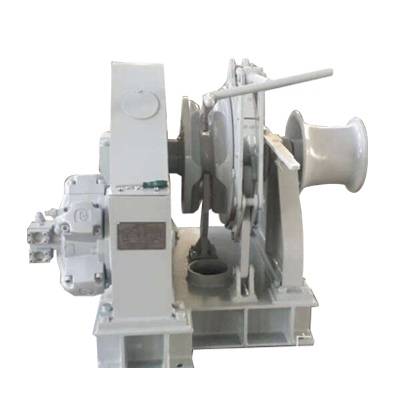
Certification ①: DNV (Det Norske Veritas) — The Global Gold Standard for Marine Winches
If there is a single certification that opens more doors in the offshore industry than any other, it is DNV. Founded in Norway in 1864, DNV Maritime has grown into the world's largest classification society for maritime assets. When I present our DNV-certified marine anchor winch to a buyer in Stavanger or Singapore, the DNV type-approval certificate is the first document they request.
What DNV Certification Covers for Winches
DNV type approval for winches encompasses several critical areas that I walk through with every procurement team:
- Design verification — DNV engineers review the winch's structural calculations, drum geometry, brake system design, and gear train layout against their classification rules for ships and offshore units.
- Material traceability — Every casting, forging, and plate used in the winch must carry mill certificates that DNV can trace back to the original heat number.
- Weld quality — All structural welds on the winch frame and drum must comply with DNV welding standards, including non-destructive testing (NDT) protocols.
- Factory acceptance testing (FAT) — The winch must undergo load testing under witnessed conditions, typically at 110% of the rated working load, with DNV surveyors present.
- Hydraulic system integrity — The hydraulic motor, control valve block, and piping layout must meet DNV's requirements for pressure containment and filtration.
When a buyer in Norway specifies "DNV class" on a winch purchase order, they are not simply asking for a sticker on the nameplate. They are requiring that the entire manufacturing process — from raw steel incoming inspection through final load test — is traceable and auditable to DNV's standard.
Why Ship Owners in Northern Europe Demand DNV First
In my experience, the majority of offshore support vessel (OSV) projects in the North Sea will not even issue a request for quotation (RFQ) unless the winch supplier can demonstrate DNV marine winch type approval. A shipyard in Vung Tau building a PSV for a Norwegian owner will pass the DNV requirement down the supply chain to every equipment vendor, including our winch supply team.
I have seen procurement timelines extend by three to four months when a supplier cannot produce valid DNV documentation at the RFQ stage. Since DNV type-approval renewal requires periodic audits — typically every three years — I always show the certificate's validity date to new buyers first.
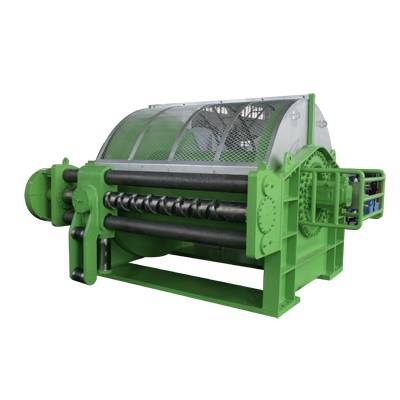
Certification ②: ABS (American Bureau of Shipping) — Essential for U.S.-Bound and Gulf of Mexico Vessels
The second checkpoint on our ⑤ Cert Roadmap is ABS, the American Bureau of Shipping. ABS classification is a non-negotiable requirement for vessels operating in U.S. waters and the Gulf of Mexico. When I work with a shipyard in Houston, Batam, or Kaohsiung building an AHTS vessel for a Gulf operator, ABS certification is the first box on their vendor evaluation form.
ABS Rules for Winch Equipment
ABS publishes its Rules for Building and Classing Steel Vessels and Rules for Building and Classing Offshore Support Vessels, both of which contain specific requirements for deck machinery. The key areas I highlight for our buyers include:
- Load testing requirements — ABS mandates that winches undergo a static overload test, typically at 1.25 times the rated load for mooring winches and 1.5 times for anchor handling winches.
- Brake holding capacity — The brake system must hold the rated load without slippage, and ABS requires documentation of brake pad material certification and wear-rate calculations.
- Control system redundancy — For winches classified under ABS rules for dynamic positioning (DP) vessels, the control system must demonstrate fail-safe characteristics and backup operation modes.
- Hydraulic component approval — ABS reviews the hydraulic motor, pump, and valve components for compliance, and the hydraulic system must be pressure-tested to 1.5 times the maximum working pressure.
I have found that ABS offshore winch certification is particularly important for jack-up rigs and semi-submersible platforms in the Gulf of Mexico. The International Maritime Organization (IMO) conventions are incorporated into ABS rules, so an ABS certificate often satisfies multiple regulatory requirements simultaneously.
Practical Difference Between DNV and ABS for Winch Buyers
Many buyers ask me whether DNV and ABS are interchangeable. My answer is always the same: they are not. The documentation packages, test report formats, and certificate templates are different. A winch that holds DNV type approval still needs a separate ABS design review and factory survey. This is why I advise buyers who plan to operate vessels in multiple jurisdictions to specify dual certification from the beginning.
Certification ③: CCS (China Classification Society) — The Gateway to the World's Largest Shipbuilding Market
China is the world's largest shipbuilding nation by gross tonnage, and the China Classification Society (CCS) is the primary classification body for Chinese-flagged vessels. When I support an OEM buyer at a shipyard in Dalian, Nantong, or Guangzhou, CCS vessel winch certification is often the first requirement stated in the technical specification.
CCS Certification Process for Marine Winches
The CCS certification process follows a structured sequence that I have guided many buyers through:
- Application and documentation submission — The winch manufacturer submits design drawings, material specifications, hydraulic schematics, and quality management system certificates to CCS.
- Design appraisal — CCS engineers review the winch design against their Rules for Classification of Sea-Going Steel Ships and Guidelines for Marine Deck Machinery.
- Prototype testing — For new winch designs not previously approved by CCS, a prototype must be manufactured and tested at a CCS-witnessed facility.
- Factory audit — CCS auditors visit the manufacturing facility to verify quality management procedures, calibration records for testing equipment, and personnel qualifications.
- Type-approval certificate issuance — Upon satisfactory completion, CCS issues a type-approval certificate valid for five years, subject to annual surveillance audits.
I always emphasize to international buyers the relationship between CCS and other classification societies. CCS has recognition agreements with DNV, ABS, and Lloyd's Register, which can streamline the process of obtaining multiple certifications. However, the CCS technical review remains a distinct process, and I advise my buyers to allocate dedicated time for CCS appraisal.
Why CCS Certification Matters Beyond China
I have encountered situations where CCS certification was required even for vessels not flagged in China. This happens when a Chinese shipyard builds a vessel under DNV or ABS class but the owner's charter party also requires CCS compliance. In these cases, having a winch supplier who already holds CCS type approval eliminates a significant bottleneck for our customers.
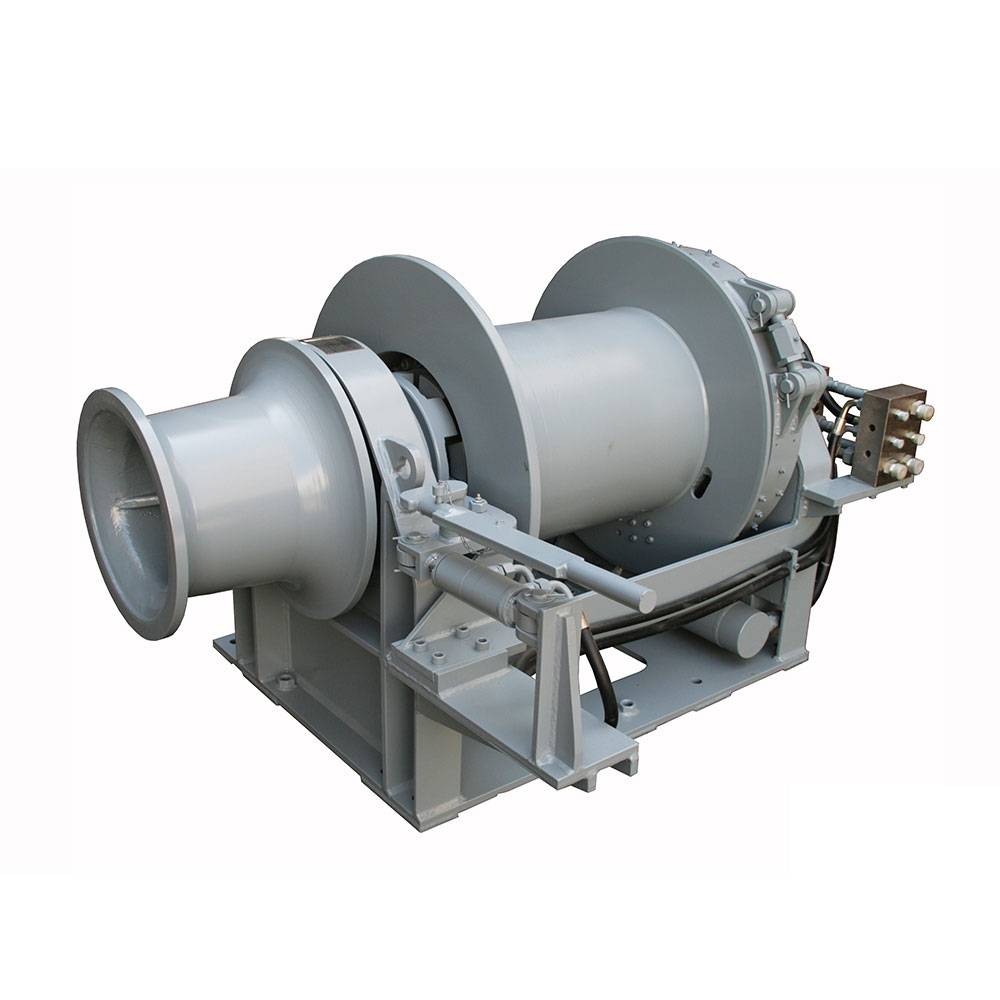
Certification ④: LR (Lloyd's Register) — The Historic Standard with Modern Authority
Lloyd's Register (LR) is the world's oldest marine classification society, established in 1760. When I work with buyers in the United Kingdom, the Middle East, or Southeast Asia, LR certified winch specifications frequently appear on their procurement documents.
LR's Approach to Winch Certification
LR takes a risk-based approach to classification that I find particularly rigorous. Their certification of winch equipment addresses:
- Risk-based design review — LR evaluates the winch design within the context of the vessel's intended operating profile, so a winch for a North Sea supply vessel faces different scrutiny than a winch for a tropical region tanker.
- Material and welding standards — LR's requirements for steel quality and weld inspection are aligned with their Rules and Regulations for the Classification of Ships, specifying acceptance criteria for ultrasonic testing, magnetic particle inspection, and visual examination of all structural welds.
- Functional testing — LR requires that winches demonstrate their full operational range during factory acceptance testing, including speed tests at rated load, brake engagement tests, and emergency stop tests.
- Environmental durability — For winches intended for harsh environments, LR may require additional salt-spray testing, low-temperature impact testing, or coating thickness verification.
I recall a project with a Singapore-based owner commissioning AHTS vessels built at a yard in Batam, Indonesia. Our IYJ-C mooring and positioning winch was specified for the mooring station, and LR certification was mandatory since the owner's fleet management agreement required Lloyd's Register class across all vessels. We coordinated with the LR surveyor in Jakarta to arrange witnessed load testing at our facility.
LR and the International Marine Contractors Association (IMCA)
I also discuss with offshore construction companies how LR certification aligns with IMCA guidelines. The International Marine Contractors Association publishes guidance on deck machinery safety that many offshore operators follow. LR-certified winches typically satisfy IMCA requirements since Lloyd's Register's testing protocols overlap with IMCA's recommendations.
I want to share a lesson I learned early in my career: never assume that a winch certified by one society will automatically satisfy another. I once worked on a project where the buyer assumed DNV approval would suffice for an ABS-classed vessel. The result was a three-month delay while we filed a separate ABS application. Since that experience, I make it a point to walk every buyer through the full ⑤ Cert Roadmap at the start of the project.
I want to share a lesson I learned early in my career: never assume that a winch certified by one society will automatically satisfy another. I once worked on a project where the buyer assumed DNV approval would suffice for an ABS-classed vessel. The result was a three-month delay while we filed a separate ABS application. Since that experience, I make it a point to walk every buyer through the full ⑤ Cert Roadmap at the start of the project.
Certification ⑤: ISO 9001 — The Foundation Under Every Marine Winch Certificate
The fifth certification on our ⑤ Cert Roadmap is not issued by a marine classification society, yet it underpins every one of them. I am referring to ISO 9001, the international standard for quality management systems. Every classification society — DNV, ABS, CCS, and LR — requires that the winch manufacturer operates under a certified ISO 9001 hydraulic winch quality management system as a prerequisite for type-approval consideration.
What ISO 9001 Certification Means in Practice
When I present INI Hydraulic's ISO 9001 certificate to a new buyer, I explain what it actually means for the product they are purchasing:
- Documented procedures — Every step of our manufacturing process, from incoming raw material inspection through final packaging, follows a written and approved procedure.
- Traceability — Every winch we produce is assigned a serial number that links back to its material certificates, heat treatment records, machining inspection reports, and test records. If a problem arises in service, we can trace the issue to its root cause within hours.
- Calibration and maintenance — All of our testing equipment, including load cells, pressure gauges, and torque wrenches, is calibrated at regular intervals with records maintained in the quality management system.
- Corrective and preventive action (CAPA) — Any nonconformance identified during manufacturing or testing triggers a formal corrective action process that addresses the immediate issue and prevents recurrence.
- Management review and continuous improvement — Our top management reviews quality performance data at least annually, and improvement objectives are set and tracked throughout the year.
ISO 9001 is not a marine-specific certification, but without it, no marine classification society will even begin a type-approval evaluation. It is the table stakes for entering the marine winch supply chain.
Storage, Shelf Life, and Handling Requirements
I should note that ISO 9001 also governs how we store finished winches and spare parts before shipment. At our facility, finished winches and packaged spare parts are stored in a climate-controlled warehouse maintained between 4°C and 30°C. Our packaged spare parts carry a shelf life of 24 months from the date of manufacture. This storage protocol is documented in our ISO 9001 quality manual and verified during every surveillance audit.
How the ⑤ Cert Roadmap Applies to Real Procurement Scenarios
Let me walk you through three real procurement scenarios where I helped buyers navigate the ⑤ Cert Roadmap.
Scenario 1: Platform Supply Vessel for the North Sea
A Norwegian owner commissions a PSV at a Vietnamese shipyard. The vessel will be DNV-classed and flagged in Norway, and the owner requires all deck machinery to hold DNV marine winch type approval. Since the vessel will also operate in UK waters, Lloyd's Register acceptance is needed under a bilateral agreement. I advise the buyer to confirm ISO 9001 as a baseline and DNV type approval as the primary certification. Our procurement timeline typically runs 16 to 20 weeks from PO to FAT.
Scenario 2: Anchor Handling Tug Supply Vessel for the Gulf of Mexico
A Houston-based operator orders an AHTS vessel from a Chinese yard. The vessel will be ABS-classed and flagged in the United States. The yard specifies ABS offshore winch certification, and the owner also requests CCS certification for local regulatory requirements. I advise the buyer to plan the dual ABS-CCS path as parallel activities, which saves considerable time.
Scenario 3: Heavy Lift Crane Vessel for the Middle East
An Abu Dhabi-based offshore contractor requires mooring winches for a heavy lift vessel in the Arabian Gulf. The vessel is Lloyd's Register classed, and the contractor follows IMCA guidelines. The winch must hold LR certified winch status, and the contractor requires a detailed FMEA for the hydraulic and control systems. Since ambient temperatures exceed 45°C, I work with our engineering team to ensure adequate cooling capacity. Our hydraulic winch product catalog includes thermal performance data for these conditions.
Common Questions I Receive About Marine Winch Certification
Over the years, I have compiled answers to the questions I hear most frequently from OEM procurement managers, fleet superintendents, and shipyard buyers. I present these here so that you can reference them during your own supplier evaluation process. My goal is to give you the confidence to ask the right questions and interpret the answers correctly.
Over the years, I have compiled answers to the questions I hear most frequently from OEM procurement managers, fleet superintendents, and shipyard buyers. I present these here so that you can reference them during your own supplier evaluation process. My goal is to give you the confidence to ask the right questions and interpret the answers correctly.
In my years supporting OEM procurement teams, certain questions about OEM marine winch certification arise in nearly every conversation. Here are the six I hear most often, along with my answers.
1. Can a winch supplier begin manufacturing before all five certifications are in place?
Yes, and this is the most common scenario I see. ISO 9001 must be valid before any classification society will accept a type-approval application, but the type-approval process can run in parallel with manufacturing. I advise my buyers to confirm the supplier's ISO 9001 certificate is current and that the type-approval application has been filed before issuing a purchase order.
2. How long does it take to obtain a new marine classification certification for a winch?
From my experience, a first-time type-approval application takes between 8 and 14 weeks, depending on design complexity and documentation completeness. If the supplier already holds approval with one society and is seeking a second via mutual recognition, the timeline can be shorter — typically 4 to 8 weeks. Renewal, which occurs every three to five years, is generally faster since only the manufacturing process is audited.
3. Does a marine winch need separate certification for each classification society, or does one certificate cover all?
Each society issues its own type-approval certificate, and one does not automatically transfer to another. However, several have bilateral recognition agreements. I recommend that my buyers specify the primary classification society in their purchase order and request additional certifications as options, which allows us to provide accurate pricing and lead times.
4. What happens if a winch fails the factory acceptance test witnessed by a classification surveyor?
If a winch fails a witnessed FAT, the classification surveyor will issue a nonconformance report. The supplier must investigate the root cause, implement corrective action, and re-test under witnessed conditions. In my experience, most FAT failures relate to brake adjustment or seal installation rather than fundamental design issues, and the corrective action timeline is typically one to three weeks. I recommend that we conduct a pre-FAT internal test using the same parameters the surveyor will verify, so we can resolve issues before the official test.
5. Are there specific certifications required for winches operating in polar or extreme cold environments?
Yes. Vessels operating in polar waters under the IMO Polar Code require equipment meeting additional low-temperature criteria. DNV, ABS, and Lloyd's Register all publish supplementary rules for polar-class vessels, including materials that maintain impact toughness at -40°C. For winches, this means specifying low-temperature steel grades, cold-rated hydraulic fluids, and seals that remain flexible at extreme temperatures. I recommend specifying polar-class requirements from the beginning, as retrofitting a standard winch for polar service is far more expensive than designing for it initially.
6. What is the minimum order quantity for certified marine winches from INI Hydraulic?
For standard models that already hold type-approval certification with DNV, ABS, CCS, or Lloyd's Register, our minimum order quantity (MOQ) is 5,000 units for single-unit orders and 50,000 units for OEM project bulk procurement. For custom designs requiring new type-approval applications, we discuss MOQ and pricing on a project basis. I encourage you to contact us early so we can provide accurate pricing that includes certification costs.
Practical Checklist: How I Recommend Buyers Verify Supplier Certifications
I share this verification checklist with every buyer evaluating a marine certification supplier:
- Request the original certificate, not a photocopy — Every classification society issues certificates with unique reference numbers that you can verify directly with the issuing society.
- Check the certificate's validity period — Type-approval certificates from DNV, ABS, CCS, and LR all have expiration dates. An expired certificate is not valid for new projects.
- Verify the certificate scope matches your winch model — Type-approval certificates are issued for specific winch models or model ranges. Ensure the winch you are purchasing falls within the scope of the certificate.
- Confirm the manufacturing facility address — The type-approval certificate specifies the manufacturing facility where the approved product is produced. If the supplier has multiple factories, verify that the factory producing your winch is the one listed on the certificate.
- Request the latest audit report summary — Classification societies conduct periodic surveillance audits of approved manufacturers. A clean audit report gives you additional confidence that the quality management system is functioning effectively.
- Verify ISO 9001 certificate with the issuing registrar — ISO 9001 certificates are issued by accredited certification bodies, and most registrars maintain online databases where you can verify a certificate's validity using the certificate number.
Why I Recommend Starting the Certification Conversation Early
If there is one piece of advice I give to every buyer, it is this: start the certification conversation at the RFQ stage, not after placing the purchase order. I have seen too many projects delayed since the buyer assumed the supplier held a particular certification, only to discover during design review that a new application was required. The ⑤ Cert Roadmap should be confirmed before specifications are finalized, since certification requirements influence design decisions such as material selection and hydraulic circuit layout.
At INI Hydraulic, we maintain current type-approval certifications with all four major classification societies, and our ISO 9001 system has been certified continuously since our initial registration. When you browse our hydraulic winch product catalog, every model includes its certification status, and our team can provide certificate copies and test records within 24 hours of your request.
I encourage you to reach out early in your project planning. Whether you are building a single vessel or equipping an entire fleet, the certification verification process benefits from early attention. You can find detailed specifications for our certified winch range, including our DNV-certified marine anchor winch and our IYJ-C mooring and positioning winch, on our website at ini-hydraulic.com.
For additional resources on maritime safety regulations and industry best practices, I recommend visiting Marine Insight and Safety4Sea, both of which provide regularly updated coverage of classification society requirements, IMO regulatory developments, and maritime industry news that affects winch procurement decisions.
About the Author
Tianyu Hu is a technical content specialist and export sales representative at INI Hydraulic Co., Ltd., one of China's leading manufacturers of hydraulic winches, slewing drives, and fluid power transmission systems. Through INI Hydraulic's YouTube channel and social media platforms, he produces hands-on technical content — including hydraulic system animations, winch load testing footage, and OEM procurement walkthroughs — that helps international buyers understand INI's product engineering before placing orders.
With a background in hydraulic transmission engineering and four years supporting offshore, marine, and construction machinery buyers across Southeast Asia, the Middle East, and Europe, Leo translates complex hydraulic spec sheets into practical procurement guidance for OEM engineers, shipyard procurement managers, and industrial equipment distributors.
Facebook: https://www.facebook.com/share/1CBU2cymKh/?mibextid=wwXIfr
Post time: Jul-30-2026