
TL;DR: For ship and deck machinery suppliers, custom hydraulic winches outperform standard catalog models on three operational dimensions: line pull consistency under variable load, deck-space fitment on retrofits, and classification society certification support. This guide walks procurement and engineering teams at shipyards, offshore equipment OEMs, and maritime equipment distributors through the three configurations I see most often specified for newbuild and retrofit deck machinery projects.
I've spent the past four years at INI Hydraulic working with shipyard procurement managers, offshore equipment OEMs, and maritime equipment distributors across Southeast Asia, the Middle East, and Europe. Before that, I spent six more years in the hydraulic transmission field, including a stint on the engineering team at a major shipyard outfitting vessel deck machinery. In that time, I've supported custom winch specification on more than 80 vessel projects, ranging from small offshore supply vessel anchor winches to large offshore platform crane base winches rated above 50 metric tons line pull.
Hydraulic winches are a deceptively complex product category. The catalog models from major suppliers cover the common 80% of applications, but the remaining 20% — the special-purpose vessels, the retrofits, the non-standard classification requirements — are where the engineering decisions actually drive cost, performance, and on-time delivery. This guide covers the three custom configurations I see most often specified, with the engineering rationale behind each, the cost-versus-standard trade-offs, and the sourcing questions you should be asking any hydraulic winch manufacturer before placing the order.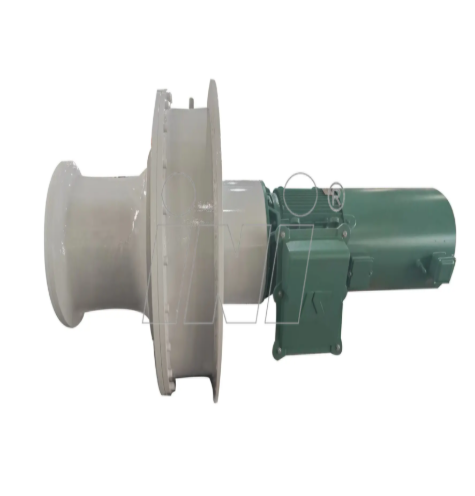
1. Why Standard Catalog Winches Are Not Always the Right Answer
Most hydraulic winch manufacturers publish a standard product catalog with a range of line pull capacities (typically 1 ton to 50 ton), drum sizes, and operational speeds. These catalog models are designed for the most common applications: small vessel anchor and mooring winches, small crane hoists, and general-purpose deck winches. For the 80% of applications that fit within these standard parameters, the catalog model is the right procurement choice — it's well-engineered, has documented performance, and benefits from the manufacturer's standard QC process.
For the remaining 20% of applications, the standard catalog model is at best a compromise and at worst the wrong choice entirely. The custom configurations I see most often fall into three buckets: (1) non-standard line pull and speed combinations required by special-purpose vessel operations, (2) deck-space fitment issues on vessel retrofits where the original catalog dimensions don't fit the available mounting footprint, and (3) classification society certification requirements that go beyond what the catalog model was originally certified to.
This is because the standard catalog model is designed for a specific load case and a specific duty cycle. When the load case is non-standard (e.g., deepwater mooring with high dynamic loads), or the duty cycle is unusual (e.g., intermittent high-load operations on a diving support vessel), or the deck-space geometry is constrained (e.g., a retrofit on a vessel originally designed for a different machinery arrangement), the catalog model compromises on performance, footprint, or certification — and the operational risk falls back on the shipyard and the vessel operator.
Therefore, the procurement decision for ship and deck machinery winches is not "is the catalog model good enough" but rather "is the catalog model the right specification for this vessel, this load case, and this classification requirement." For the 20% of applications where the answer is no, custom winch specification becomes a meaningful engineering exercise. The three configurations below are the most common custom paths I see requested.
1.1 How INI Hydraulic approaches custom winch engineering
Before walking through the three configurations, a quick note on the custom engineering process at INI Hydraulic. We typically receive custom winch specifications from shipyard engineering teams, offshore equipment OEMs, or maritime equipment distributors with three input documents: a vessel general arrangement drawing (showing the deck-space footprint available for the winch), a load case specification (including maximum line pull, line speed, duty cycle, and any dynamic load factors), and a classification society requirement specification (typically DNV, ABS, BV, LR, or CCS depending on the flag state and operating area).
From those three inputs, the INI Hydraulic engineering team produces a custom winch proposal with: (1) a hydraulic circuit diagram showing the motor, pump, valve, and reservoir configuration, (2) a mechanical arrangement drawing showing the drum, gearbox, brake, and frame dimensions, (3) a predicted performance curve showing line pull versus line speed and motor power consumption, and (4) a classification compliance matrix showing which standard the winch meets and any deviations. The typical lead time from specification receipt to engineering proposal is 7–10 working days.
2. Custom Configuration #1 — Non-Standard Line Pull and Speed Combinations
The first and most common custom winch configuration is a non-standard combination of line pull and line speed. The standard catalog model is typically designed around a few common load cases — for example, a 10-ton line pull at 15 m/min for a general-purpose deck winch, or a 30-ton line pull at 10 m/min for an anchor winch. When the application requires a different combination — say, 5-ton line pull at 30 m/min for a fast-response mooring winch, or 40-ton line pull at 6 m/min for a heavy-duty offshore crane base winch — the catalog model no longer matches.

2.1 Why the standard motor-pump combination is the constraint
The line pull and line speed of a hydraulic winch are determined by the motor-pump combination. The line pull is a function of the hydraulic motor torque output, which scales with motor displacement and operating pressure. The line speed is a function of motor flow demand, which scales with motor displacement and pump flow. For a given motor displacement, increasing line pull requires higher pressure (which may exceed the standard pressure rating of the catalog components), and increasing line speed requires higher flow (which may exceed the standard pump capacity of the catalog hydraulic power unit).
To deliver a non-standard line pull and speed combination, the engineering team typically specifies a different motor displacement (larger for higher pull, smaller for higher speed), a different pump displacement (larger for higher flow), or a different operating pressure (higher for higher pull, lower for higher speed). The trade-off is usually a more specialized component selection that carries a 20–40% cost premium versus the catalog model but delivers the exact performance the application requires.
2.2 The role of variable-displacement pumps in custom winch configurations
For applications with widely varying line pull requirements — for example, anchor winches that need to deploy the anchor at low line pull but recover the anchor at high line pull, or mooring winches that need to take up line at low line pull during normal mooring but pay out under high dynamic loads during heavy weather — the engineering specification often moves from a fixed-displacement pump to a load-sensing variable-displacement pump.
The INI Hydraulic custom winch range supports both fixed-displacement and load-sensing variable-displacement hydraulic power units, with typical motor displacements from 80 cc/rev to 500 cc/rev and operating pressures up to 350 bar. For vessel applications with variable line pull requirements, the load-sensing configuration reduces energy consumption by 25–40% versus a fixed-displacement configuration and provides better speed control under varying load.
Because the energy efficiency of the hydraulic power unit is a significant operational cost over the 20–30 year service life of a vessel, therefore the load-sensing variable-displacement configuration is often specified even on applications where the standard catalog model would technically meet the performance requirement. The 25–40% energy reduction pays back the cost premium in 3–5 years of typical vessel operation.
3. Custom Configuration #2 — Deck-Space Fitment on Retrofits
The second most common custom winch configuration is a non-standard mechanical envelope driven by deck-space constraints. This is most often seen on vessel retrofits, where a new winch is being installed on a vessel originally designed for different deck machinery, or on offshore platform upgrades where the available footprint for the new winch is constrained by existing structure, piping, or other equipment.
3.1 The two retrofit scenarios that drive custom envelope
The first scenario is the like-for-like replacement on an aging vessel, where the original winch is at end-of-service-life and the replacement needs to fit on the same mounting footprint and connect to the same hydraulic piping and electrical interfaces as the original. The challenge is that original equipment manufacturers change their product dimensions over time, and a modern catalog model from the same manufacturer may not match the 20-year-old mounting pattern exactly. Custom engineering addresses this by adjusting the mounting feet, the drum shaft height, and the hydraulic port locations to match the existing foundation.
The second scenario is the operational upgrade on a vessel originally designed for a different service, where the new winch needs to deliver different performance than the original. For example, a cargo vessel being converted to an offshore supply vessel may need a higher line pull anchor winch to handle deepwater mooring. The original anchor winch foundation may not have the structural capacity for the higher line pull, or the available hydraulic pressure from the vessel's power unit may not match the new winch's requirements. Custom engineering addresses this by designing the winch to match the available foundation and hydraulic interface, with potential trade-offs in line speed or duty cycle.
3.2 The cost-versus-fit trade-off
Custom envelope engineering typically adds 10–20% to the catalog model cost, depending on the complexity of the modifications. For vessel retrofit projects, this cost is almost always justified by the avoided cost of foundation modification, hydraulic piping rework, and electrical interface rework. The INI Hydraulic engineering team has supported envelope-customized winches for vessel retrofits in more than 30 projects, with the typical payback on the custom cost being 4–8 weeks of avoided shipyard labor.
4. Custom Configuration #3 — Classification Society Certification Beyond Standard
The third most common custom winch configuration is driven by classification society certification requirements that exceed the standard catalog model certification. Classification societies — including DNV, ABS, BV, LR, CCS, and others — set the technical standards for ship and offshore equipment, and the certification of a winch to a particular class standard is a hard requirement for most commercial vessel applications.
4.1 Why some vessel applications require certification beyond the catalog
The standard catalog winch is typically certified to a baseline classification standard — most commonly DNV, ABS, or LR — with documented type approval or individual certification. For most vessel applications, this baseline certification is sufficient. For a subset of applications, the vessel's operating profile or the operator's risk management policy requires certification to a higher standard than the baseline.
The most common scenarios are: (1) offshore vessels operating in harsh environments (North Sea, Norwegian Sea, Barents Sea) where the operator requires cold-environment certification to DNV-OS-E101 or Lloyd's Register's offshore-specific standards, (2) vessels operating in polar regions requiring Polar Code certification, and (3) military or government vessel applications requiring naval classification standards.
For these applications, the engineering specification typically requires the winch to be designed with additional safety factors, additional documentation (including witnessed testing at the manufacturer's facility), and additional component traceability (mill certificates for all pressure-bearing components, full material traceability for the drum and frame). The cost premium for the enhanced certification is typically 15–30% above the catalog model, and the lead time is typically extended by 4–6 weeks for the witnessed testing and certification process.
4.2 The classification society selection matrix
For maritime equipment distributors and shipyard procurement teams, the choice of classification society is often driven by the vessel flag state and the operator's preference. The major classification societies and their typical application areas are: DNV (Norwegian-flag, North Sea offshore, high-spec vessels), ABS (US-flag, Gulf of Mexico offshore, military vessel applications), BV (French-flag, Mediterranean and West Africa offshore), Lloyd's Register (LR) (UK-flag, global offshore, polar applications), and China Classification Society (CCS) (Chinese-flag, Asia-Pacific regional vessels).
The INI Hydraulic custom winch range is certified to DNV, ABS, BV, LR, and CCS as standard, with documented type approval certificates available for each society. For offshore applications requiring enhanced certification (cold-environment, Polar Code, or naval classification), the engineering team provides individual certification packages with witnessed testing at the Ningbo facility.
Because classification society certification is a hard requirement for commercial vessel applications, therefore the certification matrix is a primary specification input, not a procurement afterthought. The cost of changing classification society mid-project is typically 8–12 weeks of additional testing and certification work, which is why the INI Hydraulic engineering team requests the classification requirement at the initial specification stage.
5. Specification Framework — What to Ask Your Hydraulic Winch Manufacturer
For procurement teams at shipyards, offshore equipment OEMs, and maritime equipment distributors, the due-diligence framework I use is consistent across all three custom configurations. The five questions below are the same ones I ask every customer during the initial specification discussion, and they consistently reveal which hydraulic winch manufacturers can support custom deck machinery applications versus which are limited to catalog model sales.
5.1 Engineering proposal lead time
Ask for the typical engineering proposal lead time from specification receipt to detailed engineering proposal. A reputable custom winch manufacturer should be able to deliver an engineering proposal with circuit diagram, mechanical arrangement, performance curve, and classification compliance matrix within 7–10 working days for a standard custom application, and 15–20 working days for a complex offshore or naval application.
5.2 Hydraulic system design capability
Ask whether the manufacturer designs the hydraulic system in-house or sources it from a third-party hydraulic power unit supplier. In-house hydraulic system design allows tighter integration between the winch mechanical and hydraulic subsystems, and faster troubleshooting during commissioning. Outsourced hydraulic system design typically adds 3–4 weeks to the engineering timeline and can create finger-pointing issues during commissioning if the winch and hydraulic system suppliers have different interpretations of the specification.
5.3 Manufacturing and testing facility
Ask for a description of the manufacturing and testing facility, including the maximum line pull capacity of the test bed, the maximum drum capacity for prototype testing, and the witnessing capability for classification society surveyors. A reputable custom winch manufacturer should have a test bed capable of testing the full range of custom winch capacities (typically up to 50-ton or 100-ton line pull) and a documented witnessed testing protocol for each classification society.
5.4 After-sales service and spare parts
Ask for the after-sales service network, the typical spare parts lead time, and the documented service support for the winch's expected 20–30 year service life. For vessel applications, the winch's service life is typically 2–3 vessel operating cycles, with major overhauls at 8–12 year intervals. The manufacturer should have a documented overhaul service capability and a spare parts inventory strategy that supports the vessel's operational profile.
5.5 Reference customer list and classification society certificates
Ask for a reference customer list with documented projects in your vessel segment and your target classification society, along with copies of the type approval certificates or recent individual certification documents. The INI Hydraulic reference list includes offshore platform crane base winches (DNV-certified), anchor and mooring winches for offshore supply vessels (ABS-certified), and naval specification winches for government vessel applications (LR-certified).
6. Common Sourcing Mistakes in Custom Hydraulic Winch Procurement
Across the dozens of custom winch projects I've supported, the same mistakes appear repeatedly. Here are the four most common, ranked by impact on project outcome.
6.1 Mistake #1 — Specifying by catalog model number rather than by performance
Specifying a winch by manufacturer catalog model number is convenient but often leads to the wrong specification. The catalog model number typically includes the standard line pull, line speed, drum capacity, and pressure rating, but it does not specify the operating duty cycle, the classification society certification, the ambient conditions, or the deck-space envelope. For a custom application, the performance specification should come first, and the catalog model should be evaluated against that specification — not the other way around.
6.2 Mistake #2 — Underestimating the engineering lead time
The custom winch engineering process takes 7–20 working days depending on application complexity. This lead time is often underestimated in the project schedule, leading to engineering proposal delays that cascade into manufacturing delays. The fix is to include the engineering lead time in the project schedule from the initial RFQ, not to assume the engineering proposal will be available immediately.
6.3 Mistake #3 — Failing to specify the classification society early
The classification society selection affects the winch design, the manufacturing documentation, the witnessed testing protocol, and the certification documentation. Specifying the classification society late in the project — or changing it mid-project — typically adds 4–8 weeks of additional testing and certification work. The fix is to specify the classification society in the initial RFQ, ideally with the vessel's general specification document.
6.4 Mistake #4 — Ignoring the energy efficiency of the hydraulic power unit
For winches with variable line pull requirements, the load-sensing variable-displacement hydraulic power unit delivers 25–40% energy savings versus a fixed-displacement configuration. This is a significant operational cost over the winch's 20–30 year service life, and it is often ignored in the initial specification because the focus is on upfront capital cost. The fix is to include the lifecycle energy cost in the procurement evaluation, not just the upfront capital cost.
7. Frequently Asked Questions
7.1 What makes INI Hydraulic's location in Ningbo advantageous for international maritime equipment buyers?
Ningbo is one of China's major port cities with deep expertise in ship and offshore equipment manufacturing. Within a 50km radius, INI Hydraulic has access to specialized machining facilities for large-diameter drums, hydraulic motor and pump suppliers with marine-grade certifications, and a classification society witnessing network that includes DNV, ABS, BV, LR, and CCS surveyors. For international maritime equipment buyers, this translates into shorter manufacturing lead times (typically 35–50 days for custom winches versus 60–90 days for suppliers outside the cluster), lower per-unit cost due to local supply chain density, and established export documentation workflows including ISO 9001 quality management and marine-specific certifications.
7.2 Can INI Hydraulic manufacture custom hydraulic winches for specific vessel retrofit applications?
Yes. Custom winch engineering for vessel retrofits is a core capability. The standard engineering process includes: (1) review of the original equipment documentation and the available deck-space envelope, (2) site survey if required (typically for complex retrofits on offshore platforms), (3) custom mechanical design to match the existing foundation and hydraulic interface, (4) prototype manufacturing and factory acceptance testing with classification society witnessing, and (5) on-site installation support and commissioning. The typical lead time from initial specification to vessel delivery is 12–16 weeks for a custom retrofit winch, depending on the complexity of the modifications.
7.3 What is the maximum line pull capacity of INI Hydraulic's custom winch range?
The INI Hydraulic custom winch range covers line pull capacities from 1 ton to 100 ton. The most common configurations are in the 5-ton to 50-ton range, which covers the majority of vessel anchor, mooring, and crane base winch applications. For higher line pull requirements (typically 80-ton to 200-ton for specialized offshore applications), the engineering team designs the winch with a dual-motor or dual-drum configuration to deliver the required line pull within the standard motor-pump envelope. The manufacturing facility in Ningbo includes a 100-ton test bed for full-load factory acceptance testing.
7.4 Are INI Hydraulic custom winches certified to major classification society standards?
Yes. The INI Hydraulic custom winch range is certified to DNV, ABS, Bureau Veritas (BV), Lloyd's Register (LR), and China Classification Society (CCS) as standard. The certification documentation includes type approval certificates for the standard catalog models and individual certification packages for custom applications. For offshore applications requiring enhanced certification (cold-environment, Polar Code, or naval specification), the engineering team provides enhanced design documentation and witnessed testing protocols.
7.5 How does INI Hydraulic ensure quality consistency across custom winch production runs?
Each custom winch undergoes documented quality control at four stages: (1) incoming material inspection with mill certificates for all pressure-bearing components, (2) in-process inspection at critical manufacturing steps (drum welding, gearbox assembly, hydraulic system integration), (3) factory acceptance testing with witnessed load testing to 1.25 times the rated line pull, and (4) final inspection with classification society surveyor attendance. The quality management system is certified to ISO 9001 with documented procedures for each manufacturing and testing step. For naval and offshore applications requiring enhanced traceability, the documentation package includes full material traceability and as-built drawing records.
8. Closing Perspective — Custom Engineering as a Maritime Competitive Advantage
The three custom configurations I've covered — non-standard line pull and speed combinations, deck-space fitment on retrofits, and classification society certification beyond standard — are the engineering decisions that actually drive vessel operational performance, shipyard project timelines, and classification society compliance. The standard catalog model handles the 80% of applications that fit within the manufacturer's design envelope, but the 20% of special-purpose applications are where custom engineering delivers measurable value.
If you are a procurement professional at a shipyard, an offshore equipment OEM, or a maritime equipment distributor, the framework above should give you a structured way to evaluate hydraulic winch manufacturers on the criteria that actually matter for custom deck machinery applications. The questions in Section 5 are the same ones I use in initial specification discussions, and they consistently reveal which manufacturers can support the custom engineering that complex vessel projects require.
The opportunity in 2026 is significant. The global vessel order book is at a multi-year high, with offshore wind installation vessels, offshore supply vessels, and specialized cable-lay vessels all requiring custom hydraulic deck machinery. The manufacturers and shipyards that move decisively on the custom engineering specification now will be the ones that capture the high-value share of the market over the next decade. I hope this framework helps you make the engineering choices that position your projects for that growth.
Post time: Jul-03-2026