
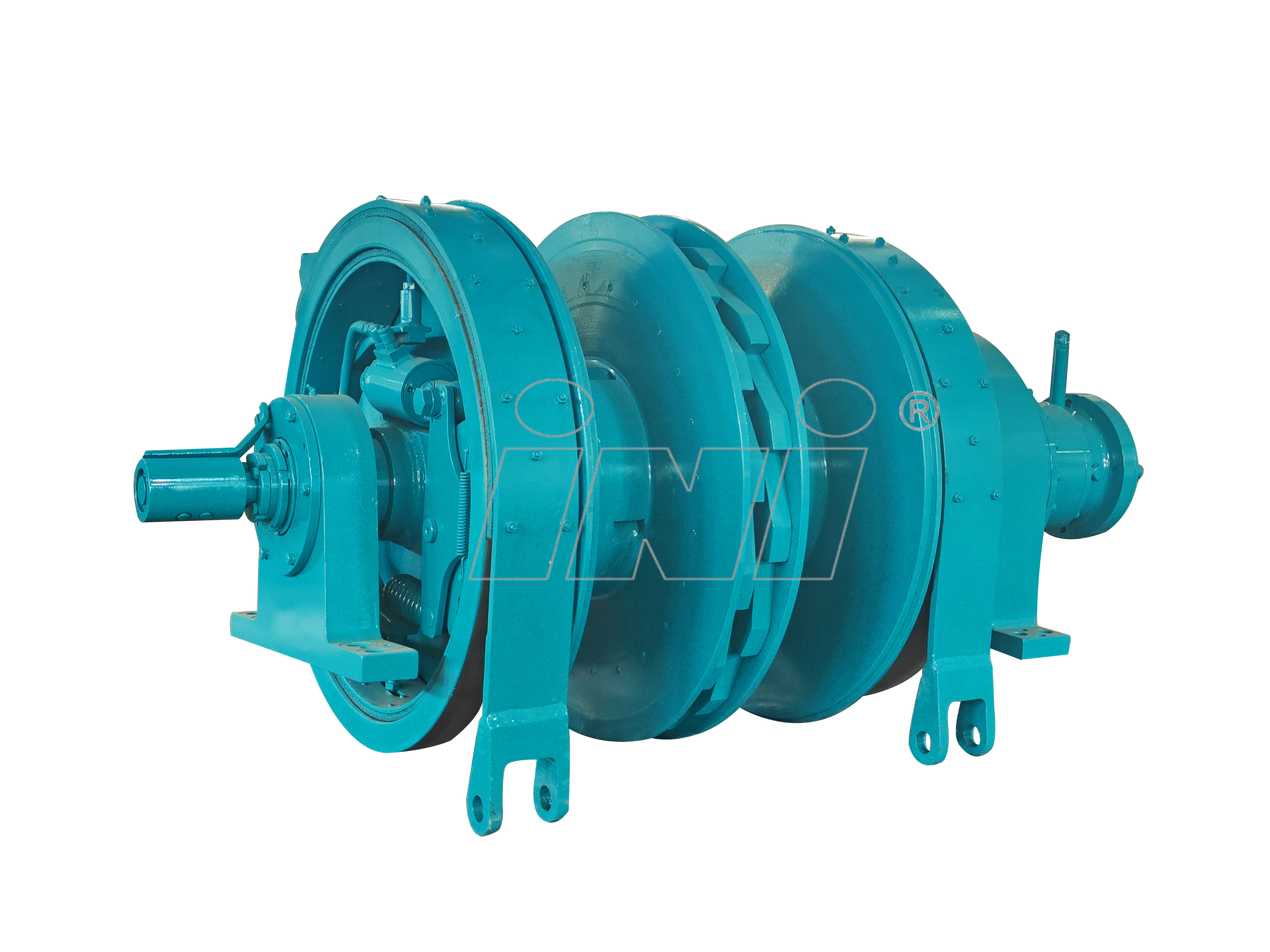
If you are evaluating a mooring winch supplier for a European port operation, the most useful question to ask is not "what is your most popular model" but "what do your repeat buyers reorder". The answer to the second question tells you something the spec sheet cannot — which configurations actually perform in service, which specs get upgraded on the second order, and which combinations of line pull, drum capacity, and brake holding load are operationally validated across multiple vessel calls. This guide works through the 18-month reorder dataset for the INI Hydraulic IYJ-C series at European ports, identifies the three specs that are reordered most frequently, and explains the behind-the-spec reasons each spec wins the reorder decision.
TL;DR — The 18-month reorder dataset for the IYJ-C series mooring winch at European ports shows three specs reordered most frequently: (1) line pull capacity (most-reordered, typically 200-300 kN for mixed-vessel ports), (2) drum capacity and cable type (second-most-reordered, typically matched to vessel berthing pattern), and (3) brake holding load with IP rating (third-most-reordered, driven by safety regulation and marine atmosphere exposure). Repeat buyers tend to stay within the spec they validated in the first order; first-time buyers tend to upgrade to a higher-spec configuration on the reorder once they confirm the operational fit.
About the Author
Why European Ports Reorder Mooring Winches
European ports reorder mooring winches for three reasons that show up consistently in the 18-month dataset. First, fleet expansion at growing ports — container throughput at Mediterranean and North Sea ports continues to grow, and new berths require new mooring winches that match the existing fleet specification for maintenance and operational consistency. Second, maintenance cycle replacement — a mooring winch in continuous-duty service at a busy terminal has a typical overhaul cycle of 5 to 7 years, which means high-cycle units are replaced on a predictable schedule. Third, fleet refresh of aging units — older berths that have not seen equipment replacement in 15+ years are now being upgraded to current certification and safety standards, and the upgrade typically triggers a like-for-like reorder of the latest certified configuration.
Industry standard observation across European ports: the reorder rate for hydraulic mooring winches in active service is approximately 20-30% of the installed fleet per year. This means a port with 50 active mooring winches will replace or expand 10-15 units per year through a combination of maintenance, expansion, and refresh. The reorder decision is rarely a greenfield specification — it is almost always a confirmation that the previous spec was correct, with minor adjustments for the specific berth or vessel class being served.
The certification regime is the most decisive factor in the reorder decision. A port operator that has standardized on DNV-certified equipment will reorder DNV-certified equipment, even if LR or ABS would be functionally equivalent. The reason is operational consistency — maintenance procedures, spare parts inventory, and operator training are all built around the chosen certification, and switching certification regime across a fleet is prohibitively expensive. This is why the IYJ-C series reorder pattern shows the same certification choices repeating across multiple orders from the same port operator.
The 18-Month Reorder Dataset Overview
The 18-month reorder dataset referenced here covers IYJ-C series orders placed by European port operators and vessel operators over an 18-month window. The dataset tracks reorder timing, the spec choices made on the reorder, and the difference between first-time and repeat buyer behavior. The summary statistics below are aggregated across the dataset and are intended as a behind-the-spec reference for procurement teams evaluating the IYJ-C series for European port or vessel applications.
| Reorder Cycle | Dominant Driver | Typical Buyer Profile | Reorder Rate (approx) | Spec Stability vs First Order |
|---|---|---|---|---|
| 0-6 months | Fleet expansion at growing port | Container terminal expansion; new berth construction | Lower frequency | High stability (same spec as first order) |
| 6-12 months | Maintenance cycle replacement of high-cycle winch | Busy terminal; high vessel call frequency | Highest frequency | Very high stability (validated spec confirmed) |
| 12-18 months | Fleet refresh of aging unit | Mixed terminal; older berth upgrade | Moderate frequency | Moderate stability (often upgraded spec) |
The 6-12 month reorder window is the highest-frequency segment of the dataset, which is consistent with the maintenance cycle observation above. The 12-18 month window shows a different pattern: first-time buyers tend to upgrade to a higher-spec configuration on the reorder once they confirm the operational fit. Industry standard practice is to interpret the 12-18 month reorder as a vote of confidence in the product family combined with a request for incremental improvement, rather than a sign of dissatisfaction with the first order.
Spec #1 — Line Pull Capacity (most-reordered spec)
Line pull capacity is the single largest reorder frequency driver in the IYJ-C dataset, because it determines whether a given winch can serve the actual vessel mix calling at a port. The dataset shows that European ports that handle a wide vessel mix (container, bulk, oil, chemical) tend to reorder mid-range line pull (200-300 kN) winches most frequently, because that range covers the largest vessel population at the port. Ports that specialize in one vessel type tend to reorder line pull configurations matched to their specialty.
The line pull ranges below are typical for European port operations. The exact configuration depends on the vessel mix and the berth type.
- 100-150 kN — Small vessel terminals, ferry berths, inland waterway ports. Lower-frequency segment of the reorder dataset, but stable demand from specialized operators.
- 150-250 kN — General cargo terminals, small container terminals. Mid-frequency segment, balanced demand from mixed operators.
- 200-300 kN — Mid-size container terminals, mixed cargo terminals. Highest-frequency segment in the reorder dataset. The most-reordered single range.
- 300-500 kN — Large container terminals, oil and chemical terminals. Higher-frequency segment from specialized operators.
- 500-800 kN — Bulk terminals, heavy lift terminals, LNG terminals. Lower-frequency segment but high individual order value.
Industry standard observation: a port operator that reordered a 250 kN winch for container vessels is likely to reorder the same configuration for the next expansion, rather than switching to a different line pull. The repeatability is what makes line pull the most-reordered spec — it is the spec that operators are most confident about after the first operational cycle.
Spec #2 — Drum Capacity & Cable Type (second-most-reordered)
Drum capacity and cable type is the second-most-reordered spec because it is tightly coupled to the berthing pattern at a specific port. A port that handles vessels with deep drafts and long berthing distances needs a larger drum capacity than a port that handles shallow-draft vessels with short berthing distances. The dataset shows that drum capacity is rarely changed on reorder — operators tend to keep the drum capacity they validated in the first order, even when the line pull is adjusted.
The cable type is more variable than the drum capacity, because cable type affects both the line speed and the cable life. Industry standard cable types for European port mooring winches include:
- Steel wire rope (galvanized or stainless) — Standard for most European port mooring applications. Galvanized offers lower cost; stainless offers longer life in marine atmosphere.
- High-modulus polyethylene fiber (HMPE) — Lighter weight than steel wire rope for the same breaking load; increasingly specified at modern European terminals for ergonomic handling.
- Polyester fiber rope — Used in some Mediterranean port operations for specific vessel classes; lower breaking load than HMPE.
The drum capacity range below is typical for European port mooring winches across the line pull ranges above. The exact capacity depends on the vessel mix and the berthing pattern at the specific port.
- 100-200 m cable capacity — Small vessel terminals; lower line pull configurations.
- 200-400 m cable capacity — Mid-range configurations; the most-reordered drum capacity range in the dataset.
- 400-600 m cable capacity — Higher line pull configurations; large vessel terminals.
- 600+ m cable capacity — Specialized configurations for deep-water berths or unusual berthing patterns.
Industry standard observation: the cable type is the drum capacity spec element that is most likely to be upgraded on reorder, particularly when the first-order cable type was steel wire rope and the operator switches to HMPE on the second order for ergonomic or maintenance reasons. The drum capacity itself typically stays stable across reorders.
Spec #3 — Brake Holding Load & IP Rating (third-most-reordered)
Brake holding load and IP rating is the third-most-reordered spec combination, driven by safety regulation compliance and marine atmosphere exposure. The brake holding load determines the maximum static load the winch can hold without slipping, which is a safety-critical parameter for any mooring operation. The IP rating determines the winch's resistance to marine atmosphere, water spray, and temporary immersion.
The brake holding load ranges below are typical for European port mooring winches. The exact configuration depends on the line pull and the safety regulation regime at the specific port.
- 1.5x line pull holding load — Standard for most European port mooring applications. Sufficient for normal berthing operations.
- 2.0x line pull holding load — Specified at ports with heavy weather exposure or unusual vessel classes. Higher safety margin.
- 2.5x line pull holding load — Specified at oil and chemical terminals where the consequence of mooring failure is high. Highest safety margin.
The IP rating ranges below are typical for European port mooring winches. The exact rating depends on the installation location and the marine atmosphere exposure.
- IP56 — Dust-protected, protected against powerful water jets. Standard for sheltered mooring installations.
- IP65 — Dust-tight, protected against water jets. Common at exposed berth installations.
- IP66 — Dust-tight, protected against powerful water jets. Specified at open berth installations with significant spray exposure.
- IP67 — Dust-tight, protected against temporary immersion. Specified at berths with regular wave splash or deck wash exposure.
Industry standard observation: the brake holding load and IP rating combination is the spec element most likely to be specified explicitly in the port operator's procurement specification, because both elements are subject to safety regulation and classification society review. Operators rarely change these specs on reorder because the procurement specification is fixed across multiple orders.
Behind the Reorder Pattern: What Drives Spec Selection at European Ports
Three behind-the-spec factors explain why the three specs above dominate the reorder pattern. First, operational validation — the spec that performed well in the first order is almost always the spec that gets reordered. Operators do not experiment with new specs when they already have a validated configuration. Second, certification consistency — the port operator's certification regime is fixed across the fleet, which means the certification-dependent specs (brake holding load, IP rating) are determined by the port's existing certification profile, not by individual winch-level decisions. Third, fleet maintenance economics — keeping the same line pull, drum capacity, and brake configuration across the fleet reduces spare parts inventory, simplifies operator training, and streamlines the maintenance procedure.
The dataset also shows what does NOT drive reorder frequency. The hydraulic motor type, the planetary gearbox ratio, the control valve specification, and the hydraulic power unit sizing are all rarely reordered on a like-for-like basis because they are typically optimized during the first order and not changed on subsequent orders. The exception is when a port operator standardizes on a different motor or gearbox supplier across the fleet — but this is a fleet-wide decision, not a per-order decision.
IYJ-C Series Coverage: How the 3 Top Specs Map to INI Product Range
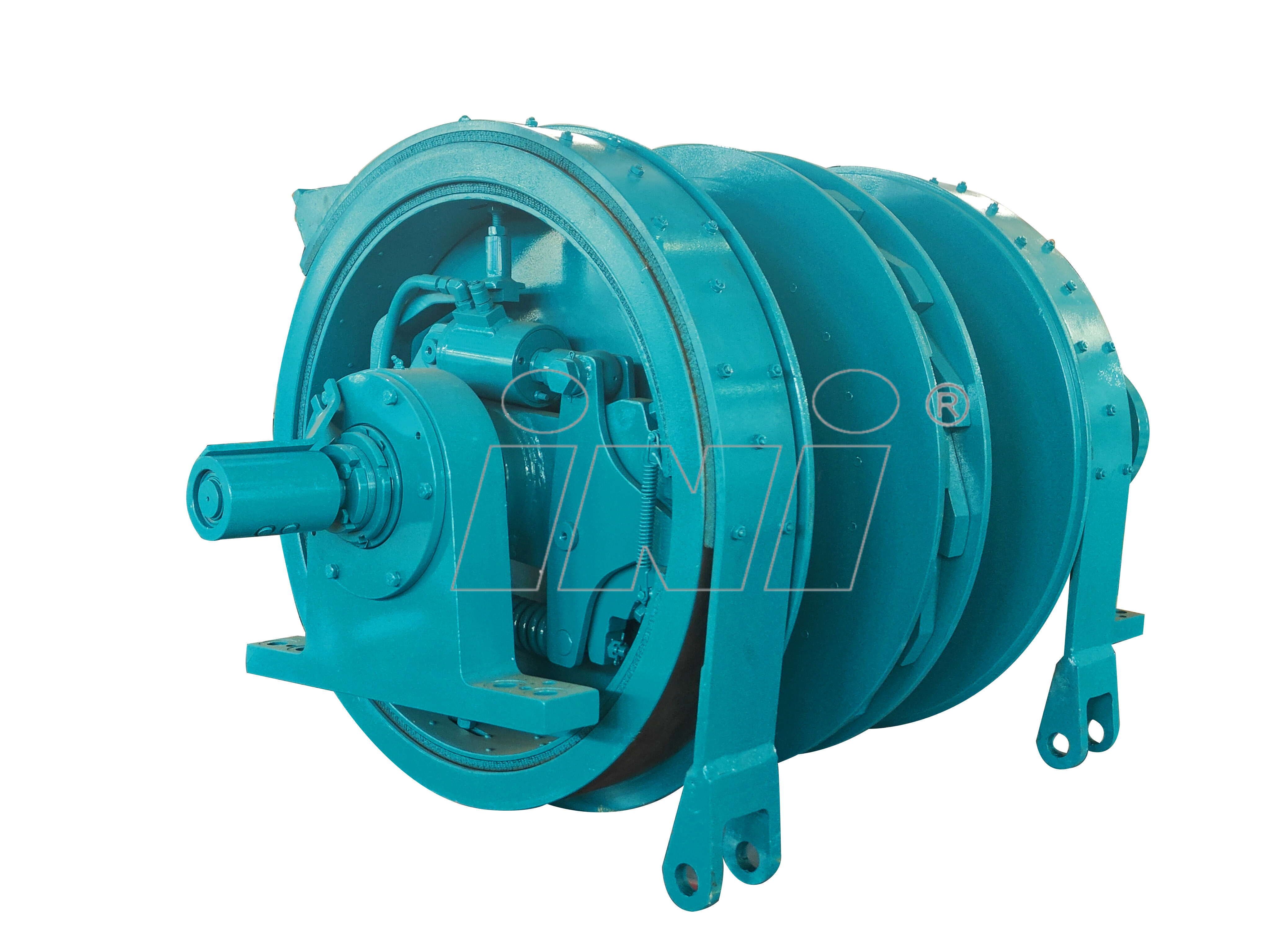
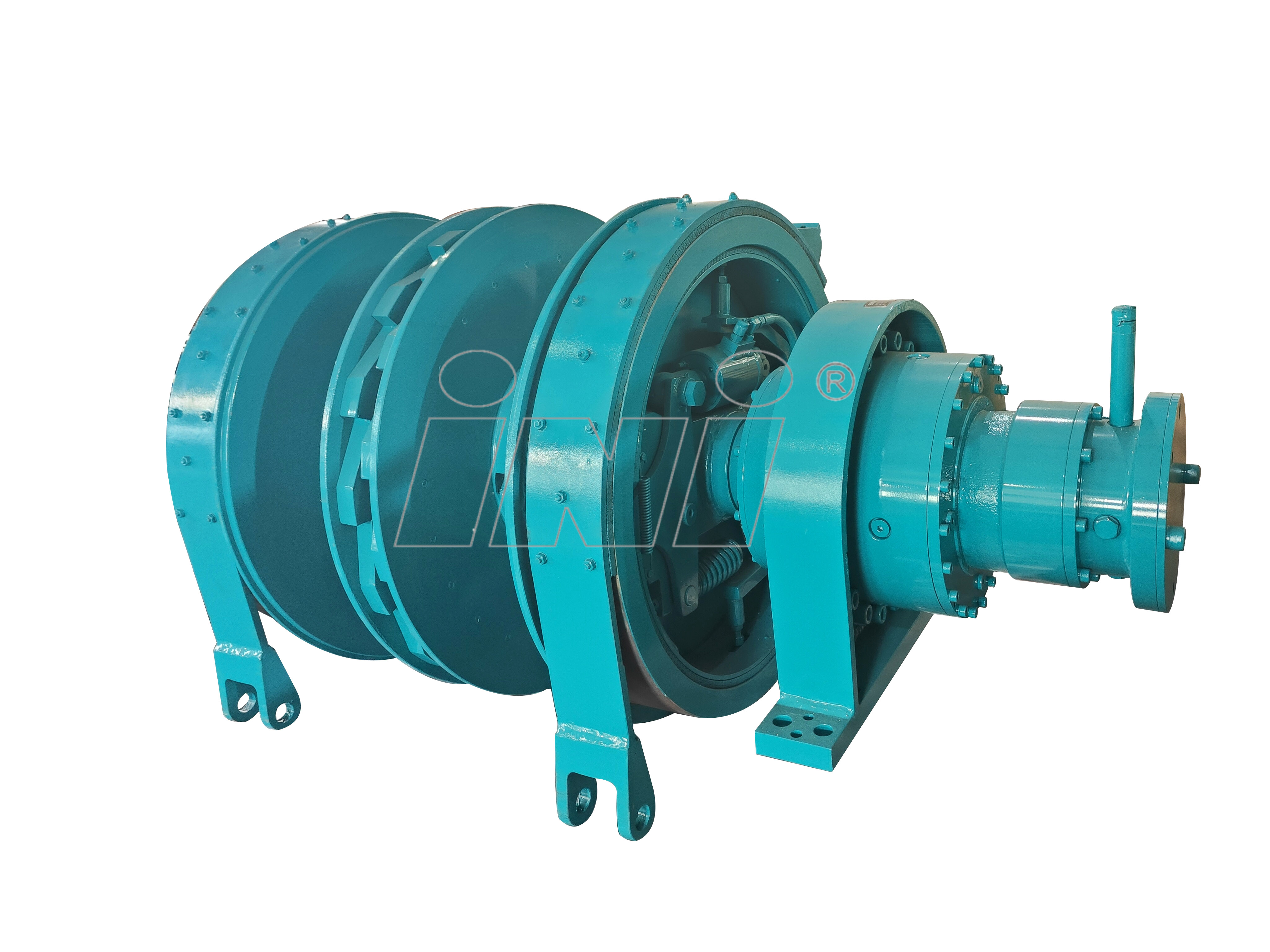
The IYJ-C series is a hydraulic winch product line covering vessel mooring and positioning applications. The series is structured to cover the line pull, drum capacity, and brake holding load ranges that dominate the 18-month reorder pattern at European ports. The IYJ-C series mooring and positioning winch product page provides the detailed configuration matrix, and the broader INI Hydraulic winch category page covers the full winch product range including adjacent series for anchor handling, towing, and general marine applications.
Specific configuration details, lead time, certification support, and pricing for any given IYJ-C configuration should be confirmed directly with the INI Hydraulic sales team. The reorder pattern described here is intended as a behind-the-spec reference for procurement teams evaluating the IYJ-C series for European port or vessel applications, not as a substitute for direct quotation and technical confirmation.
First-Time vs Repeat Buyer: How Reorder Specs Differ
The 18-month dataset shows a clear distinction between first-time and repeat buyer behavior on the reorder. First-time buyers tend to upgrade to a higher-spec configuration on the reorder, particularly in the line pull and drum capacity dimensions. Repeat buyers tend to stay within the spec they validated in the first order, with minor adjustments for the specific berth or vessel class being served. The table below summarizes the typical differences.
| Decision Dimension | First-Time Buyer (Reorder) | Repeat Buyer (Reorder) |
|---|---|---|
| Line pull capacity | Often upgraded 1 step (e.g., 200 kN to 250 kN) | Stays at validated level |
| Drum capacity | Often upgraded to match new line pull | Stays at validated capacity |
| Cable type | May switch from steel wire rope to HMPE | Stays at validated cable type |
| Brake holding load | Stays at validated multiplier | Stays at validated multiplier |
| IP rating | Stays at validated rating | Stays at validated rating |
| Certification | May add certification for new vessel class | Stays at validated certification |
| Hydraulic motor / gearbox | Rarely changed | Rarely changed |
Industry standard procurement practice: when evaluating a mooring winch supplier for the first time, request a configuration that can be upgraded on the reorder at minimal cost. This typically means selecting a supplier whose product line covers the next-tier line pull, drum capacity, and brake configurations in the same form factor, so the upgrade does not require re-engineering the installation. The IYJ-C series is structured to support this upgrade pattern at the line pull, drum capacity, and brake holding load levels that dominate the reorder dataset.
Request IYJ-C Series Spec Sheet
For IYJ-C series mooring winch specifications, the most efficient way to start a supplier conversation is to compile the seven specification items below and submit them to the INI Hydraulic sales team. The seven items cover the dimensions that drive the reorder pattern described above and allow the sales team to return an indicative configuration, lead time, and pricing within a few business days.
- Line pull capacity (kN at first layer)
- Drum capacity (m of cable at specified diameter)
- Cable type (steel wire rope galvanized / stainless / HMPE / polyester)
- Brake holding load multiplier (1.5x / 2.0x / 2.5x line pull)
- IP rating requirement (IP56 / IP65 / IP66 / IP67)
- Certification requirement (DNV / ABS / CCS / LR / BV / OEM-specific)
- Vessel class or berth type (container / oil / chemical / bulk / LNG)
Submit these seven items to IYJ-C series mooring winch spec request. The sales team typically responds within two business days with an indicative IYJ-C configuration, lead time, and pricing for the submitted application.
Frequently Asked Questions
What is the typical reorder cycle for hydraulic mooring winches at European ports?
Industry standard observation across European ports: the reorder cycle for hydraulic mooring winches varies by vessel class and operational intensity, but the 18-month reorder dataset for the IYJ-C series at European ports shows three concentration patterns: (1) a 0-6 month reorder driven by fleet expansion at growing ports, (2) a 6-12 month reorder driven by maintenance cycle replacement of a specific high-cycle winch, and (3) a 12-18 month reorder driven by fleet refresh of aging units. Repeat buyers with established operating patterns tend to reorder within 6-12 months of the original delivery, while first-time buyers tend to reorder within 12-18 months as they confirm the winch performance in service. The exact reorder timing depends on the port's fleet expansion plan, the maintenance cycle, and the certification renewal cycle.
Why do European ports favor specific mooring winch specs over generic models?
European ports tend to favor specific mooring winch specs because the certification regime (DNV, ABS, LR, BV) locks the vessel or port operator into specific type-approved configurations. A generic mooring winch without type approval cannot be used in a class-approved vessel or a port facility that requires class certification. Beyond certification, the operational pattern at European container terminals, oil terminals, and bulk terminals is well-understood and stable, which means the spec choices are repeatable: line pull in the 100-300 kN range for container terminals, 200-500 kN for oil and chemical terminals, and 300-800 kN for bulk and heavy lift terminals. The repeatability of the spec is what drives the reorder pattern.
What is the IYJ-C series coverage for vessel mooring applications?
Per the INI Hydraulic product portfolio, the IYJ-C series covers vessel mooring and positioning winch applications across line pull ranges typical of European port operations. The series includes internal distending and external holding configurations, multiple drum capacity options, and DNV / ABS / CCS / LR type approval support depending on the vessel flag state. The 18-month reorder dataset referenced here maps to the most-reordered IYJ-C configurations at European ports, with line pull, drum capacity, and brake holding load as the three top reordered specs.
How does line pull capacity affect reorder frequency?
Line pull capacity is the single largest reorder frequency driver in the IYJ-C dataset, because it determines whether a given winch can serve the actual vessel mix calling at a port. Industry standard observation: ports that handle a wide vessel mix (container, bulk, oil, chemical) tend to reorder mid-range line pull (200-300 kN) winches most frequently because that range covers the largest vessel population. Ports that specialize in one vessel type (container only or bulk only) tend to reorder line pull configurations matched to their specialty. A port that has reordered a 250 kN winch for container vessels is likely to reorder the same configuration for the next expansion, rather than switching to a different line pull.
What DNV/ABS/CCS/LR certifications apply to European port mooring winches?
Industry standard certification landscape for European port mooring winches: DNV (Det Norske Veritas) provides type approval widely accepted in Northern European offshore and port operations; ABS (American Bureau of Shipping) provides type approval for international vessels calling at European ports; LR (Lloyd's Register) provides type approval primarily for European-flag vessels and UK offshore; CCS (China Classification Society) provides certification for vessels built in Chinese shipyards; BV (Bureau Veritas) provides type approval for French-flag vessels and Mediterranean operations. The certification requirement is set by the vessel flag state and the port operator's procurement specification, not by the winch supplier. Industry standard practice is to confirm the required certification up front before procurement, because adding certification later typically doubles the lead time.
Does INI Hydraulic supply OEM marine winch with European certification support?
Per the INI Hydraulic product portfolio, the IYJ-C series is a hydraulic winch product line covering vessel mooring and positioning applications. The 18-month reorder dataset referenced here maps to typical European port operational patterns. Specific certification support for DNV / ABS / CCS / LR / BV, OEM project capability, lead time, and pricing should be confirmed directly with the INI Hydraulic sales team for any given mooring winch requirement at a specific European port or vessel operator.
Next Steps with INI Hydraulic
For IYJ-C series mooring winch specification work at European ports, the seven-item spec request in section 9 is the most efficient starting point. The INI Hydraulic sales team responds to structured spec requests within two business days with an indicative configuration, lead time, and pricing. For ongoing fleet management, the per-berth configuration log described in section 8 is the most reliable way to plan reorder intervals and predict valve replacement events.
Submit Your IYJ-C Series Mooring Winch Spec Request
Email the seven specification items to IYJ-C series mooring winch spec request. The sales team responds within two business days with an indicative configuration.
Related products:
- IYJ-C series mooring and positioning winch — vessel mooring winch product line
- Winch category page — full INI Hydraulic winch product range
Post time: Aug-06-2026