
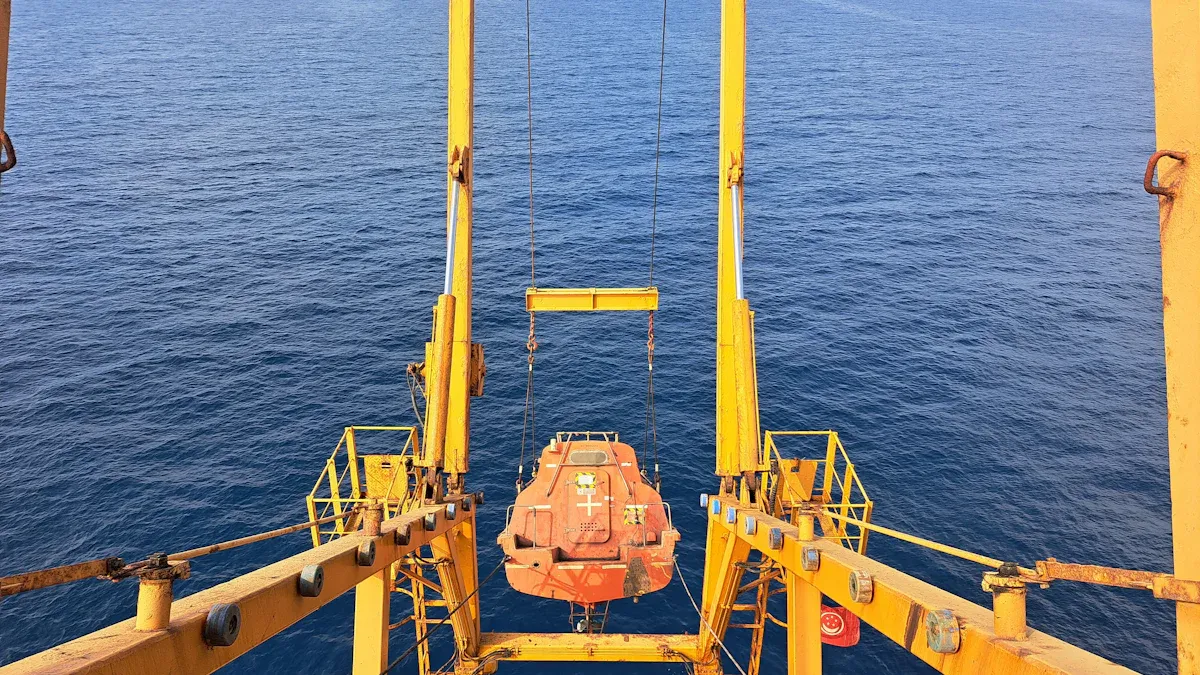
A carrier deck crane is a compact, wheeled lifting machine equipped with a flat deck for material transport. Manufacturers design it for efficient material handling in confined spaces. These cranes offer small size, powerful lifting capabilities, and excellent maneuverability. The market for such compact machines, including Marine Deck Crane variants, was USD 3.1 billion in 2024, projected to reach USD 4.5 billion by 2030.
Key Takeaways
- Carrier deck cranes are small, wheeled machines. They lift and move materials in tight spaces. They have a flat deck to carry items.
- These cranes are easy to steer. They can turn sharply. This helps them work well in crowded areas.
- Carrier deck cranes are strong. They can lift many different weights. They are built tough for hard jobs.
Key Features of a Carrier Deck Crane
Compact Design and Maneuverability
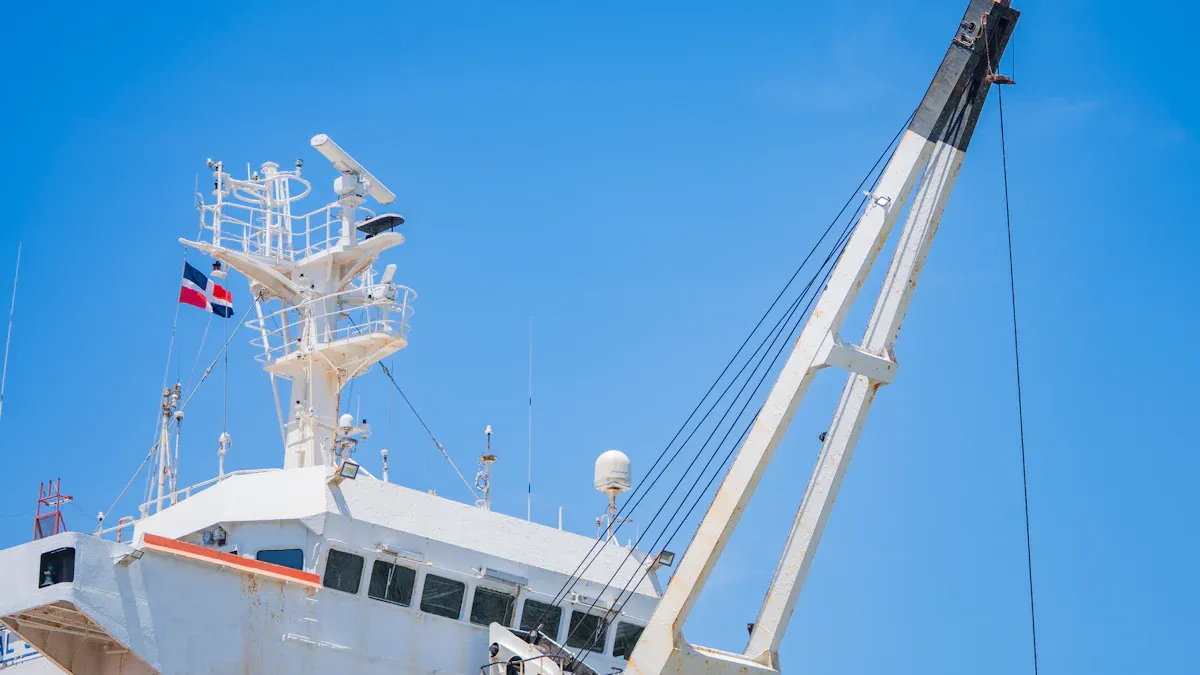
Carrier deck cranes feature a compact design. This design allows them to operate effectively in confined spaces. Their small footprint makes them ideal for navigating crowded work sites. For example, the Broderson IC-250 has an operating weight of 37,700 lbs and a width of 7.83 ft. The Broderson IC-200 weighs 31,080 lbs with a width of 7.875 ft. Another model boasts a height of 6' 6", a width of 5' 0", and a gross vehicle weight of 7,860 lbs. These dimensions highlight their compact nature.
These cranes also offer exceptional maneuverability. They often come equipped with 4-wheel steering. This system allows for a very tight turning radius. Such a feature is crucial for quick and precise positioning, especially when maneuvering around obstacles. Operators can switch between rear-wheel, four-wheel, or crab steering modes. This versatility enhances navigation in confined areas. The Broderson IC-40 and IC-20 models are particularly noted for their extremely tight turning radii, which improves functionality in space-constrained environments.
Integrated Flat Deck for Transport
A key feature of carrier deck cranes is their integrated flat deck. This deck provides a convenient platform for material transport. It allows the crane to lift and move materials, then transport them across a site. The Getman A64 Flat Deck, for instance, transports materials with a maximum payload capacity of up to 4,540 kg (10,000 lb). Operators commonly use this flat deck to carry extra materials, tools, or parts. This dual functionality, combining lifting with transport, significantly boosts operational efficiency.
Variable Lifting Capacity
Carrier deck cranes offer a variable lifting capacity. This variability allows them to handle a wide range of loads. Different models provide different maximum lifting capabilities. For example, one model has an operating weight of 28,584 lbs and a boom length of 41 ft. This range ensures the crane can adapt to various job requirements, from lighter loads to heavier components. Their design prioritizes powerful lifting capabilities despite their compact size.
Precision Control and Steering
These cranes incorporate advanced control systems for precision movements. Fully hydraulic controls give operators precise command over lifting and movement operations. These systems enable pinpoint accuracy when positioning loads. This accuracy is vital for safely maneuvering materials in tight or crowded job sites.
Control systems often include variable frequency electric motors and hydraulic systems. These drives provide smooth, controlled movement for millimeter precision. Automation and robotics also improve fine positioning, performing complex tasks and reducing human error. Specialized software solutions and algorithms analyze sensor data and control drive systems. Stabilization systems, such as gyroscopes and counterweights, compensate for vibrations. A Human-Machine Interface (HMI) offers intuitive control, displaying crane status and position clearly. Operators can choose between manual, semi-automatic, or fully automatic control systems, depending on the task's complexity and precision needs. The versatile steering system, with rear-wheel, 4-wheel, and crab steering modes, further enhances precise positioning.
Robust Construction for Demanding Environments
Carrier deck cranes feature robust construction. This construction allows them to withstand demanding operational environments. For marine applications, a Marine Deck Crane must endure corrosive saltwater exposure. Manufacturers use stainless steel parts, multi-layer coatings, and hot-dip galvanization to combat rust.
These cranes also operate in extreme temperatures, ranging from -40°C to 200°C. They utilize high-temperature lubricants, insulated cables, and thermal-resistant coatings. Anti-condensation systems are also in place. Designs account for varying wind speeds and conditions influenced by wave action. Crash cranes, a type of carrier deck crane, withstand Electromagnetic Environmental Effects (E3) within the radio frequency (RF) spectrum. This ensures compatibility with a ship's RF environment, preventing interference with other electrical systems. Cranes designed for severe weather or polar regions require enhanced robustness and specialized features.
How a Carrier Deck Crane Works

Power Systems and Operation
Carrier deck cranes rely on robust power systems for their operations. These machines often utilize a variety of power sources. Many cranes employ hydraulic power systems, which provide the force needed for lifting and movement. Electric power systems are also common, offering clean and efficient operation. Furthermore, hybrid power systems represent a growing trend. These systems combine electric, diesel, and hydraulic components to optimize performance.
The choice of power system significantly impacts operational efficiency and environmental footprint. Electric driving technology, for instance, substantially reduces energy consumption compared to traditional diesel-hydraulic systems. This leads to improved operational efficiency. Regenerative energy systems further enhance efficiency by capturing and reusing energy during operations like lowering loads. This significantly decreases overall energy demand. Closed hydraulic systems also contribute to energy-efficient design. They cut hydraulic oil consumption by over 50% and notably reduce power consumption. For environmental benefits, hydrogen combustion engines and fuel cells offer low and zero-emission power sources. Fuel cells are particularly eco-efficient and cheaper to operate than combustion engines over time, despite higher initial costs. Electric motor-powered cranes, including battery-powered models, provide zero emissions and quiet operation. They can even work while charging, improving operational flexibility. The industry is also exploring alternative fuels like liquid hydrogen, ammonia, and methanol to reduce carbon emissions. This shift towards electrification and hybrid models is driven by strict environmental regulations and corporate goals to lower carbon footprints. These advancements lead to improved sustainability, reduced fuel consumption, and lower noise levels.
Boom and Hoisting Mechanisms
The boom and hoisting mechanisms are central to a carrier deck crane's lifting capabilities. Different types of booms offer varied functionalities.
- Telescopic Boom Cranes: These cranes feature multiple sections that extend or retract. This design allows operators to adjust the working radius. They are popular in construction and maintenance due to their mobility, ease of transport, and ability to maneuver in tight spaces.
- Knuckle Boom Cranes: Also known as articulating booms, these cranes have hinged sections. This allows the boom to bend and flex, reaching difficult spots. They are compact, flexible, and handle multiple tasks in construction, maintenance, and shipping.
- Stiff Boom Cranes: These cranes feature a fixed boom design. They offer a compact solution for various load handling tasks, especially in marine environments.
The hoisting mechanism typically involves a winch and cable system. This system lifts and lowers loads with precision. Planetary gearboxes, often found in these systems, provide high torque and smooth operation. Companies like INI Hydraulic specialize in designing and manufacturing hydraulic winches and planetary gearboxes, ensuring reliable hoisting performance for various applications, including Marine Deck Crane operations.
Operator Controls and Safety Features
Carrier deck cranes incorporate advanced controls and numerous safety features. These elements ensure safe and efficient operation. Operators use fully hydraulic controls for precise command over lifting and movement. This allows for pinpoint accuracy when positioning loads.
Safety features are critical for preventing accidents.
- Load Moment Indicators: These devices monitor real-time load weight and radius. They prevent overloading, a common cause of crane accidents.
- Anti-Collision Devices: These systems detect nearby obstacles. They reduce collision risks, especially in crowded work environments.
- Crane Level Indicators: These devices help operators ensure the crane sits on a level surface. This is crucial for stability and preventing tipping.
- Boom Angle Indicators: These measure the boom's angle relative to the ground. They help operators stay within safe operating limits and prevent overextension.
- Boom Back Stops: These mechanical devices prevent the boom from moving too far backward. This protects equipment and personnel.
- Telematics: This technology tracks crane usage and maintenance. It ensures timely servicing, contributing to overall safety and reliability.
Operating a carrier deck crane requires specific training and expertise. Certifications like the NCCER Carry Deck Crane Operator Certification ensure operators possess the necessary skills. This training covers crane setup, operation in confined spaces, hazard awareness, rigging, load dynamics, and emergency procedures.
Multi-Mode Steering Capabilities
Multi-mode steering capabilities significantly enhance the maneuverability of carrier deck cranes. These cranes often offer several steering options.
- 2-Wheel Steering: This mode typically uses the front or rear wheels for steering, similar to a conventional vehicle.
- 4-Wheel Coordinated Steering: In this mode, the front and rear wheels steer in opposite directions. This allows for an extremely tight turning radius, ideal for optimal positioning in confined spaces.
- 4-Wheel Crab Steering: This mode allows all four wheels to turn in the same direction. The crane moves diagonally, which is invaluable for navigating around obstacles or positioning the crane parallel to a wall.
Operators can quickly switch between these steering modes. Electronic sensors and a control box automatically align the steering after a new mode selection. This versatility, combined with compact dimensions, enables carrier deck cranes to operate effectively in tight quarters. These features make them ideal for plant maintenance and material handling in congested industrial settings.
Applications and Evolution of the Marine Deck Crane
Versatile Applications Across Industries
Carrier deck cranes serve numerous industries beyond construction and mining. They are vital in power generation for assembling wind turbines and maintaining power plants. The aerospace sector uses them for aircraft assembly and handling large components. Forestry operations benefit from these cranes for moving heavy logs. In entertainment, they set up stages and lighting rigs. Telecommunications relies on them to install cell towers. Emergency services employ them for high-rise rescues. Manufacturing plants use them to maneuver heavy machinery and optimize production. Oil and gas operations frequently use them for drilling and pipeline installation. Shipping ports worldwide depend on them to load and unload containers. These cranes also assist in industrial plants by moving heavy machinery and handling components in confined spaces. They support equipment maintenance by lifting heavy parts for repairs.
Carrier Deck Cranes in Construction and Mining
Carrier deck cranes are indispensable in construction and mining. Their compact design allows them to work effectively in tight spaces. They lift and transport materials in confined areas, such as indoor construction projects or warehouses. These cranes move various materials like pallets, equipment, and tools using their small decks. They perform diverse lifting and moving tasks with attachments like jibs or hooks. They are ideal for small job sites and indoor applications. They move materials from delivery points to their point of use. In mining, they transport equipment and tools in underground mines where space is limited.
The Role of Marine Deck Crane in Maritime Operations
Marine deck cranes play a critical role in maritime operations. They are a common sight in shipyards. They set the foundation of large container vessels or replace damaged propellers on smaller boats. Their lifting capabilities position prefabricated sections, heavy machinery, and fragile components during construction. For repairs, cranes aid in removing and replacing parts. This ensures efficient vessel restoration. These cranes lift and move cargo, place and remove containers from ships, and transfer materials between ship and shore. They also move materials around the docks. A Marine Deck Crane handles massive ship parts in ports and assists in ship construction.
Historical Development and Modern Advancements
The evolution of carrier deck cranes reflects continuous innovation. Early designs focused on basic lifting functions. Modern advancements incorporate sophisticated hydraulic systems and precision controls. The integration of multi-mode steering enhances maneuverability. Power systems have evolved to include electric and hybrid options, reducing environmental impact. Manufacturers constantly improve materials and construction techniques. This ensures greater durability and operational efficiency in demanding environments.
Carrier deck cranes are indispensable tools for material handling in challenging environments. Their unique design combines lifting power with transport capabilities, offering significant operational advantages. These cranes provide compact size and versatility, allowing them to operate in tight spaces. Continuous innovation ensures their adaptability and efficiency across diverse industrial and marine applications. The market projects continued growth, driven by global construction and technological advancements like telematics.
FAQ
What is the primary function of a carrier deck crane?
A carrier deck crane lifts and transports materials. It operates efficiently in confined spaces. Its integrated flat deck also allows for material transport.
How do carrier deck cranes achieve maneuverability in tight spaces?
These cranes use compact designs and multi-mode steering. Options include 2-wheel, 4-wheel coordinated, and crab steering. This allows precise navigation around obstacles.
What industries commonly use carrier deck cranes?
Many industries use these cranes.
They include:
- Construction
- Mining
- Maritime
- Power generation
- Aerospace
- Manufacturing
Post time: Dec-09-2025