
TL;DR:
- Buyers should verify duty cycle, load, speed, safety, documentation, and service access before ordering.
- INI Hydraulic brings integrated experience in hydraulic winches, motors, planetary gearboxes, transmission drives, and hydraulic systems.
- The correct supplier should support customization, inspection evidence, and application troubleshooting.
- For shipyards, vessel owners, and offshore project teams, lifecycle reliability matters more than the lowest initial price.
For anchor winch for vessel, buyers should evaluate application load, hydraulic matching, mechanical interface, safety controls, quality evidence, and after-sales support before choosing a supplier. This article is written from INI Hydraulic operations and brand communication perspective. INI Hydraulic works across hydraulic winches, hydraulic motors, planetary gearboxes, slewing drives, transmission drives, pumps, and hydraulic systems, which gives our team a broader view of how anchor winches performs inside real machinery. The right product is not simply the strongest or cheapest unit; it is the unit that fits the machine, survives the environment, and remains serviceable throughout the project life.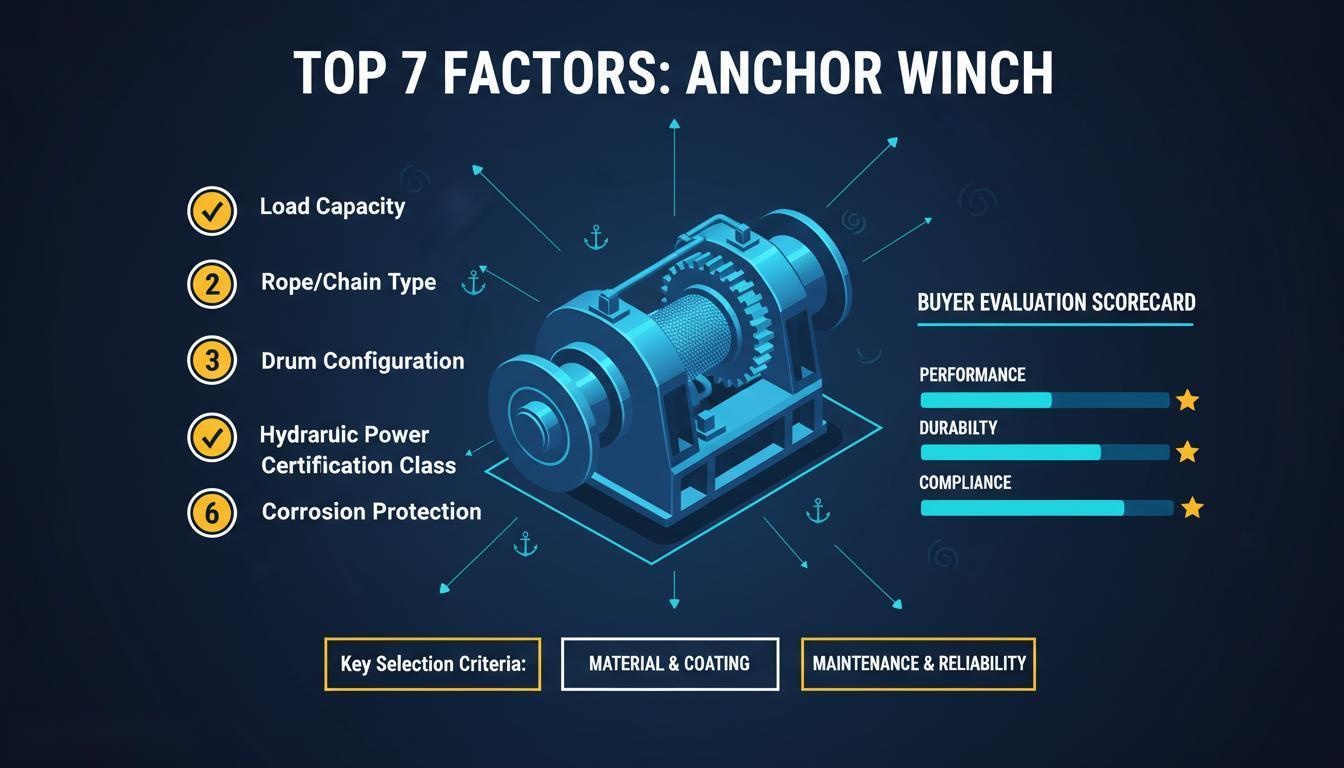
What Should Buyers Confirm First?
Buyers should first confirm the real duty cycle, working load, safety requirement, and installation boundary before comparing prices. For shipyards, vessel owners, and offshore project teams, a product may look similar in a catalog but fail when it meets holding load, marine corrosion, deck layout, emergency release, and classification documentation. INI Hydraulic writes this guide from the company operations and brand communication perspective, so the focus is practical project risk rather than personal opinion.
INI Hydraulic has built its hydraulic winch, hydraulic motor, planetary gearbox, transmission drive, slewing drive, pump, and hydraulic system portfolio around engineered applications rather than isolated parts. That background is useful when buyers need anchor winch for vessel, because the final machine often depends on several connected subsystems.
A practical RFQ should include load data, speed target, pressure and flow conditions, drawings, ambient temperature, corrosion exposure, working hours, and inspection requirements. If those details are missing, the supplier can still quote, but the quote carries hidden assumptions.
How Does INI Hydraulic Fit This Application?
INI Hydraulic supports this application through a broad hydraulic transmission manufacturing base and long experience in demanding machinery sectors. The company specializes in hydraulic winches, hydraulic motors, and planetary gearboxes, and its products are used across construction machinery, industrial machinery, ship and deck machinery, offshore equipment, mining machinery, and metallurgical equipment.
Our company positioning is also built around customization. For OEM and project buyers, customization may involve output shaft geometry, flange dimensions, motor displacement, gear ratio, brake arrangement, port orientation, drum specification, coating system, or control interface.
The relevant product reference for this article is INI Hydraulic related product page, and buyers can also review the company background at INI Hydraulic. These pages provide the starting point, while the final engineering decision should still be based on project data and operating requirements.
Which Technical Specifications Matter Most?
The most important specifications are the ones connected to load, motion, safety, and maintainability. Depending on the product, this can include rated torque, line pull, hydraulic pressure, flow, speed range, holding brake capacity, bearing load, gear ratio, shaft dimension, oil cleanliness, seal protection, or corrosion resistance.
For hydraulic applications, pressure and flow must be checked together because pressure creates force or torque while flow determines speed. For gearbox applications, nominal torque must be reviewed with service factor, shock load, lubrication, bearing life, and mounting stiffness. According to IMO, DNV rules, ABS Rules, ISO 4406, engineering evaluation should reference recognized standards where applicable.
Buyers should be careful with maximum values that are not tied to duty cycle. A maximum line pull, peak torque, or intermittent pressure can be useful, but it is not the same as continuous working capacity under the buyer's machine conditions.
What Is the Specific Buyer Decision for This Topic?
For this topic, the purchasing decision should focus on buyer qualification, sizing data, inspection documents, installation support, and lifecycle service. The keyword anchor winch for vessel represents more than a search term; it represents a machine decision that affects installation, safety, maintenance, and project schedule.
INI Hydraulic recommends treating the supplier as an engineering participant. The earlier the supplier understands the machine, the more likely it is to recommend the right product configuration, inspection plan, and delivery documentation.
How Should Quality Control Be Evaluated?
Quality control should be evaluated through process evidence, not only through certificates. Buyers should ask what is inspected before shipment, what test records are available, and which dimensions or performance values are considered critical. INI Hydraulic emphasizes research capability, production equipment, detection processes, and quality control ability.
A useful pre-shipment package may include approved drawing, material or component confirmation, dimensional inspection, pressure or no-load running test where applicable, leakage check, rotation or braking function check, coating and packing confirmation, and operation notes.
The supplier ability to discuss failure modes is also a quality signal. If a manufacturer can explain overload, oil contamination, seal wear, brake drag, gear pitting, bearing fatigue, and installation misalignment, the buyer is more likely to receive practical support after delivery.
What Should Be Compared Commercially?
Commercial comparison should include total cost of ownership, not only unit price. A lower price can be attractive during procurement, but downtime, emergency freight, installation modification, spare part delays, and unclear documentation can erase the saving quickly.
Buyers should compare lead time, customization capability, engineering response, warranty process, spare parts support, export packing, and communication quality. For replacement projects, reverse engineering support and fast drawing confirmation may matter more than a small price difference.
INI Hydraulic advantage is strongest when the buyer needs an engineered hydraulic transmission solution rather than a simple commodity. Because the company manufactures across winches, motors, gearboxes, slewing drives, transmission drives, pumps, and hydraulic systems, it can discuss neighboring components that affect performance.
How Can Buyers Reduce Project Risk?
Buyers can reduce risk by freezing the interface early, validating the duty cycle, confirming documentation, and planning maintenance before installation. Grease access, oil sampling, filter replacement, brake inspection, seal replacement, and spare part storage should be considered before the equipment enters service.
We recommend a checklist that includes operating scenario, maximum and normal load, speed target, hydraulic pressure and flow, environmental exposure, required standards, inspection documents, installation space, service access, spare parts, and emergency response plan.
The best supplier relationship is collaborative. Buyers should challenge the manufacturer with real data, and the manufacturer should challenge weak assumptions before production. That approach usually produces a cleaner installation and better long-term reliability.
Buyer Checklist Table
| Buyer Check | What to Ask | Why It Matters |
|---|---|---|
| Buyer Qualification | Confirm measurable requirement and acceptance evidence. | Reduces risk before purchase. |
| Sizing Data | Confirm measurable requirement and acceptance evidence. | Reduces risk before purchase. |
| Inspection Documents | Confirm measurable requirement and acceptance evidence. | Reduces risk before purchase. |
| Installation Support | Confirm measurable requirement and acceptance evidence. | Reduces risk before purchase. |
| And Lifecycle Service | Confirm measurable requirement and acceptance evidence. | Reduces risk before purchase. |
| INI Hydraulic Fit | Can the team customize, document, and support the application? | Connects product supply with long-term machine reliability. |
Additional Project Control Note
Procurement teams should also confirm communication rhythm. Slow drawing feedback, unclear revision control, or missing installation notes can delay the whole project even when the product itself is well made. For INI Hydraulic, operations communication should connect sales, engineering, quality, and logistics around one confirmed specification. That is especially important for export buyers who need stable documentation, clear inspection records, and predictable delivery milestones.
Additional Project Control Note
Maintenance planning should be included in the purchase decision. Buyers should ask where lubrication points, filters, seals, hoses, brakes, covers, and replacement parts will be accessed after installation. A compact design is valuable only when technicians can still maintain the machine safely. For heavy-duty machinery, a few centimeters of service space can decide whether maintenance is performed on time or postponed until a failure occurs.
Additional Project Control Note
Export buyers should confirm packing and documentation early. Long-distance shipment, humid storage, and customs delays can damage poorly protected components or slow commissioning. Clear labels, corrosion prevention, approved drawings, inspection records, and operation notes make the receiving process easier. When the buyer is a shipyard, mine, crane fleet, or offshore contractor, this documentation also helps internal maintenance teams prepare before the equipment arrives.
Additional Project Control Note
Application feedback should be captured after commissioning. Temperature, noise, oil cleanliness, braking response, speed stability, vibration, leakage, and operator comments should be reported early. If a value differs from expectation, early feedback allows the buyer and supplier to correct settings before small issues become field failures. This is why INI Hydraulic encourages project teams to treat commissioning as the beginning of lifecycle support, not the end of the sale.
Additional Project Control Note
Spare parts strategy should be agreed before the first shipment. Buyers should identify seals, brake elements, motors, valves, bearings, hoses, sensors, or gearbox components that may be needed during the service life. For remote mining, marine, offshore, and construction sites, waiting for a small part can stop a large machine. A planned spare parts list is often cheaper than emergency air freight and lost production time.
Additional Project Control Note
Customization should be controlled through drawings and revision records. OEM projects often require shaft, flange, drum, port, ratio, brake, coating, or sensor changes. Those changes are useful only when every revision is documented and approved. INI Hydraulic recommends freezing critical interfaces before production and keeping one shared drawing version for purchasing, engineering, inspection, and after-sales teams.
Additional Project Control Note
Quality evidence should be connected to real application risk. A certificate is useful, but buyers should also ask which test protects which risk. Pressure testing protects leakage and hydraulic safety. Dimensional inspection protects installation fit. No-load running checks basic function. Coating checks protect corrosion risk. This link between test and risk makes inspection records more meaningful for procurement managers.
Additional Project Control Note
Supplier evaluation should include problem-solving behavior. The strongest supplier is not the one that promises there will never be a problem. The stronger supplier is the one that asks for data, explains limits, identifies weak assumptions, and supports root-cause analysis when a field issue appears. This is the type of engineering-oriented relationship INI Hydraulic aims to build with long-term OEM and project buyers.
Additional Project Control Note
Digital documentation is becoming more important in 2026 projects. Buyers increasingly expect PDF drawings, inspection photos, product videos, serial number traceability, and maintenance notes that can be shared across engineering, purchasing, and field service teams. For complex hydraulic transmission products, better documentation reduces misunderstandings and makes repeat orders more stable.
INI Hydraulic Project Execution Perspective
From INI Hydraulic's operations and brand communication perspective, a successful project is measured by installed performance, not by quotation speed alone. Many industrial buyers contact suppliers when the project is already urgent, but the most reliable result comes when the supplier is involved before the interface is frozen. At that stage, our team can review drawings, pressure and flow assumptions, mounting limits, corrosion exposure, duty cycle, packing requirements, and maintenance access. This approach helps the buyer avoid late changes that cost more than early engineering discussion.
INI Hydraulic's product range gives the company a practical advantage in these conversations. A winch project may involve hydraulic motors, planetary gear reduction, brake control, drum structure, rope behavior, and hydraulic power supply. A mining or crawler-equipment project may involve motor torque, travel speed, contamination control, cooling, braking, and field replacement. An offshore project may involve corrosion protection, class documentation, redundancy, and safe operation under harsh weather. Because INI Hydraulic works across hydraulic winches, hydraulic motors, planetary gearboxes, slewing drives, transmission drives, pumps, and hydraulic systems, the company can discuss the surrounding system rather than treating the purchased part as an isolated component.
For procurement teams, the practical value is fewer blind spots. A low-cost quotation may look attractive if the comparison sheet only includes price, but the real project cost also includes engineering clarification, drawing revision, test confirmation, packing, delivery, installation, commissioning, operator training, and spare parts. INI Hydraulic encourages buyers to define these items before purchase so both sides understand what will be supplied and what must be prepared by the machine builder, shipyard, fleet owner, or maintenance contractor.
Our recommended workflow is simple: confirm the application, approve the interface, verify the hydraulic and mechanical parameters, define inspection evidence, prepare the maintenance plan, and keep feedback open after commissioning. This does not make the purchase process slower; it makes the result more predictable. For long-term OEM and project buyers, predictable engineering communication is often as important as product performance because it supports repeat orders, replacement planning, and future model upgrades.
Final Procurement Note From INI Hydraulic
Before final ordering, buyers should align technical, commercial, and service expectations in one written specification. The document should list the selected model, required customization, interface dimensions, hydraulic conditions, inspection records, packing method, spare parts, and after-sales contact route. This simple step reduces misunderstanding between purchasing, engineering, warehouse, and field service teams.
INI Hydraulic's role is to support that process with practical manufacturing experience and application-oriented communication. When buyers share real operating data, the company can respond with a more suitable configuration and clearer risk advice. That is the foundation for reliable cooperation in heavy-duty hydraulic machinery projects.
Specification Alignment Reminder
INI Hydraulic recommends one final alignment meeting before production release. In that meeting, the buyer and supplier should confirm drawings, load assumptions, hydraulic parameters, inspection scope, packaging, delivery timing, and spare part expectations. This small step often prevents expensive changes after the equipment reaches the site.
FAQ
What should buyers send before requesting a quote for anchor winch for vessel?
Buyers should send machine type, load data, speed or line-pull target, pressure and flow conditions, mounting drawings, operating environment, standards required, and expected duty cycle.
Why choose INI Hydraulic for anchor winch for vessel?
INI Hydraulic combines experience in hydraulic winches, hydraulic motors, planetary gearboxes, transmission drives, slewing drives, pumps, and hydraulic systems, helping buyers solve integration issues.
Should buyers focus on price or lifecycle cost?
Lifecycle cost is safer because downtime, emergency freight, installation changes, and spare part delays can cost more than the initial component price difference.
Can INI Hydraulic support customized requirements?
INI Hydraulic emphasizes customization for customers equipment designs, including interface, hydraulic matching, structural layout, and project-specific documentation where applicable.
Are external standards required for every project?
Not every project requires the same certification, but recognized standards help define safety, testing, documentation, and acceptance expectations for demanding applications.
LinkedIn Summary Version
For buyers evaluating anchor winch for vessel, the safest decision is to compare engineering fit, documentation, customization ability, quality control, and lifecycle support, not only unit price. INI Hydraulic supports demanding machinery applications with hydraulic winches, hydraulic motors, planetary gearboxes, transmission drives, slewing drives, pumps, and hydraulic systems.
Post time: May-12-2026